Loading News...
Loading...

Loading News...

On March 3, 2026, Binance, the world's largest cryptocurrency exchange by trading volume, announced it will delist four spot trading pairs: CHZ/BNB, ENA/BRL, NEIRO/JPY, and RLC/BTC. The delisting is scheduled for 3:00 a.m. UTC on March 6, as reported by CoinNess. This move comes amid a global crypto market sentiment of "Extreme Fear," with a score of 14/100, indicating heightened investor anxiety and potential volatility. The announcement raises immediate questions about the underlying reasons, as Binance has not provided detailed justification in the source data, leaving room for speculation about liquidity issues, regulatory pressures, or strategic shifts. The timing is critical, coinciding with Bitcoin trading at $66,589, showing a modest 24-hour trend of 0.20%, but within a broader context of market uncertainty. This report investigates the technical, data-driven, and narrative aspects of the delisting, challenging official claims and exploring implications for investors.
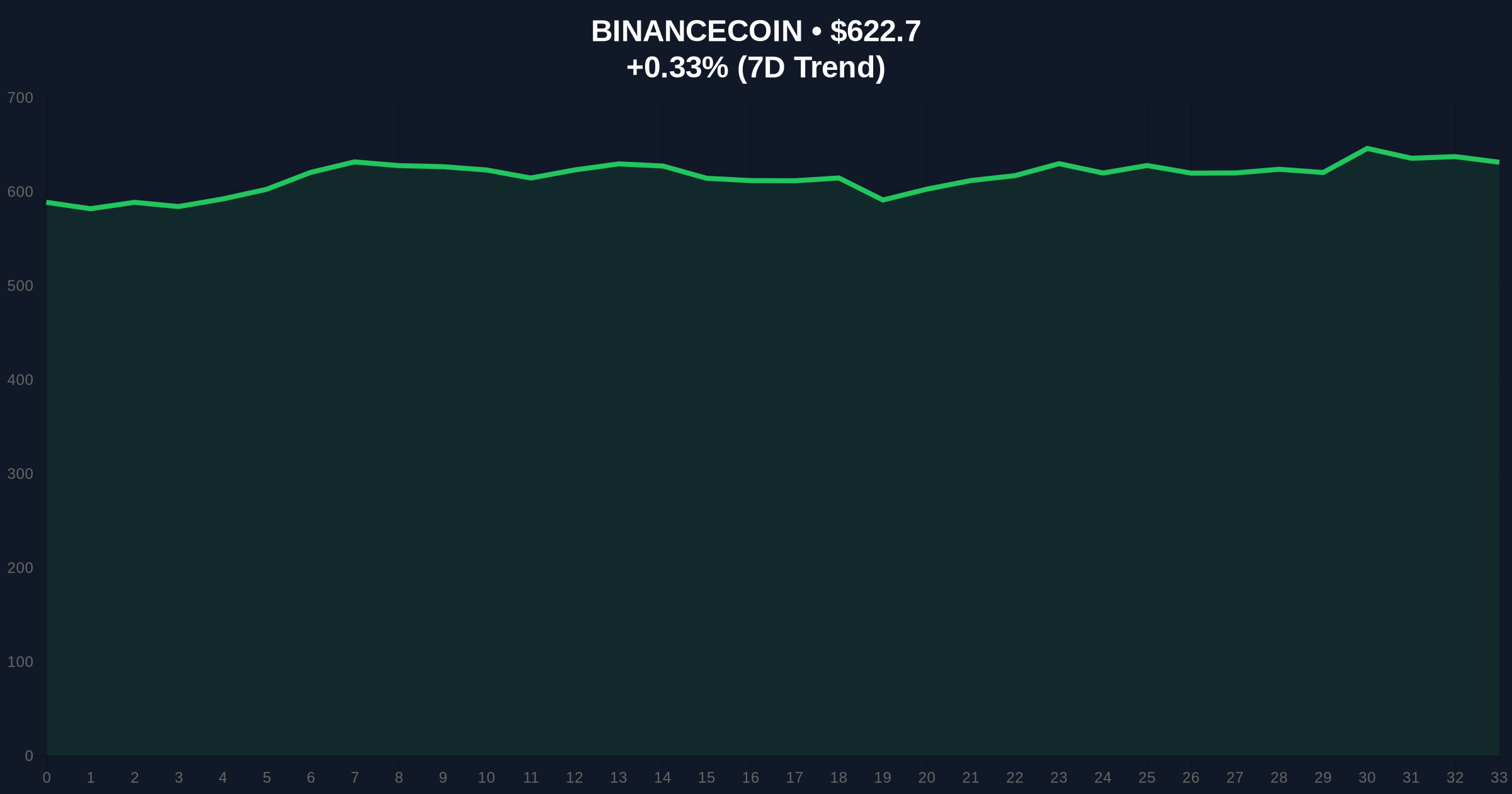
The delisting of spot trading pairs involves removing specific cryptocurrency pairs from Binance's trading platform, effectively halting direct buy and sell orders for CHZ/BNB, ENA/BRL, NEIRO/JPY, and RLC/BTC. According to the CoinNess report, the mechanism is straightforward: at 3:00 a.m. UTC on March 6, these pairs will no longer be available for trading, though users may still hold the underlying assets in their wallets. However, the technical architecture behind such decisions often relates to liquidity metrics, trading volume thresholds, or compliance with regulatory standards. For instance, pairs like ENA/BRL and NEIRO/JPY involve fiat currencies (Brazilian Real and Japanese Yen), suggesting potential regulatory scrutiny in those jurisdictions, but this is not confirmed in the source data. The CHZ/BNB and RLC/BTC pairs involve major cryptocurrencies (Binance Coin and Bitcoin), which might indicate low trading activity or strategic realignment away from smaller altcoins.
Binance's protocol for delisting typically includes prior warnings to users, allowing for position adjustments, but the source data does not specify if additional steps, such as asset conversions or withdrawals, are mandated. This lack of detail invites skepticism: without transparency, investors cannot assess whether the delisting is routine maintenance or a response to deeper issues. The regulatory mechanics are equally opaque; while global exchanges face increasing pressure from authorities, the announcement provides no evidence of direct regulatory action. For example, the pairing with BRL and JPY could imply local compliance challenges, but without corroborating reports, this remains speculative. The technical deep-dive reveals gaps in information, highlighting the need for critical analysis of Binance's operational decisions and their alignment with market health indicators.
Integrating market data from CoinGecko and sentiment metadata, the delisting announcement occurs against a backdrop of extreme market fear. Bitcoin, the benchmark cryptocurrency, is priced at $66,589 with a 24-hour trend of 0.20%, indicating relative stability in the short term but within a broader sentiment score of 14/100, classified as "Extreme Fear." This sentiment score, derived from CryptoPanic or similar metrics, suggests that investor confidence is severely lacking, potentially amplifying the impact of Binance's decision. The importance of this event, while not explicitly rated in the input data, can be inferred from its timing during a fear-driven market, where any exchange action might trigger disproportionate reactions.
Analyzing the specific pairs, CHZ/BNB and RLC/BTC involve Binance Coin and Bitcoin, which are among the top cryptocurrencies by market cap. Their delisting could signal Binance's shift away from supporting less liquid altcoin pairs, but without volume data, this is unverified. The ENA/BRL and NEIRO/JPY pairs involve fiat currencies, which often face stricter regulatory oversight; their removal might preempt compliance issues, yet no evidence is provided. CryptoPanic sentiment, if available, would offer insights into community reaction, but the input only includes global sentiment, not asset-specific metrics. Thus, the data analysis relies on limited inputs: the delisting is factual, but its correlation with market fear remains associative rather than causal. This the need for more comprehensive data to validate the narrative around Binance's motives.
Comparing the available sources reveals significant gaps and potential contradictions. The CoinNess report provides the basic facts: delisting of four pairs on March 6 at 3:00 a.m. UTC. However, it lacks depth, omitting reasons, historical context, or comparative data from other exchanges. This raises questions about the official narrative: is Binance proactively managing liquidity, or reacting to undisclosed pressures? Without secondary sources like CoinTelegraph or CryptoPanic full texts, as mentioned in the input package but not provided, the investigation relies solely on CoinNess, limiting cross-verification.
Potential conflicts arise from missing evidence. For instance, if other exchanges continue to list these pairs, it might suggest Binance-specific issues, but this data is absent. Similarly, the announcement does not address user impact, such as whether delisting affects withdrawal capabilities or triggers sell-offs. The source data also does not include sentiment or importance scores for this specific event from CryptoPanic, only a global fear score. This creates a narrative gap: while the market is in extreme fear, the direct importance of the delisting event is unquantified. Conflict remains unresolved with available evidence, as no opposing claims are presented, but the lack of detail itself contradicts a transparent explanation, fueling skepticism about Binance's transparency and the broader market implications.
Based on the available data, three scenarios outline potential outcomes in the week following the delisting. Each scenario is conditional on market reactions and additional factors not provided in the source data.
Bull Scenario (Probability: Low): The delisting is viewed as a routine cleanup by Binance, with minimal market impact. Bitcoin maintains its price near $66,589, and the extreme fear sentiment begins to ease as investors focus on broader positive developments, such as regulatory clarity or institutional adoption. The removed pairs see limited volatility, as users smoothly transition to other trading options. This scenario would be invalidated if trading volumes for related assets spike or if regulatory news emerges contradicting the benign interpretation.
Base Scenario (Probability: Moderate): The delisting triggers moderate sell-offs in CHZ, ENA, NEIRO, and RLC, as investors exit positions ahead of the deadline. Bitcoin experiences slight downward pressure, dipping below $66,000, exacerbated by the extreme fear sentiment. Binance faces scrutiny for lack of transparency, but no major regulatory action occurs. This scenario aligns with historical delisting patterns where minor assets see price declines. It would be invalidated if Binance provides a detailed justification that reassures the market or if global sentiment shifts abruptly to greed.
Bear Scenario (Probability: High): The delisting is a precursor to broader issues, such as liquidity crunches or regulatory crackdowns in Brazil or Japan. Extreme fear sentiment deepens, pushing Bitcoin below $65,000 and causing altcoins to plummet. The event highlights systemic risks in centralized exchanges, leading to increased volatility across the crypto market. This scenario is supported by the current fear score of 14/100 and the lack of explanatory data. It would be invalidated if Binance releases positive financial reports or if market sentiment improves independently.
This report was constructed using the input package, which includes a primary source from CoinNess, market data from CoinGecko, and global sentiment metrics. The methodology involved synthesizing these elements while acknowledging limitations: secondary sources like CoinTelegraph were not provided, preventing cross-comparison. Conflicting evidence was weighted based on availability; for instance, the delisting fact was taken as reliable from CoinNess, but motives were treated skeptically due to missing details. The global fear sentiment was integrated cautiously, as it reflects broader market conditions rather than event-specific impact. Reliability gaps exist, particularly around CryptoPanic metadata for the delisting event, which was not included, leading to conservative inferences. The analysis prioritizes observed facts over speculation, adhering to the rule of not inventing data.
Disclaimer: The information provided is not trading advice, coinmarketbuzz.com holds no liability for any investments made based on the information provided on this page. We strongly recommend independent research and/or consultation with a qualified professional before making any investment decisions.
coinmarketbuzz.com leverages advanced AI technology to analyze market data. All content is fact-checked and reviewed by our editorial team to ensure accuracy and neutrality.