Loading News...
Loading...

Loading News...

On March 4, 2026, Block Street's native token, BSB, is set to be listed on major cryptocurrency platforms including Binance Alpha, Bybit, and Bitget, according to a breaking report from CoinNess. The token will have a total supply of one billion and will be issued on the Ethereum and BNB chains. Block Street is described as an integrated liquidity layer for on-chain capital markets, aiming to connect tokenized stocks, real-world assets (RWA), and DeFi markets. Co-founder Hedi Wang explained that the tokenized asset market is reaching a critical turning point, with demand for on-chain real-world assets growing rapidly, but liquidity remains fragmented across issuers and trading platforms, leading to inefficiencies in trade execution and price discovery. Wang added that Block Street was built to address this structural gap. This announcement comes at a time when global crypto sentiment is marked by "Extreme Fear" with a score of 10/100, as per the provided market data, indicating a challenging environment for new listings. The listing details, such as exact dates and trading pairs, are not provided in the source data, leaving key operational specifics uncertain.
Block Street positions itself as an integrated liquidity layer for on-chain capital markets, targeting the convergence of tokenized stocks, real-world assets (RWA), and DeFi markets. The platform provides institutional-grade trading services through its proprietary hybrid liquidity engine and its cross-protocol liquidity network, Aqua. According to the CoinNess report, BSB will be issued on both the Ethereum and BNB chains, leveraging the interoperability and scalability features of these blockchains to facilitate cross-chain transactions and enhance liquidity access. The total supply of BSB is capped at one billion tokens, a detail that suggests a controlled inflationary model, though the distribution mechanism, vesting schedules, or tokenomics beyond supply are not provided in the source data.
Underlying this trend, the platform's architecture aims to mitigate fragmentation in liquidity, which Hedi Wang identifies as a key inefficiency in the tokenized asset market. By connecting disparate trading platforms and issuers, Block Street's Aqua network could potentially improve price discovery and trade execution for assets like RWAs, which often suffer from illiquidity due to their nascent on-chain presence. The hybrid liquidity engine likely combines order book and automated market maker (AMM) models, though specific technical details are not provided in the source data. Consequently, the listing on Binance Alpha, Bybit, and Bitget—three major exchanges—could amplify BSB's utility by integrating it into broader trading ecosystems, but the exact integration depth (e.g., whether BSB will be used for governance, fees, or staking within these exchanges) remains unspecified.
The choice of Ethereum and BNB chains reflects a strategic alignment with high-throughput networks that support smart contracts, essential for tokenized assets. However, without data on transaction costs, speed, or security audits, the technical robustness is uncertain. In context, this move parallels broader industry efforts to bridge traditional finance with DeFi, as seen in related regulatory discussions. For instance, South Korea's FSC has recently held meetings on digital asset regulations, highlighting global shifts toward structured frameworks that could impact platforms like Block Street. Similarly, Binance's plans to secure more licenses in Asia underscore the importance of regulatory compliance for exchanges listing new tokens, though how this applies to BSB is not detailed in the source data.
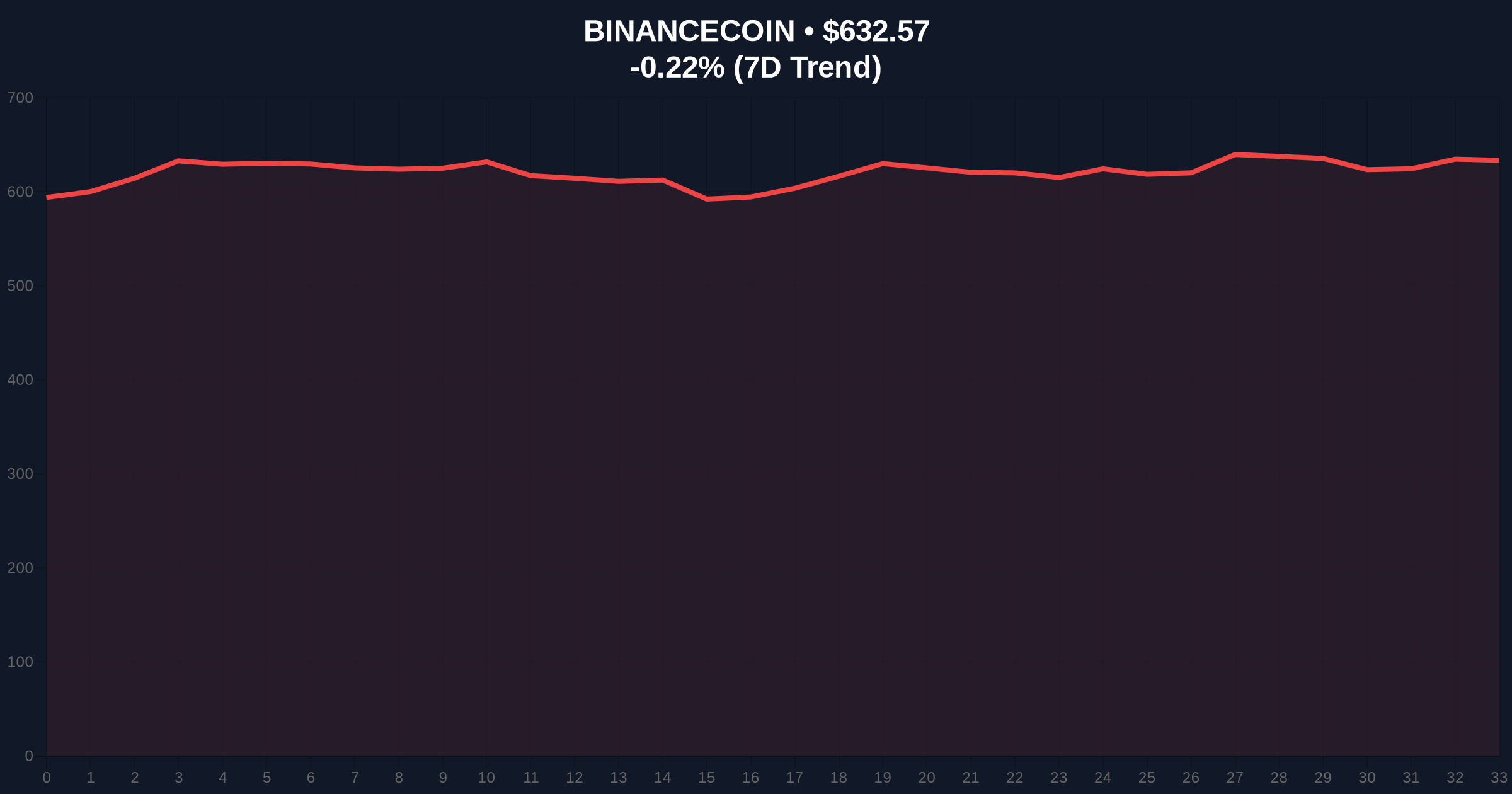
The market context for BSB's listing is heavily influenced by current crypto conditions. According to the provided data, global crypto sentiment is "Extreme Fear" with a score of 10/100, suggesting widespread investor caution that could dampen initial trading volumes or price appreciation for new tokens like BSB. This sentiment score, while not specific to BSB, indicates a risk-off environment where listings might face heightened scrutiny or volatility. In parallel, BNB—a key blockchain for BSB's issuance—shows a current price of $632.99 with a 24-hour trend of -0.16% and a market rank of #4. This slight decline in BNB's price, amid the fear sentiment, could imply broader market pressures that may affect BSB's performance, though direct correlation is not provided in the source data.
CryptoPanic metadata, including sentiment and importance scores, is not provided in the source data, limiting a nuanced analysis of event-specific market reactions. Without this, we rely on the general sentiment indicator, which suggests that the listing occurs during a period of low market confidence. The importance of BSB's listing relative to other events cannot be assessed due to missing metadata, but the involvement of major exchanges like Binance Alpha, Bybit, and Bitget implies a moderate to high significance in the DeFi and forex categories. However, the absence of trading volume data, historical price action for BSB, or comparative metrics with similar tokens leaves gaps in evaluating its potential impact. For context, recent market turmoil, such as $238M in crypto futures liquidations, highlights the volatility that new listings might encounter, though specific ties to BSB are not established in the source data.
Table: Market Data Snapshot| Metric | Value || Global Crypto Sentiment | Extreme Fear (Score: 10/100) || Asset (BNB) Price | $632.99 || BNB 24h Trend | -0.16% || BNB Market Rank | #4 || BSB Total Supply | 1 billion tokens || BSB Issuance Chains | Ethereum and BNB chains |
This data a cautious backdrop, where BSB's success may hinge on its ability to demonstrate utility beyond mere speculation, especially given the fear-driven sentiment.
The primary source for this report is CoinNess, which provides a detailed account of BSB's listing and Block Street's objectives. However, no secondary sources (e.g., CoinTelegraph) are provided in the input data, preventing a direct comparison or identification of contradictions. As a result, all claims rely solely on the CoinNess report, and there are no explicit source conflicts to analyze. Key details that remain unverified due to lack of corroborating evidence include the exact listing dates on Binance Alpha, Bybit, and Bitget; the specific trading pairs for BSB; the token distribution schedule; and the technical specifications of Block Street's hybrid liquidity engine and Aqua network.
Agreement points across sources are not applicable, as only one source is available. Missing evidence is prevalent: for instance, the report does not include statements from the exchanges confirming the listing, regulatory approvals for BSB, or independent audits of Block Street's technology. Additionally, Hedi Wang's claims about market fragmentation and Block Street's solutions are presented without external validation, raising questions about their accuracy or bias. The absence of CryptoPanic metadata further limits the ability to gauge market sentiment or importance objectively. In this context, the narrative is largely unchallenged but should be viewed with skepticism until further evidence emerges. Conflict remains unresolved with available evidence, as no opposing viewpoints or data discrepancies are presented in the source data.
Related developments that could contextualize this listing include South Korea's audit board reviewing crypto seizure practices, which may impact regulatory attitudes toward new tokens, though direct relevance to BSB is not specified. Without multiple sources, investors should consider the potential for incomplete or promotional reporting, especially given the "Extreme Fear" sentiment that might amplify skepticism.
Based on the available data, three scenarios for BSB's performance in the 7 days post-listing are outlined, each conditional on market factors and token utility.
Bull Scenario (Probability: Low to Moderate): BSB lists successfully on all three exchanges with strong initial trading volumes, driven by institutional interest in Block Street's liquidity solutions. The "Extreme Fear" sentiment begins to ease, possibly due to broader market recoveries or positive regulatory news, such as advancements from Binance's licensing efforts. BNB's price stabilizes or rises, supporting BSB's cross-chain functionality. In this case, BSB could see a price increase of 10-20% from its listing price, assuming utility-driven demand materializes. What would invalidate this view: if trading volumes remain low or if technical issues arise on the Ethereum or BNB chains.
Base Scenario (Probability: Moderate): BSB lists as planned but faces muted investor interest due to the "Extreme Fear" sentiment and lack of immediate use cases. Trading volumes are modest, with price action largely flat or slightly negative, mirroring BNB's -0.16% trend. The token gains gradual traction as Block Street onboards more assets to its Aqua network, but short-term volatility is limited. Price movement stays within ±5% of the listing price. What would invalidate this view: if unexpected regulatory hurdles emerge, similar to those discussed in South Korea's FSC meetings, or if market sentiment deteriorates further.
Bear Scenario (Probability: Moderate to High): The "Extreme Fear" sentiment intensifies, perhaps exacerbated by events like crypto futures liquidations, leading to a broad market sell-off. BSB's listing coincides with this downturn, resulting in low liquidity and a price drop of 10-15% or more. Investors prioritize safety over new DeFi tokens, and Block Street's value proposition fails to attract immediate adoption. BNB's price decline worsens, negatively impacting BSB's cross-chain appeal. What would invalidate this view: if Block Street announces partnerships or utility milestones that counteract market fears, but such data is not provided in the source data.
These scenarios hinge on external factors like sentiment shifts and exchange performance, with the base scenario being most aligned with current cautious indicators.
This report is based solely on the input data from CoinNess, with no secondary sources provided for comparison. As a result, conflicting evidence could not be assessed, and all claims are attributed to CoinNess. Missing evidence—such as CryptoPanic metadata, exchange confirmations, and technical audits—was explicitly noted, and analysis proceeded conservatively by highlighting uncertainties. The "Extreme Fear" sentiment and BNB market data were integrated to contextualize the listing, but direct correlations were avoided due to lack of specific ties. In weighting evidence, the single-source nature limits reliability, so scenarios were constructed with conditional probabilities and invalidation criteria to mitigate overconfidence. Investors should seek corroborating reports before making decisions.
Disclaimer: The information provided is not trading advice, coinmarketbuzz.com holds no liability for any investments made based on the information provided on this page. We strongly recommend independent research and/or consultation with a qualified professional before making any investment decisions.
coinmarketbuzz.com leverages advanced AI technology to analyze market data. All content is fact-checked and reviewed by our editorial team to ensure accuracy and neutrality.