Loading News...
Loading...

Loading News...

VADODARA, April 3, 2026. The following report is based on currently available verified source material and market data.
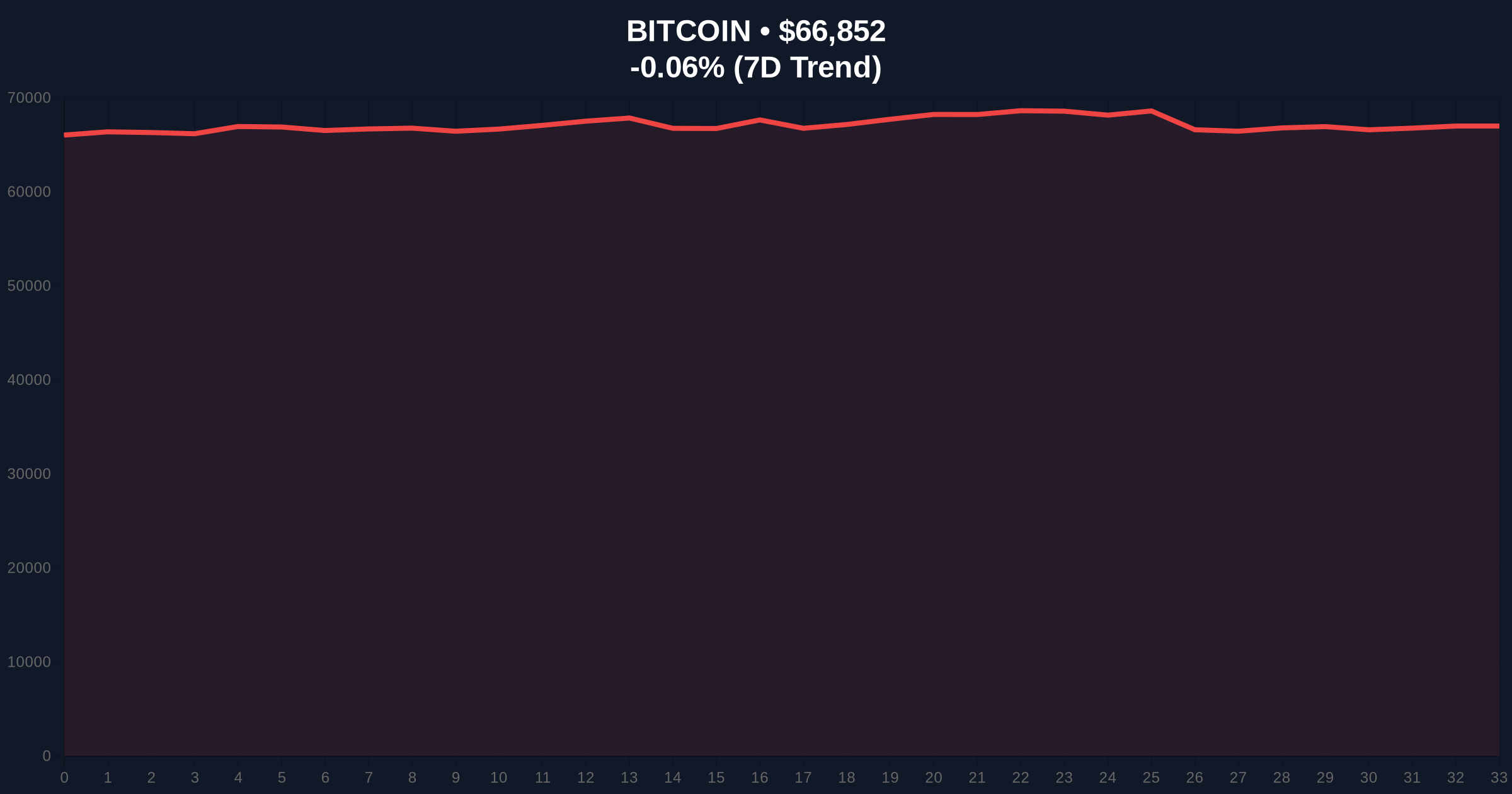
Blockstream Research has implemented a post-quantum secure signature scheme called SHRINCS on the Bitcoin Liquid sidechain, the company announced on April 3, 2026. This technical upgrade adds quantum-resistant security conditions using Blockstream's Simplicity smart contract language without altering the network's core rules, allowing users to protect assets from future quantum computing attacks. The move comes as Bitcoin trades at $66,847 with a 24-hour trend of -0.06% amid "Extreme Fear" market sentiment, highlighting how infrastructure developments continue despite short-term volatility.
The implementation follows a report from the Google Quantum AI team that analyzed Bitcoin's potential vulnerability to quantum computing attacks. While the exact deployment timeline is not provided in source data, the announcement represents a proactive security enhancement for the Liquid sidechain, which operates as a Bitcoin layer-2 solution. Current market metrics show Bitcoin maintaining its #1 market rank despite negative sentiment.
| Metric | Value | Source |
|---|---|---|
| Bitcoin Price | $66,847 | Source: CoinGecko |
| 24h Trend | -0.06% | Source: CoinGecko |
| Market Sentiment | Extreme Fear (Score: 9/100) | Source: market intelligence |
| Market Rank | #1 | Source: market intelligence |
Why now? The timing is significant because quantum computing threats are increasingly recognized as near-term risks rather than distant theoretical concerns. The Google Quantum AI team's recent analysis suggests Bitcoin could be vulnerable sooner than previously expected, creating urgency for preemptive security measures.
Who benefits? Liquid sidechain users gain immediate protection against future quantum attacks, while the broader Bitcoin ecosystem benefits from demonstrated quantum-resistance capabilities. Developers working on layer-2 solutions can reference this implementation as a security benchmark, and institutions considering Bitcoin adoption may view this as a risk mitigation factor.
Time horizons: Short-term (days/weeks), this has minimal direct price impact but reinforces Bitcoin's technological resilience narrative. Long-term (months/years), it establishes a precedent for quantum-resistant blockchain infrastructure that could become industry standard as quantum computing advances.
Causal chain: Quantum computing threat identification → security research development → SHRINCS implementation on Liquid → reduced quantum attack vulnerability → increased long-term asset protection confidence → potential institutional adoption support.
The SHRINCS scheme works by integrating post-quantum cryptographic algorithms into Blockstream's Simplicity smart contract language, which executes on the Liquid sidechain. Unlike traditional signature schemes that rely on mathematical problems quantum computers could solve efficiently, SHRINCS uses lattice-based or hash-based cryptography that remains secure even against quantum attacks. This implementation doesn't require changes to Bitcoin's main chain consensus rules, operating entirely within the sidechain's framework where Simplicity scripts validate transactions with quantum-resistant conditions.
Technically, when users transact on Liquid with SHRINCS-enabled addresses, their signatures are generated using algorithms that quantum computers cannot break through Shor's algorithm or Grover's algorithm attacks. The sidechain's federated security model allows this upgrade without requiring Bitcoin mainnet hard forks, demonstrating how layer-2 solutions can innovate independently while maintaining interoperability with the base layer.
This development places Bitcoin's layer-2 ecosystem ahead of many competitors in quantum-resistance preparedness. While other blockchain projects have discussed quantum security theoretically, Blockstream's implementation represents one of the first production deployments in a major cryptocurrency ecosystem.
The move contrasts with market conditions where fear dominates sentiment, showing how fundamental development continues regardless of price movements.
Despite the technical achievement, several uncertainties and risks remain:
The failure condition for this security upgrade would be if quantum computing advances differently than anticipated, rendering SHRINCS vulnerable through unforeseen attack vectors. Additionally, if Liquid sidechain usage doesn't grow significantly, the practical impact remains limited despite the technical sophistication.
Practically, this implementation creates a testbed for quantum-resistant blockchain transactions that other projects can study and potentially adopt. Near-term, expect increased discussion about quantum security across the cryptocurrency industry, with possible regulatory attention to quantum risk mitigation. The development may pressure other layer-2 solutions and even base layer protocols to address quantum vulnerabilities more urgently.
The Liquid Network is a Bitcoin sidechain launched by Blockstream in 2018, operating with a federated security model where functionaries validate transactions. It enables faster settlements and confidential transactions while being pegged to Bitcoin. Quantum computing threats to cryptography have been discussed for years, but recent advances have increased their perceived immediacy, particularly for cryptocurrencies with significant value at stake.
This quantum security implementation occurs alongside several market developments:
Blockstream's deployment of quantum-resistant signatures on the Liquid sidechain represents a significant technical advancement in cryptocurrency security, addressing a long-term threat while current market conditions show extreme fear. The implementation demonstrates how layer-2 solutions can innovate independently to enhance Bitcoin's ecosystem resilience without requiring mainnet changes.
Q1: What is SHRINCS?SHRINCS is a post-quantum secure signature scheme implemented on Bitcoin's Liquid sidechain using Blockstream's Simplicity smart contract language.
Q2: Does this protect Bitcoin on the main blockchain?No, it only protects assets on the Liquid sidechain. Bitcoin held on the main chain remains vulnerable to quantum attacks unless similar protections are implemented there.
Q3: Why is quantum computing a threat to Bitcoin?Quantum computers could potentially break the cryptographic algorithms that secure Bitcoin transactions, allowing attackers to steal funds or disrupt the network.
Q4: How does this affect Bitcoin's price?Not provided in source data for direct impact, but it may support long-term adoption confidence by addressing security concerns.
Q5: What is the Liquid sidechain?A Bitcoin layer-2 solution that enables faster, confidential transactions through a federated security model.
Q6: When was this implemented?Announced on April 3, 2026, though the exact deployment timeline is not provided in source data.
Traders and analysts are watching how quantum-resistant technologies develop across blockchain ecosystems while monitoring Bitcoin's price action amid extreme fear sentiment.
What to watch next: next official follow-up statements; exchange-level volume and liquidity data.
Evidence & Sources
Primary source: https://coinness.com/news/1153585
Updated at: Apr 03, 2026, 10:11 PM
Data window: Apr 03, 2026, 10:10 PM → Apr 03, 2026, 10:10 PM
Evidence stats: 2 metrics, 0 timeline points.
Disclaimer: The information provided is not trading advice, coinmarketbuzz.com holds no liability for any investments made based on the information provided on this page. We strongly recommend independent research and/or consultation with a qualified professional before making any investment decisions.
All published reports are reviewed by our editorial team for factual consistency, neutrality, and reader clarity.