Loading News...
Loading...

Loading News...

VADODARA, April 4, 2026. The following report is based on currently available verified source material and market data.
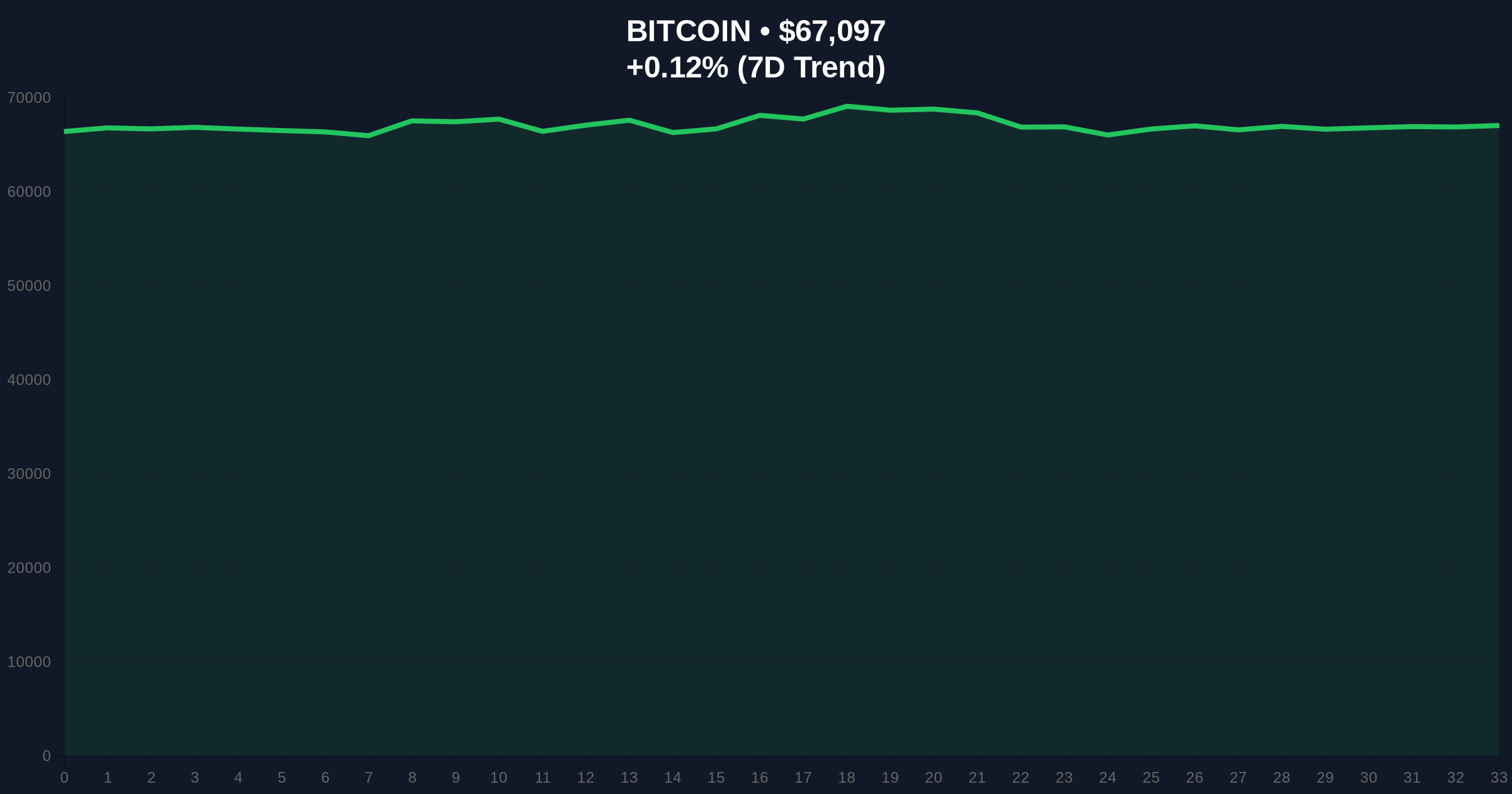
On April 4, 2026, analyst Scott Melker argued that Bitcoin's current 50% drawdown from its $126K all-time high is not a bear market but a bull market correction, citing a broken four-year cycle and multiple bottoming signals. This perspective challenges traditional bear market expectations of 85-90% crashes and matters because it suggests a potential near-term recovery rather than prolonged decline, impacting investor sentiment currently at "Extreme Fear" with a score of 11/100.
Key metrics from the analysis include Bitcoin's all-time high of $126K in October 2025, a current price of $67,080 with a 24-hour trend of 0.10%, and a drawdown of approximately 50% from the peak. Melker compares this to summer 2021's 55% drop from $65K to $28K, suggesting a similar pattern. Additional signals include weekly RSI at historic lows, the Fear & Greed Index at its lowest reading ever, "Bitcoin going to zero" Google searches at an all-time high, and Bitcoin approaching the 200-week moving average. Source: public statement, Source: CoinGecko.
| Metric | Value | Source |
|---|---|---|
| Bitcoin All-Time High | $126K | Public statement |
| Current Price | $67,080 | CoinGecko |
| Drawdown from ATH | ~50% | Public statement |
| Fear & Greed Index | 11/100 (Extreme Fear) | CoinGecko |
Why now? The significance lies in Bitcoin's deviation from historical cycles, it hit its all-time high early driven by ETF flows without a blowoff top or altcoin season, breaking the typical 4-year pattern. Who benefits? Long-term investors and dollar-cost averagers stand to gain if this is a correction, while traders expecting a deep bear market may face losses. Time horizons: Short-term, the market could see volatility as signals flash; long-term, if the cycle is broken, traditional models may need revision. Causal chain: ETF-driven early ATH → no proportional upside → limited downside risk → current dip as correction rather than bear market → potential recovery based on historical parallels.
The mechanism hinges on market structure shifts: ETF inflows accelerated Bitcoin's price rise prematurely, preventing the typical bull market euphoria and altcoin season. Consequently, the absence of a blowoff top means selling pressure is less extreme, as gains were not as inflated. Underlying this trend, on-chain metrics like 44% of Bitcoin's supply held at a loss indicate capitulation, which historically precedes bottoms. The 200-week moving average acts as a support level, with breaches in past cycles marking accumulation zones.
Melker notes that altcoins face distinct challenges due to prediction markets siphoning liquidity, suggesting Bitcoin's recovery may not translate to broader crypto gains. This contrasts with developments in other sectors:
The bearish scenario includes potential external shocks, such as geopolitical tensions like the Iran war, which could exacerbate market fragility. Uncertainties persist: data on ETF flow sustainability and retail sentiment shifts are not provided in source data. Failure conditions: if Bitcoin breaks below the 200-week moving average significantly or if fear metrics worsen further, the correction narrative could collapse.
Practically, investors may automate buying strategies as Melker suggests, focusing on dollar-cost averaging in the $60K range. Market structure could evolve with increased institutional influence from ETFs, potentially reducing retail-driven volatility. Regulatory developments, like the GENIUS Act and CLARITY Act, may further shape liquidity and stability.
Historically, Bitcoin cycles involved 3-4x gains from previous all-time highs followed by 85-90% crashes, but the 2025 cycle peaked early at 2x, driven by ETF adoption. This structural shift challenges traditional technical analysis and investor psychology, making current signals like RSI lows and fear indices critical for reassessment.
Cross-market reactions include altcoins underperforming due to prediction market competition, as noted by Melker. In related sectors, BNB's price predictions link to new crypto assets like Pepeto, showing diversification in investor focus. Not provided in source data for specific timing of these events.
Melker's analysis presents a contrarian view that Bitcoin's 50% dip is a bull market correction, supported by broken cycle dynamics and multiple bottom signals. However, risks from external factors and altcoin liquidity shifts warrant caution, emphasizing the need for data-driven strategies over emotional reactions.
Evidence & Sources
Primary source: https://coinpedia.org/news/bitcoin-isnt-in-a-bear-market-but-in-a-50-bull-market-dip
Updated at: Apr 04, 2026, 02:29 PM
Data window: Apr 04, 2026, 01:49 PM → Apr 04, 2026, 02:13 PM
Evidence stats: 9 metrics, 1 timeline points.
Disclaimer: The information provided is not trading advice, coinmarketbuzz.com holds no liability for any investments made based on the information provided on this page. We strongly recommend independent research and/or consultation with a qualified professional before making any investment decisions.
All published reports are reviewed by our editorial team for factual consistency, neutrality, and reader clarity.