Loading News...
Loading...

Loading News...

VADODARA, April 1, 2026. The following report is based on currently available verified source material and market data.
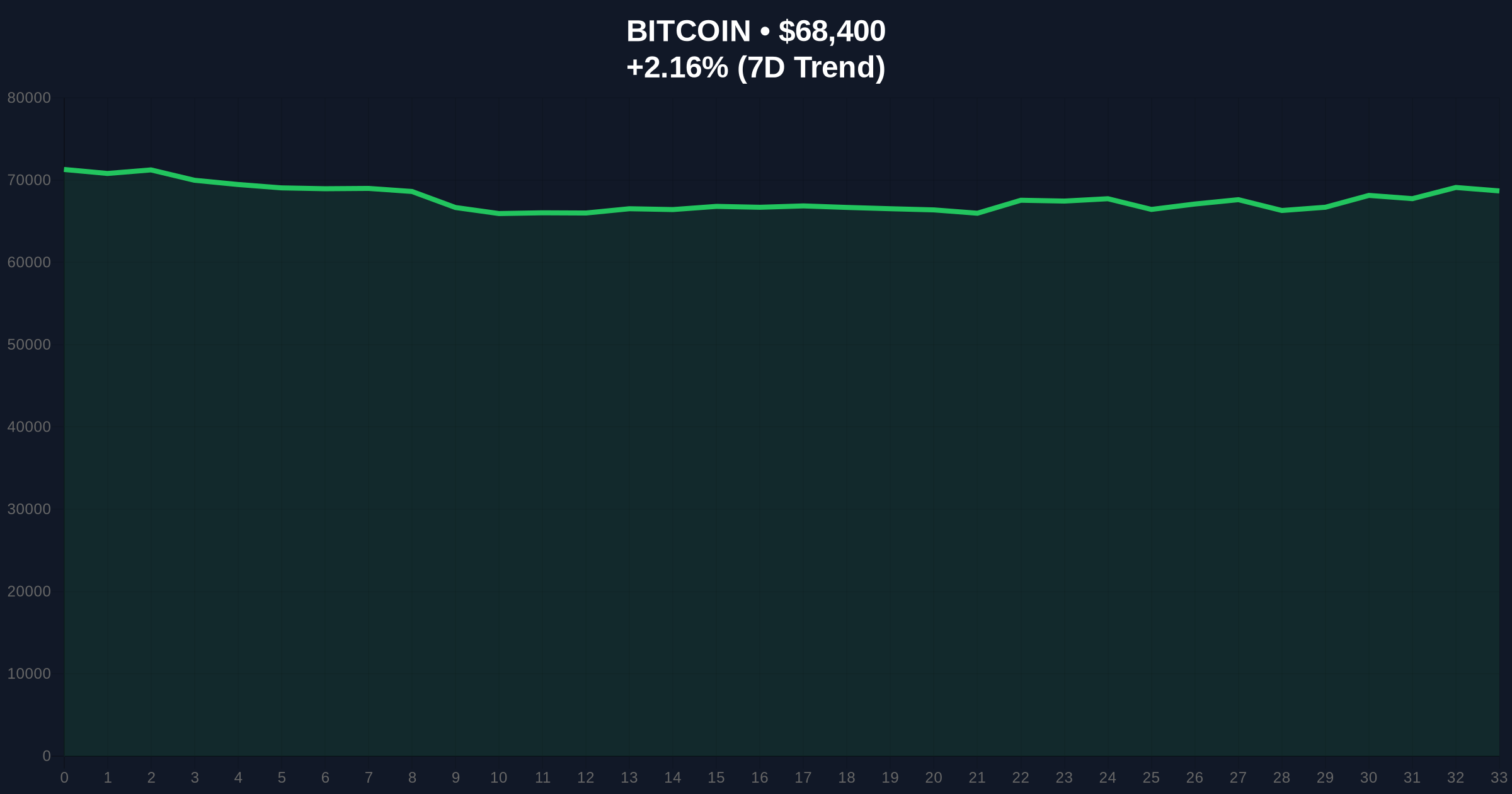
Bitcoin Retests $70K Historical Peak, Signaling End of Parabolic Era as Market Matures developed into a market-moving story within the reported window. The initial source indicates immediate relevance for crypto sentiment, while fuller validation is still tied to cited datasets and official statements.
Bitcoin is trading near $70,000, revisiting its previous bull cycle peak from the 2019, 2022 market cycle, a pattern break that suggests the era of runaway parabolic gains could be over. Published on April 1, 2026, by Omkar Godbole and edited by Sam Reynolds, this analysis indicates Bitcoin’s current bear market has pulled prices back to old highs, signaling slower growth and a maturing market. The retrace to prior peaks, unusual in earlier cycles, reflects the law of diminishing returns as higher prices demand more capital for upward moves, with institutionalization and broader market participation tempering extreme swings. This shift matters now as traders anchor to the $70,000 level to gauge whether the bear phase is ending, impacting market structure and investor expectations globally.
Bitcoin’s price action shows a significant retrace to historical levels, with key metrics highlighting the market’s current state. The data indicates a break from past patterns where old peaks were rarely retested.
| Metric | Value | Source |
|---|---|---|
| Current Price | $68,370 | Source: CoinGecko |
| 24-Hour Trend | +2.12% | Source: CoinGecko |
| Previous Bull Cycle Peak (2019, 2022) | $70,000 | Source: public statement |
| Recent Bull Run Peak (2023, 2025) | $126,000 | Source: public statement |
| Global Crypto Sentiment | Extreme Fear (Score: 8/100) | Source: CoinGecko |
Bitcoin has been hovering around $70,000 since early February 2026, well below the $126,000 peak of the 2023-2025 bull run. In earlier bear markets, such as 2014 and 2018, Bitcoin never returned to prior cycle highs, with the exception of 2022 when prices dipped under the 2017 high of $20,000. The current retrace is notable for occurring without extreme catalysts, as part of the natural ebb of a bear cycle.
This development is significant due to four key factors that reshape Bitcoin’s market dynamics.
Why now? The retrace to $70,000 occurs amid a maturing market with increased institutional participation and derivatives trading, which has tempered volatility. This contextual shift makes the pattern break more pronounced as Bitcoin’s growth slows, reflecting the law of diminishing returns where higher prices require larger capital inflows for gains.
Who benefits? Traders and institutional investors may benefit from more predictable price movements, reducing extreme swings. Retail investors accustomed to parabolic rallies could face lower returns, while market analysts gain clearer support/resistance levels for technical analysis.
Time horizons: Short-term (days/weeks), the $70,000 level acts as a key support, with a bounce potentially signaling the bear market’s end. Long-term (months/years), Bitcoin may experience more measured, “tradfi-like” uptrends rather than frenzied rallies, impacting investment strategies.
Causal chain: The mechanism links slowing growth (diminishing returns) to increased market maturity (institutionalization) → reduced parabolic gains → retrace to old peaks → anchoring bias at $70,000 → potential support for next uptrend. This chain explains how the event leads to a structural market change.
The underlying mechanics involve market structure and behavioral economics. Bitcoin’s price retrace to old peaks works through the law of diminishing returns: as Bitcoin becomes more expensive, moving prices higher requires ever-larger sums of capital, making parabolic rallies less frequent. This is compounded by institutionalization and derivatives growth, which provide structured ways to bet on volatility, not just price increases, tempering extreme swings.
Behaviorally, anchoring bias plays a key role, traders fixate on previous highs like $70,000 as reference points, leading to buying when prices return to these levels. This creates self-reinforcing support/resistance, stalling the downtrend. The absence of extreme catalysts in this retrace indicates a natural market ebb, unlike past anomalies blamed on scams or deleveraging.
Bitcoin’s maturing pattern contrasts with adjacent developments in crypto, highlighting broader market trends.
Practically, near-term implications include traders watching the $70,000 level for bounce signals, similar to late 2022 when the downtrend ended around $20,000. If support holds, the next uptrend may be more measured, with reduced volatility benefiting long-term investors. Market participants should adjust strategies for slower growth, focusing on fundamentals over speculation.
Historically, Bitcoin’s price seldom retraced to previous bull-market peaks, even during bear markets. The 2014 and 2018 cycles saw no return to prior highs, with 2022 as an exception dismissed as an anomaly. This structural framing highlights how the current retrace marks a departure, indicating market maturation since its inception.
Cross-market reactions include increased institutional activity, such as Franklin Templeton’s crypto division launch, which supports the narrative of broader participation tempering swings. Regulatory delays, like Hong Kong’s stablecoin plan, add external pressures but don’t directly drive Bitcoin’s retrace, emphasizing internal market dynamics.
Bitcoin’s retrace to $70,000 signals a potential end to parabolic eras, driven by diminishing returns and market maturation. While risks persist, the pattern break offers a clearer framework for support/resistance, reshaping investor expectations in a more institutionalized.
Q1: Why is Bitcoin retracing to old peaks now?Due to the law of diminishing returns and increased market maturity, with institutional participation reducing extreme volatility, making retraces more natural.
Q2: What does the $70,000 level indicate?It acts as a key support due to anchoring bias, with a bounce potentially signaling the bear market’s end, similar to past cycles.
Q3: How does this affect future price gains?Gains may be more measured and “tradfi-like,” requiring larger capital for upward moves, reducing parabolic rallies.
Q4: What are the risks to this analysis?Support breaks could lead to deeper drops, and unforeseen speculative frenzies might renew parabolic gains, challenging the maturing market narrative.
Q5: How does this compare to past bear markets?Unlike 2014 and 2018, Bitcoin is retesting prior highs without extreme catalysts, indicating a structural shift.
Q6: What should traders watch next?The $70,000 level for bounce or breakdown signals, alongside institutional flows and regulatory developments impacting market stability.
Traders and analysts are closely monitoring the $70,000 support level for signs of a bounce or further decline, as it may determine whether Bitcoin’s bear market has run its course or if deeper retracements lie ahead.
Evidence & Sources
Primary source: https://www.coindesk.com/markets/2026/04/01/bitcoin-s-old-peaks-aren-t-untouchable-anymore-and-the-days-of-parabolic-rallies-could-be-over
Updated at: Apr 02, 2026, 01:08 AM
Data window: Apr 01, 2026, 11:32 AM → Apr 01, 2026, 04:48 PM
Evidence stats: 9 metrics, 4 timeline points.
Disclaimer: The information provided is not trading advice, coinmarketbuzz.com holds no liability for any investments made based on the information provided on this page. We strongly recommend independent research and/or consultation with a qualified professional before making any investment decisions.
All published reports are reviewed by our editorial team for factual consistency, neutrality, and reader clarity.