Loading News...
Loading...

Loading News...

VADODARA, April 17, 2026. The following report is based on currently available verified source material and market data.
Bitcoin Options Worth $1.6 Billion Expire Today: Market Mechanics and Skeptical Analysis developed into a market-moving story within the reported window. The initial source indicates immediate relevance for crypto sentiment, while fuller validation is still tied to cited datasets and official statements.
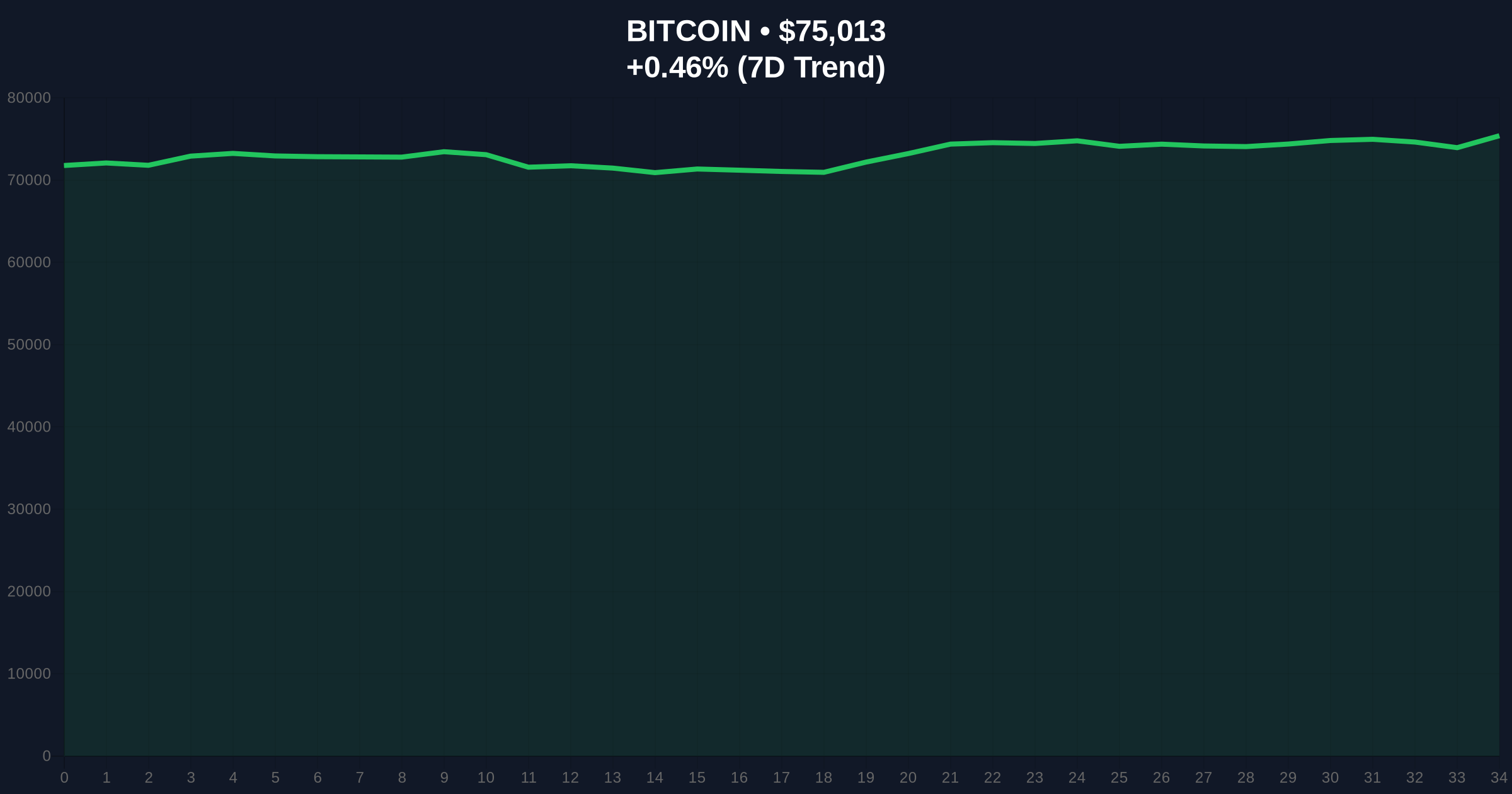
On April 17, 2026, Bitcoin options valued at $1.67 billion are set to expire at 8:00 a.m. UTC, according to data from crypto options exchange Deribit. Simultaneously, $460 million in Ethereum options will expire. This event matters because large-scale options expirations can trigger significant volatility as market makers adjust their hedging positions, potentially impacting Bitcoin's price, which currently sits at $75,023 amid "Extreme Fear" sentiment in the broader crypto market.
The data reveals critical metrics for today's expiration. For Bitcoin, the put/call ratio is 1.03, indicating a slight bias toward puts (bearish bets), with a max pain price of $71,500, the price at which the largest number of options would expire worthless. For Ethereum, the put/call ratio is 0.94, leaning toward calls (bullish bets), with a max pain price of $2,250. Current market conditions show Bitcoin trading at $75,023, up 0.47% in the last 24 hours, while global crypto sentiment is in "Extreme Fear" with a score of 21/100. Source: exchange data, public statement, CoinGecko.
| Asset | Options Value | Put/Call Ratio | Max Pain Price | Current Price |
|---|---|---|---|---|
| Bitcoin (BTC) | $1.67 billion | 1.03 | $71,500 | $75,023 |
| Ethereum (ETH) | $460 million | 0.94 | $2,250 | Not provided in source data. |
Why now? This expiration occurs during a period of "Extreme Fear" sentiment, which could amplify market reactions as traders are already on edge. Who benefits? Market makers and sophisticated traders may profit from volatility spikes, while retail investors could face increased risk due to potential price swings. Time horizons: In the short term (days), expect heightened volatility around the expiration time; longer-term (weeks), the impact may fade unless it triggers broader market shifts. Causal chain: Options expiration → market makers unwind hedges → increased buying or selling pressure → price volatility → potential cascading effects on sentiment and liquidity.
How does this work internally? Options expirations mechanically involve market makers who hedge their positions by holding underlying assets like Bitcoin. As options near expiry, they adjust these hedges, buying or selling Bitcoin to neutralize risk. For Bitcoin with a put/call ratio of 1.03, there's a slight skew toward puts, meaning if Bitcoin's price is above the max pain of $71,500, many puts expire worthless, potentially reducing selling pressure as hedges are unwound. Conversely, if price dips below, puts may be exercised, increasing selling pressure. This dynamic creates a tug-of-war that can lead to volatility, especially in thin liquidity conditions.
The bearish scenario questions the narrative's impact. What could invalidate the bullish view? If Bitcoin's price remains stable despite expiration, it may indicate strong underlying support or that hedging was already adjusted, reducing volatility. Uncertainty exists due to missing data: for example, open interest details or trader positioning are not provided, making it hard to gauge exact market impact. The failure condition would be if external factors, like macroeconomic news, overshadow options effects, breaking the assumed mechanism. Key risks include:
Practically, near-term implications involve traders monitoring price action around $71,500 for Bitcoin and $2,250 for Ethereum, as deviations could signal momentum shifts. Market makers may increase liquidity provision to manage volatility, potentially stabilizing prices post-expiration. However, if volatility spikes, it could trigger stop-loss orders, exacerbating moves. Investors should watch for follow-on effects in derivatives markets, such as changes in futures basis or options skew.
Options expirations are routine in crypto markets, but their significance has grown with increased institutional participation. Historically, large expirations have sometimes correlated with price swings, though causality is often debated. The put/call ratio and max pain price are standard metrics used to gauge market sentiment and potential pressure points, derived from options pricing models.
Cross-market reactions include recent news that may contextualize this event. For example, Charles Schwab's launch of Bitcoin and Ethereum trading to 46 million accounts could influence retail participation amid volatility. Additionally, HIVE's $75 million raise for AI infrastructure amid a Bitcoin miner pivot highlights shifting industry dynamics that might affect long-term market structure. These developments suggest a maturing ecosystem but also introduce new variables into price discovery.
Key takeaways: Today's Bitcoin and Ethereum options expirations represent a significant market event with potential for volatility, driven by hedging adjustments and sentiment in an "Extreme Fear" environment. While metrics like max pain price offer clues, skepticism is warranted due to data limitations and the complex interplay of factors. Traders should approach with caution, recognizing both opportunities and risks in the short term.
What to watch next: Bitcoin options worth $1.6B to expire today According to data from crypto options exchange Deribit, Bitcoin options valued at $1.67 billion are set to expire at 8:00 a.m.; UTC today..
Evidence & Sources
Primary source: https://coinness.com/news/1154773
Updated at: Apr 17, 2026, 02:13 AM
Data window: Apr 17, 2026, 02:08 AM → Apr 17, 2026, 02:09 AM
Evidence stats: 7 metrics, 2 timeline points.
Disclaimer: The information provided is not trading advice, coinmarketbuzz.com holds no liability for any investments made based on the information provided on this page. We strongly recommend independent research and/or consultation with a qualified professional before making any investment decisions.
All published reports are reviewed by our editorial team for factual consistency, neutrality, and reader clarity.