Loading News...
Loading...

Loading News...

VADODARA, April 7, 2026. The following report is based on currently available verified source material and market data.
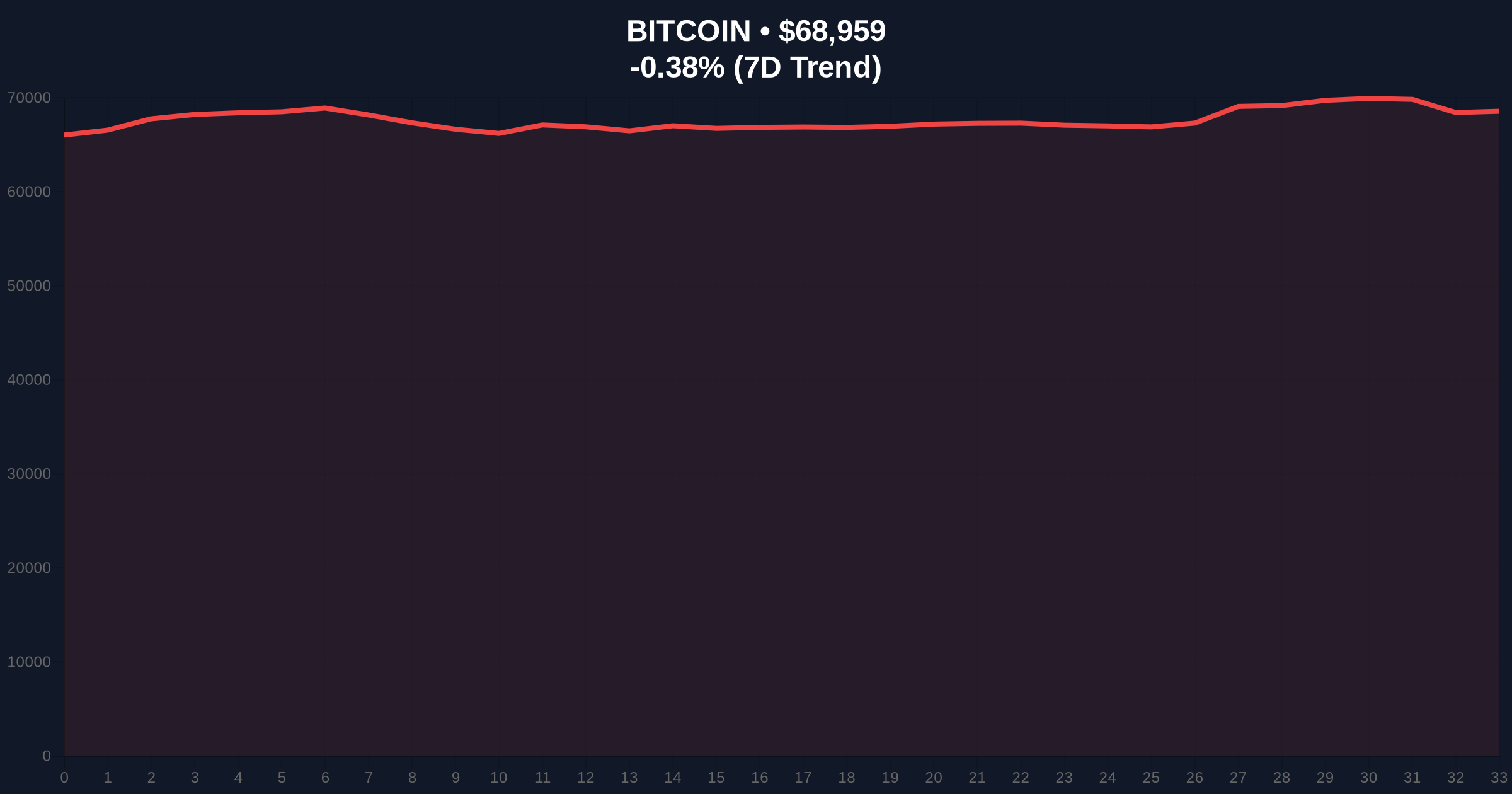
Bitcoin ETF Inflows Surge to $471M, Highest Since February, as Price Stalls Below $70K developed into a market-moving story within the reported window. The initial source indicates immediate relevance for crypto sentiment, while fuller validation is still tied to cited datasets and official statements.
On April 6, 2026, U.S. spot Bitcoin ETFs recorded $471 million in net inflows, marking the strongest daily intake in over a month and the sixth-largest of the year. This surge occurred as Bitcoin's price hovered around $68,780, struggling to break the $70,000 resistance level. The event matters because it highlights a potential shift in Bitcoin's market dynamics, where institutional ETF flows are increasingly offsetting weak spot demand from large holders, effectively anchoring the price. Current market impact shows Bitcoin trading at $68,946 with a 24-hour decline of 0.40%, amid a global crypto sentiment of "Extreme Fear" (score: 11/100).
The data reveals a significant inflow event with specific metrics grounding the narrative. According to SoSoValue data, U.S. spot Bitcoin ETFs pulled in $471 million on April 6, 2026, the largest daily inflow since February 25 and the sixth-biggest in 2026. This figure, however, remains below January's peak regime, where multiple days topped $700 million. Bitcoin's price was $68,780 at the time of the inflow, with a current price of $68,946 and a 24-hour trend of -0.40%. Macro context adds depth: markets price a 98% probability that the Federal Reserve will hold rates steady at its April meeting, according to Polymarket data.
| Metric | Value | Source |
|---|---|---|
| ETF Inflow (April 6) | $471 million | Source: public statement |
| Bitcoin Price (Current) | $68,946 | Source: CoinGecko |
| 24-Hour Trend | -0.40% | Source: CoinGecko |
| Fed Hold Probability | 98% | Source: regulatory filing |
This event is significant now because Bitcoin has been stalling below $70,000 for weeks, with weak spot buying and distribution by large holders capping upside momentum. The timing coincides with a macro environment of limited Fed movement expectations, making ETF flows a critical price anchor. Who benefits? Institutional investors and ETF issuers gain from increased liquidity and demand, while retail traders may face reduced volatility but limited breakout potential. Large holders (whales) could be distributing at resistance, using ETF inflows as exit liquidity. Time horizons split: short-term, ETFs provide marginal buying pressure to prevent deeper declines; longer-term, if the shift to a leading indicator holds, Bitcoin could decouple from traditional macro lags. The causal chain is: ETF inflows → absorb selling pressure from whales → provide marginal buying support → anchor price below resistance → delay breakout until spot demand strengthens.
The mechanism involves a liquidity and price discovery shift. Historically, Bitcoin's price was driven by retail and whale spot trading, often reacting to macro events with a lag. With ETF approval, institutional flows now set the marginal price. Here's how it works: ETFs purchase Bitcoin in bulk to back shares, creating consistent demand that offsets spot market selling. When whales distribute (sell) into resistance, ETFs absorb that supply, preventing a price crash but also capping upside by meeting buy orders before momentum builds. This creates a feedback loop: high inflows signal institutional confidence, but if spot demand remains weak, price gets trapped in a range. The Binance Research report notes Bitcoin's correlation with its Global Easing Breadth Index turned sharply negative since 2024, suggesting ETFs front-run policy moves rather than react, changing the timing of demand.
Compared to other crypto assets, Bitcoin's ETF-driven dynamics contrast with altcoins lacking institutional products. For example, XRP recently failed a breakout above $1.35 due to thinning liquidity and seller control, highlighting how assets without ETF support are more vulnerable to spot market whims. In regulation, the SEC is nearing clarity on crypto fundraising, which could impact ETF expansions. Broader trends include:
The bullish narrative hinges on ETFs sustaining inflows, but several risks could invalidate it. First, if ETF demand wanes, due to regulatory changes or investor fatigue, the price anchor could fail, leading to a sharp decline as spot selling overwhelms. Second, the shift to a leading indicator is theoretical; if macro conditions shift unexpectedly (e.g., Fed hikes), Bitcoin might revert to lagging, causing mispricing. Third, high inflows amid price stagnation suggest distribution, not accumulation, potentially masking underlying weakness. Key uncertainties include:
Practically, near-term implications include continued range-bound trading around $70,000 unless spot demand recovers. Traders should watch ETF flow consistency and whale on-chain movements for breakout signals. If Binance Research's thesis holds, Bitcoin could increasingly act as a forward-looking asset, pricing in central bank pivots ahead of traditional markets, potentially reducing correlation with stocks and bonds. This might attract more institutional capital but also increase volatility during policy surprises.
Bitcoin ETFs were approved in the U.S. in 2024, transforming market structure by introducing daily institutional flows. Historically, Bitcoin followed global easing cycles with a lag, but post-ETF, correlations have shifted, with institutional investors positioning ahead of expected moves. This structural change underpins the current dynamics of price anchoring and flow dominance.
Cross-market reactions include XRP's failed breakout due to liquidity issues, contrasting Bitcoin's ETF support. In prediction markets, Polymarket's data on Fed probabilities informs macro assumptions. Regulatory updates, such as SEC Chair Atkins' comments on crypto fundraising, could impact ETF growth. Geopolitical uncertainty, like reports on Iranian leadership, adds macro risk layers.
The $471 million ETF inflow highlights Bitcoin's evolving market mechanics, where institutional demand offsets spot weakness, creating price stability but limiting upside. While this suggests a shift toward leading macro indicators, risks around flow sustainability and external factors remain critical for traders to monitor.
Q1: What caused the ETF inflow surge?A1: The exact trigger is not provided in source data, but it coincides with Bitcoin stalling below $70,000 and macro calm, possibly attracting institutional buying.
Q2: How do ETFs anchor Bitcoin's price?A2: ETFs provide consistent marginal buying that absorbs selling pressure from large holders, preventing crashes but also capping breakouts by meeting resistance buy orders.
Q3: Why is Bitcoin not breaking $70,000 despite high inflows?A3: Weak spot demand and distribution by whales offset ETF buying, creating a balance that traps price below resistance.
Q4: What is the significance of the Binance Research report?A4: It suggests Bitcoin has shifted from lagging to leading global monetary policy since ETF approval, with institutional flows front-running central bank moves.
Q5: What are the risks to this narrative?A5: Key risks include ETF flow declines, macro surprises, and increased spot selling overwhelming institutional support.
Q6: What should traders watch next?A6: Monitor daily ETF flow data, whale on-chain movements, and macro indicators like Fed decisions for breakout or breakdown signals.
Traders and analysts are closely watching whether ETF inflows can sustain amid "Extreme Fear" sentiment and if spot demand recovers to catalyze a breakout above $70,000.
Evidence & Sources
Primary source: https://www.coindesk.com/markets/2026/04/07/bitcoin-etf-inflows-hit-highest-level-since-february
Updated at: Apr 07, 2026, 11:06 AM
Data window: Apr 07, 2026, 07:56 AM → Apr 07, 2026, 11:05 AM
Evidence stats: 9 metrics, 2 timeline points.
Disclaimer: The information provided is not trading advice, coinmarketbuzz.com holds no liability for any investments made based on the information provided on this page. We strongly recommend independent research and/or consultation with a qualified professional before making any investment decisions.
All published reports are reviewed by our editorial team for factual consistency, neutrality, and reader clarity.