Loading News...
Loading...

Loading News...

VADODARA, April 7, 2026. The following report is based on currently available verified source material and market data.
Bitcoin ETF Inflows Hit $471M, Highest Since Late February, Amid Market Volatility developed into a market-moving story within the reported window. The initial source indicates immediate relevance for crypto sentiment, while fuller validation is still tied to cited datasets and official statements.
On April 7, 2026, U.S. spot Bitcoin ETFs recorded $471 million in daily inflows, marking the strongest single-day inflow since February 25. This surge occurred as Bitcoin's price briefly approached $70,000 before retreating below $69,000, highlighting a divergence between institutional capital flows and short-term price action amid a market sentiment of "Extreme Fear." The event signals renewed institutional interest despite ongoing geopolitical pressures and concerns over Bitcoin's quantum resistance, potentially setting the stage for a shift in market dynamics.
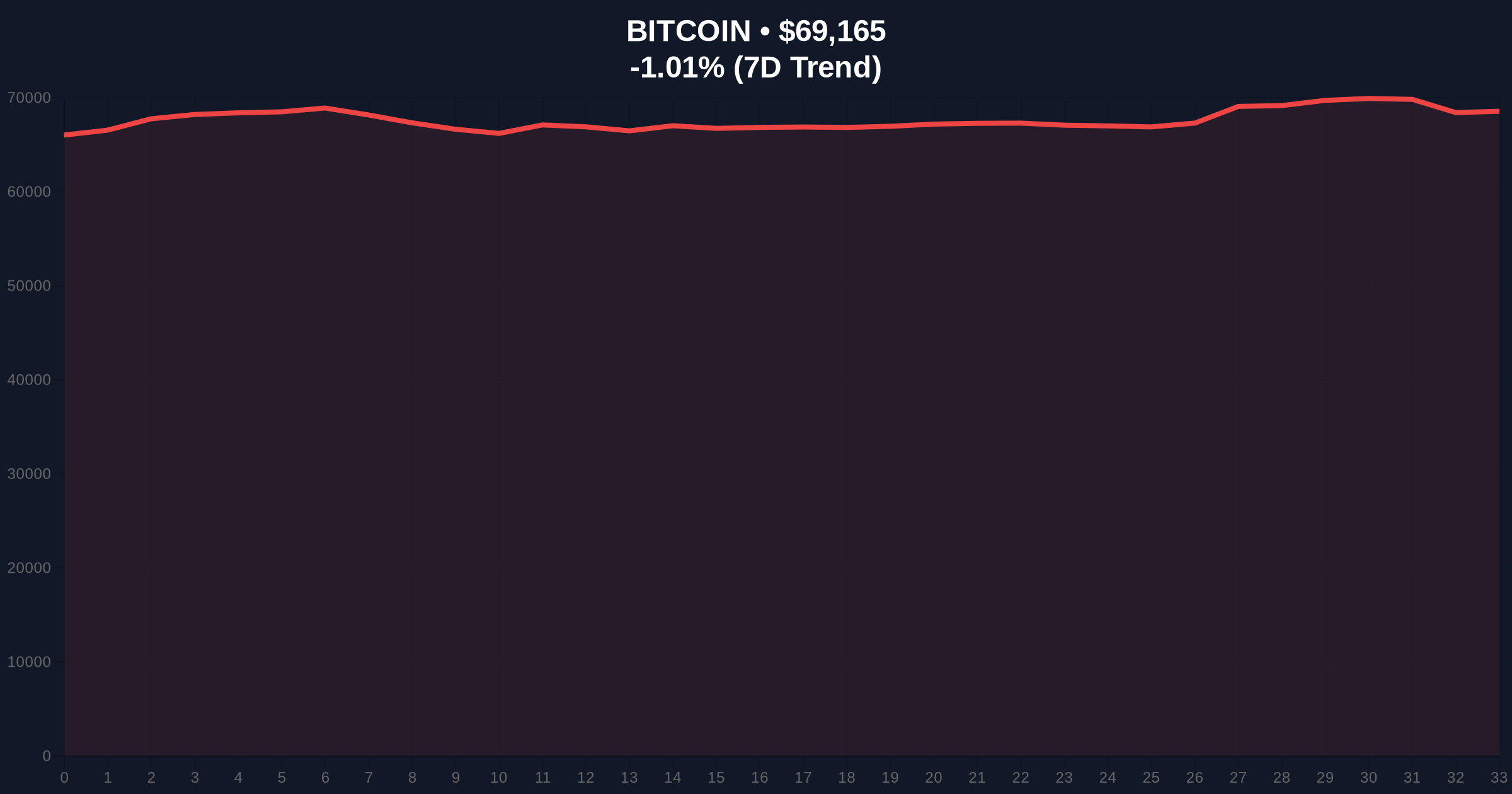
The $471 million inflow represents the largest daily figure in weeks, with BlackRock's iShares Bitcoin Trust ETF (IBIT) leading at $182 million, followed by Fidelity's FBTC at $147 million and ARK 21Shares Bitcoin ETF (ARKB) at nearly $119 million. This inflow brought total net inflows for April's first three trading sessions to approximately $307 million, pushing assets under management (AUM) back above $90 billion. In contrast, Bitcoin's price showed volatility, briefly touching $70,000 before settling at $69,151 with a 24-hour decline of 1.03%, according to CoinGecko data. The Crypto Fear & Greed Index remained at 13, indicating "Extreme Fear" sentiment.
| Metric | Value | Source |
|---|---|---|
| Daily Bitcoin ETF Inflow | $471 million | Source: public statement |
| Bitcoin Price (Current) | $69,151 | Source: CoinGecko |
| 24-Hour Price Trend | -1.03% | Source: CoinGecko |
| Fear & Greed Index | 13 (Extreme Fear) | Source: public statement |
| Top ETF Inflow (IBIT) | $182 million | Source: public statement |
Why now? This inflow surge comes after a period of muted activity, with March marking the first monthly gain ($1.3 billion) following outflows in January and February. The timing is significant as it coincides with Bitcoin's price testing key resistance levels near $70,000, suggesting institutional accumulation may be providing underlying support despite retail fear.
Who benefits? Institutional investors and ETF issuers like BlackRock and Fidelity gain from increased AUM and fee revenue. Traders may benefit from reduced selling pressure, while retail investors face mixed signals due to the sentiment disconnect.
Time horizons: Short-term, inflows could stabilize prices by absorbing sell-side liquidity. Long-term, sustained inflows may reinforce Bitcoin's legitimacy as an institutional asset, though regulatory and macroeconomic risks persist.
Causal chain: Large ETF inflows → direct Bitcoin purchases by issuers → decreased available supply on exchanges → reduced selling pressure → potential price support → possible retail FOMO if sentiment shifts.
ETF inflows mechanically work through issuers purchasing Bitcoin to back new shares, creating direct buy-side pressure. When inflows hit $471 million, issuers like BlackRock and Fidelity must acquire equivalent Bitcoin, often from spot markets or OTC desks. This process drains liquidity from exchanges, making it harder for large sell orders to execute without impacting price. The recent data shows ARKB's $119 million inflow was its largest since July 2025, indicating renewed confidence from specific issuers. Concurrently, ETF outflows slowed to just $16.6 million last week, per Arkham data, reducing net selling pressure and allowing inflows to dominate.
While Bitcoin ETFs saw robust inflows, other crypto ETF segments showed varied activity:
This divergence highlights Bitcoin's dominance in institutional portfolios, with Ethereum showing tentative recovery while altcoins lag. The broader context includes regulatory developments, such as discussions around a "Gensler 2.0" crypto bill, which could impact ETF approvals and market sentiment.
Despite the bullish inflow data, several risks could invalidate the positive narrative:
Uncertainty remains around whether inflows will sustain, and missing data includes detailed on-chain metrics like whale accumulation patterns, which could provide deeper validation.
Practically, traders should monitor whether inflows persist through April, as consistent buying could help Bitcoin break above $70,000 resistance. Issuers may adjust strategies based on AUM targets, and regulatory updates could influence ETF accessibility. In the near term, watch for correlation between ETF flows and price action; a decoupling might indicate broader market stress.
Bitcoin ETFs have become a key conduit for institutional investment since their approval, with monthly flows often reflecting broader market cycles. The recent inflow surge follows a volatile first quarter, where paper losses topped $14.5 billion, underscoring the asset's sensitivity to macro factors.
Cross-market reactions include Ethereum's ETF inflows showing tentative recovery, while altcoins like XRP and Solana see limited activity. Regulatory shifts, such as Spain's recent crypto regulations, could influence global ETF adoption, though direct impact on U.S. flows is not provided in source data.
The $471 million Bitcoin ETF inflow signals strong institutional demand amid market fear, but its sustainability hinges on sentiment shifts and external factors. While providing short-term price support, risks from geopolitics and flow reversals warrant cautious optimism.
Q1: What caused the $471 million Bitcoin ETF inflow?The inflow was driven by renewed institutional interest, with BlackRock's IBIT leading at $182 million, likely due to strategic accumulation near key price levels.
Q2: How does this compare to past inflows?It's the largest daily inflow since February 25, when $507 million was recorded, indicating a recovery from earlier outflows.
Q3: Why is Bitcoin's price down despite inflows?Price action is influenced by multiple factors, including sentiment ("Extreme Fear") and geopolitical pressures, which can offset buying pressure from ETFs.
Q4: What are the risks to this bullish trend?Risks include a reversal to ETF outflows, sustained fear sentiment, and external shocks like regulatory changes or macroeconomic shifts.
Q5: How do Ether ETFs compare?Ether ETFs saw $120 million in inflows, showing recovery but still facing longer-term outflows, highlighting Bitcoin's relative strength.
Q6: What should investors watch next?Monitor daily ETF flow data, Bitcoin's ability to hold above $69,000, and shifts in the Fear & Greed Index for sentiment cues.
Traders and analysts are closely watching whether ETF inflows can sustain through April, as this will test the resilience of institutional support against ongoing market fear and volatility.
Evidence & Sources
Primary source: https://cointelegraph.com/news/bitcoin-etf-inflows-471-million-highest-since-february
Updated at: Apr 07, 2026, 11:42 AM
Data window: Apr 07, 2026, 10:55 AM → Apr 07, 2026, 11:42 AM
Evidence stats: 9 metrics, 1 timeline points.
Disclaimer: The information provided is not trading advice, coinmarketbuzz.com holds no liability for any investments made based on the information provided on this page. We strongly recommend independent research and/or consultation with a qualified professional before making any investment decisions.
All published reports are reviewed by our editorial team for factual consistency, neutrality, and reader clarity.