Loading News...
Loading...

Loading News...

VADODARA, April 3, 2026. The following report is based on currently available verified source material and market data.
Binance to Delist Six Perpetual Futures Pairs Including OL/USDT Amid Extreme Market Fear developed into a market-moving story within the reported window. The initial source indicates immediate relevance for crypto sentiment, while fuller validation is still tied to cited datasets and official statements.
Binance, the world's largest cryptocurrency exchange, announced on April 3, 2026, that it will delist six perpetual futures pairs, including OL/USDT, HIPPO/USDT, RLS/USDT, PUFFER/USDT, WIF/USD, and WLD/USD. The delistings are scheduled for April 8 and 9, 2026, at 8:30 a.m. UTC, respectively. This move occurs against a backdrop of extreme market fear, as measured by a global crypto sentiment score of 9/100, and impacts traders' access to leveraged positions on these assets, potentially affecting liquidity and price discovery.
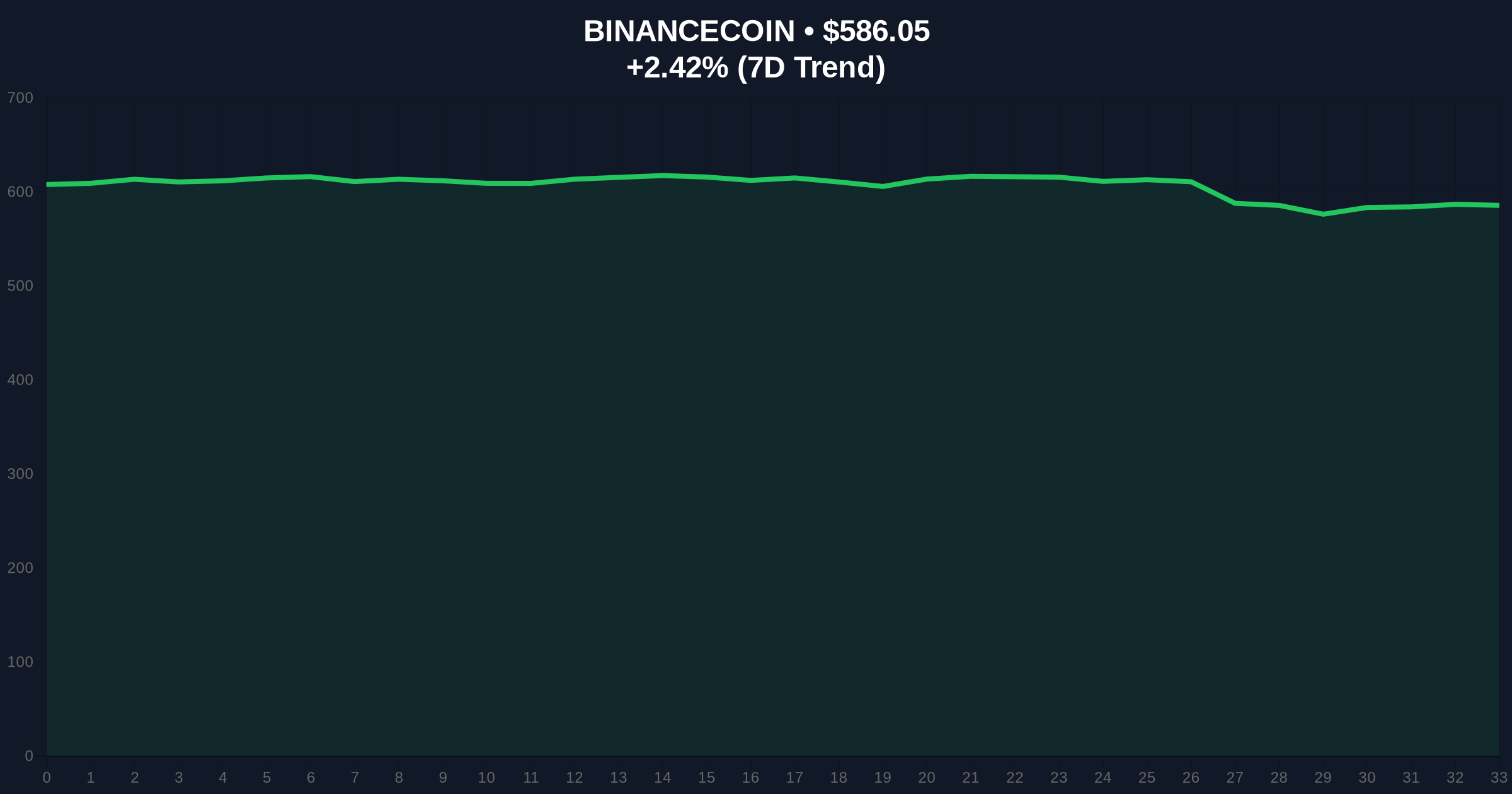
The announcement specifies the delisting of OL/USDT, HIPPO/USDT, RLS/USDT, and PUFFER/USDT perpetual futures on April 8, 2026, followed by WIF/USD and WLD/USD on April 9, 2026. Market data shows BNB, Binance's native token, trading at $586.05 with a 24-hour trend of 2.42%, ranking #5 by market cap. The global crypto sentiment is "Extreme Fear" with a score of 9/100, indicating heightened risk aversion among investors. Not provided in source data: explicit event timeline points beyond the announcement dates.
| Metric | Value | Source |
|---|---|---|
| BNB Price | $586.05 | Source: CoinGecko |
| BNB 24h Trend | 2.42% | Source: CoinGecko |
| Global Sentiment Score | 9/100 (Extreme Fear) | Source: market intelligence |
| Delisting Dates | April 8-9, 2026 | Source: exchange data |
Why now? The delisting coincides with extreme market fear, suggesting Binance may be streamlining its offerings to reduce risk during volatile periods. Who benefits? Traders with existing positions may face forced closures, while the exchange could benefit from reduced operational complexity and potential regulatory scrutiny. Conversely, liquidity providers and arbitrageurs lose access to these markets. Time horizons: In the short-term, traders must adjust positions by the delisting deadlines, potentially causing price volatility. Long-term, this reflects a trend of exchanges pruning low-volume or high-risk pairs to maintain platform stability. Causal chain: Exchange announces delisting → traders unwind positions → reduced liquidity → increased price slippage → impact on asset valuations.
Perpetual futures delistings mechanically work by removing trading pairs from the exchange's order books, halting new position openings and requiring existing positions to be closed before the deadline. This process typically involves a gradual reduction in liquidity as market makers withdraw, leading to wider bid-ask spreads and potential price dislocations. For instance, as traders exit positions, selling pressure can temporarily depress prices, especially in thin markets. The underlying mechanism ties to exchange risk management: by delisting pairs with low volume or high volatility, Binance mitigates exposure to liquidations and market manipulation during periods of extreme fear.
This delisting follows a pattern of exchange adjustments amid market stress. For example, Binance recently listed Micron and SanDisk perpetual futures, indicating a shift toward more established or liquid assets. Other exchanges may follow suit in pruning risky offerings. Key industry trends include:
The bearish scenario involves potential negative impacts on affected assets and traders. Key risks include:
Failure conditions: If trading volumes remain high post-announcement, the delisting may not significantly impact prices. Missing data includes specific volume metrics for the affected pairs, making it hard to gauge the full market impact.
Practically, traders should monitor position deadlines and consider alternative exchanges for these pairs. The delisting may prompt other platforms to reassess similar offerings, potentially leading to a broader contraction in perpetual futures markets for low-cap assets. In the near-term, watch for price reactions in OL, HIPPO, RLS, PUFFER, WIF, and WLD as the deadlines approach.
Binance regularly reviews and delists trading pairs to ensure market quality and compliance. This move aligns with historical practices during market downturns, where exchanges reduce exposure to volatile assets. The extreme fear sentiment, scoring 9/100, the cautious environment driving such decisions.
In related news, Binance recently listed Micron and SanDisk perpetual futures amid extreme market fear, highlighting a dual strategy of adding and removing products based on market conditions. Additionally, price predictions for assets like Worldcoin (WLD) suggest recovery challenges, which may influence delisting decisions for underperforming tokens.
Binance's delisting of six perpetual futures pairs reflects strategic risk management during a period of extreme market fear. Traders must adapt quickly, while the broader industry may see increased scrutiny on derivative offerings.
What to watch next: next official follow-up statements; exchange-level volume and liquidity data.
Evidence & Sources
Primary source: https://coinness.com/news/1153571
Updated at: Apr 03, 2026, 04:10 PM
Data window: Apr 03, 2026, 04:04 PM → Apr 03, 2026, 04:04 PM
Evidence stats: 2 metrics, 0 timeline points.
Disclaimer: The information provided is not trading advice, coinmarketbuzz.com holds no liability for any investments made based on the information provided on this page. We strongly recommend independent research and/or consultation with a qualified professional before making any investment decisions.
All published reports are reviewed by our editorial team for factual consistency, neutrality, and reader clarity.