Loading News...
Loading...

Loading News...
VADODARA, April 3, 2026. The following report is based on currently available verified source material and market data.
Binance Lists Micron and SanDisk Perpetual Futures Amid Extreme Market Fear developed into a market-moving story within the reported window. The initial source indicates immediate relevance for crypto sentiment, while fuller validation is still tied to cited datasets and official statements.
Binance announced on April 3, 2026, that it will list USDT-margined perpetual futures for Micron (MU) and SanDisk (SNDK), expanding its derivatives offerings beyond traditional cryptocurrencies. This move comes as the global crypto market sentiment registers "Extreme Fear" with a score of 9/100, indicating heightened investor anxiety and potential volatility. The listing allows traders to speculate on the price movements of these tech stocks using crypto collateral, bridging traditional equity markets with the crypto ecosystem. Binance's decision to add these instruments during a period of market stress highlights its strategy to diversify product offerings and capture demand for alternative trading vehicles, potentially increasing platform activity and fee revenue.
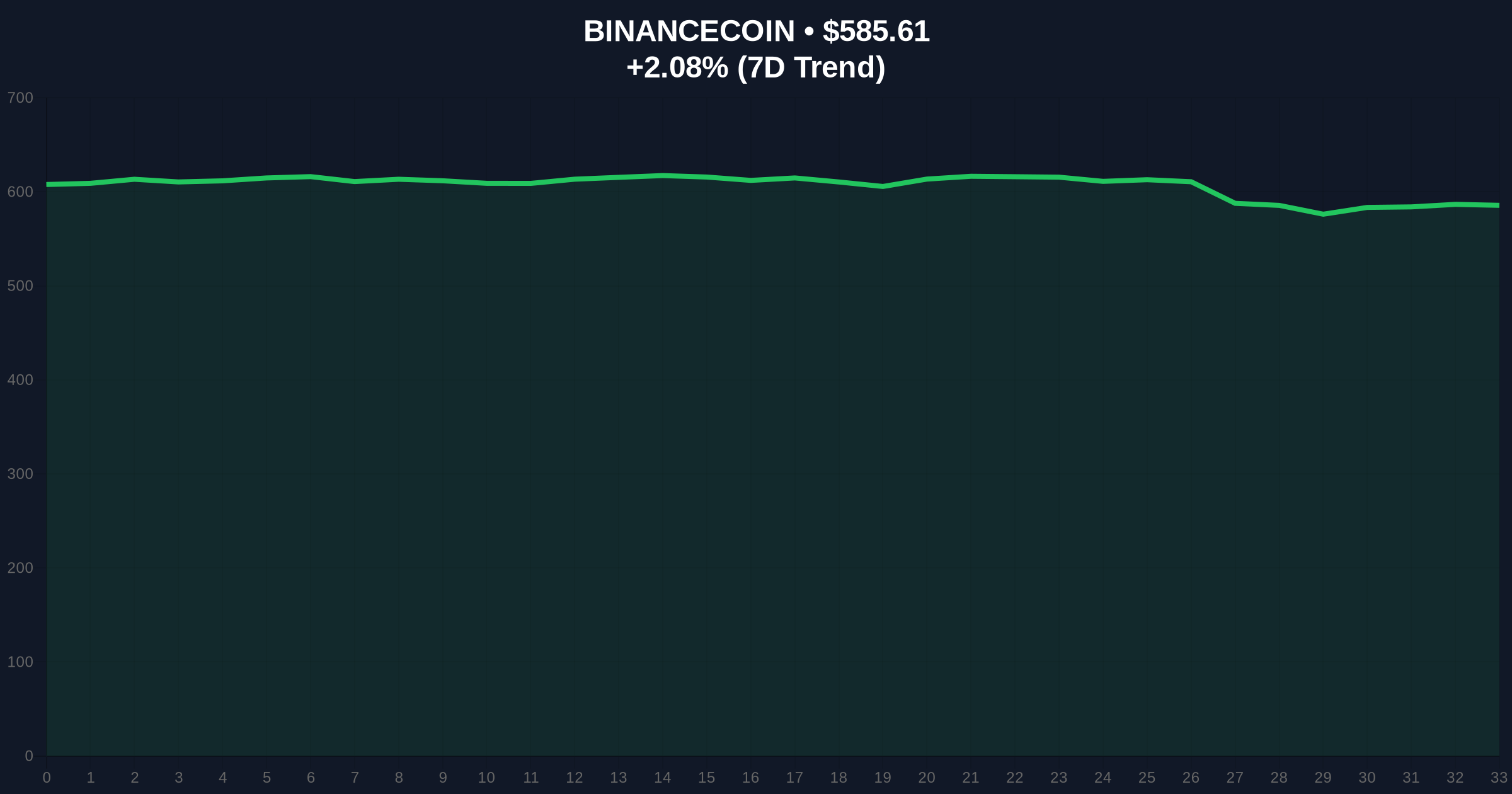
The announcement lacks specific timeline details, but key market metrics provide context for the listing's environment. Binance's native token BNB shows a 24-hour price increase of 2.09%, trading at $585.63, ranking fifth by market capitalization. This positive movement contrasts with the broader market sentiment, suggesting isolated strength or platform-specific optimism. The following table summarizes available data:
| Metric | Value | Source |
|---|---|---|
| BNB Price | $585.63 | Source: CoinGecko |
| BNB 24h Trend | 2.09% | Source: CoinGecko |
| Global Crypto Sentiment | Extreme Fear (Score: 9/100) | Source: market intelligence |
| Event Date | April 3, 2026 | Source: CoinNess |
Not provided in source data: explicit listing timeline, contract specifications, leverage limits, and trading volumes for MU and SNDK futures.
This development matters for several reasons. First, why now? The listing occurs during "Extreme Fear" sentiment, which may attract traders seeking hedging opportunities or speculative plays in volatile conditions. Second, who benefits? Binance stands to gain through increased trading volume and fees, while traders access new instruments for diversification or leverage. Retail and institutional participants can now trade tech stock derivatives without leaving the crypto ecosystem, though this introduces complexity and risk. Third, time horizons: short-term, this may boost BNB's price and platform metrics; long-term, it could normalize crypto-equity hybrids if successful. Fourth, the causal chain: Binance listing → increased product diversity → trader adoption → higher platform activity → potential fee growth and BNB demand.
Perpetual futures are derivative contracts without expiry dates, allowing continuous trading with funding rates to anchor prices to spot markets. Binance's USDT-margined version requires traders to use Tether as collateral, isolating crypto market dynamics from traditional equity settlements. The mechanism involves: Binance listing MU and SNDK futures → traders deposit USDT → open long/short positions → funding rates adjust periodically based on demand imbalance → positions can be held indefinitely or closed for profit/loss. This structure enables leveraged exposure to tech stocks while operating within Binance's crypto infrastructure, bypassing traditional brokerage barriers but introducing crypto-specific risks like stablecoin volatility.
Binance's move aligns with broader trends of crypto platforms expanding into traditional assets, though specifics vary. Key comparisons include:
Related developments show parallel market shifts: Polkadot faces price predictions amid fear, while DeFi platforms like Aave manage risk through structural changes. Additionally, macroeconomic factors such as US jobs data influence broader market conditions.
Despite potential benefits, significant risks exist. The bearish scenario includes:
Uncertainty remains due to missing data: contract details, expected volumes, and regulatory clearances are unknown. The failure condition would be if traders reject the products or regulators intervene, negating the anticipated platform growth.
Practically, this listing could lead to more crypto-equity hybrids if successful, setting a precedent for other exchanges. Near-term, watch BNB's price reaction and initial trading volumes for MU/SNDK futures to gauge adoption. If demand is strong, Binance may expand to other stocks, further blurring lines between crypto and traditional finance. However, regulatory developments will be critical; any crackdown could limit this trend's growth.
Binance has historically expanded its futures offerings to include various cryptocurrencies and indices, aiming to capture derivative market share. The addition of tech stocks represents a strategic push into traditional assets, leveraging its large user base and infrastructure. This follows industry trends where crypto platforms diversify beyond pure crypto products to attract broader audiences and increase revenue streams.
Beyond direct comparisons, other market movements provide context. For instance, EdgeX's token burn initiative reflects deflationary strategies in crypto, contrasting with Binance's expansionary product launch. These varied approaches highlight how platforms adapt differently to the current "Extreme Fear" environment.
Binance's listing of Micron and SanDisk perpetual futures is a strategic expansion during a period of market fear, offering new trading instruments but introducing risks. Success depends on trader adoption, regulatory tolerance, and market conditions, with implications for both Binance's growth and the broader crypto-equity convergence trend.
Q1: What are perpetual futures?Perpetual futures are derivative contracts without expiry dates, using funding rates to track spot prices, allowing continuous trading.
Q2: Why list these stocks now?Binance likely aims to diversify offerings and capture demand during volatile markets, though specific timing reasons are not provided in source data.
Q3: How does this affect BNB?Increased platform activity could boost BNB demand and price, but risks like regulatory issues might negatively impact it.
Q4: What are the main risks?Key risks include low adoption, regulatory scrutiny, and market contagion, especially given the "Extreme Fear" sentiment.
Q5: Can retail traders access these?Yes, retail traders can participate using USDT collateral, but they should be aware of leverage risks and market volatility.
Q6: How does this compare to other exchanges?It aligns with trends of expanding into traditional assets, but focuses on perpetual futures for specific tech stocks, unlike spot offerings elsewhere.
Traders are watching initial volumes and regulatory responses to assess whether this listing can gain traction amid current market fear.
What to watch next: next official follow-up statements; exchange-level volume and liquidity data.
Evidence & Sources
Primary source: https://coinness.com/news/1153568
Updated at: Apr 03, 2026, 03:39 PM
Data window: Apr 03, 2026, 03:32 PM → Apr 03, 2026, 03:34 PM
Evidence stats: 2 metrics, 0 timeline points.
Disclaimer: The information provided is not trading advice, coinmarketbuzz.com holds no liability for any investments made based on the information provided on this page. We strongly recommend independent research and/or consultation with a qualified professional before making any investment decisions.
All published reports are reviewed by our editorial team for factual consistency, neutrality, and reader clarity.