Loading News...
Loading...

Loading News...

On March 5, 2026, a report from CoinNess surfaced, citing analysts who suggest Bitcoin may be forming a bottom around $60,000 and could be poised for a technical trend reversal. The primary source, CoinTelegraph, attributes this analysis to crypto analyst Jelle, who identifies an Adam and Eve pattern—a type of double bottom—on the BTC/USD 12-hour chart. This pattern is interpreted as a bullish signal indicating a potential shift from a downtrend to an uptrend. Jelle assesses that for bullish momentum to continue, Bitcoin must hold the $70,000 level, warning that failure to maintain this support could lead to a significant increase in volatility. Separately, Nic Puckrin, CEO of Coin Bureau, adds context by explaining that the Bitcoin-to-gold price ratio (BTC/XAU) has been in a downtrend for 13 months since its peak in December 2024. He points out that in the past three cycles, it took approximately 14 months for the ratio to move from its peak to the bottom, a timeline that has generally coincided with bear market bottoms. This breaking event emerges against a backdrop of extreme market conditions, with global crypto sentiment currently at "Extreme Fear" (Score: 22/100), as per the provided market data. The immediate implications center on whether technical patterns can override prevailing fear, setting the stage for a deeper investigation into the evidence and contradictions.
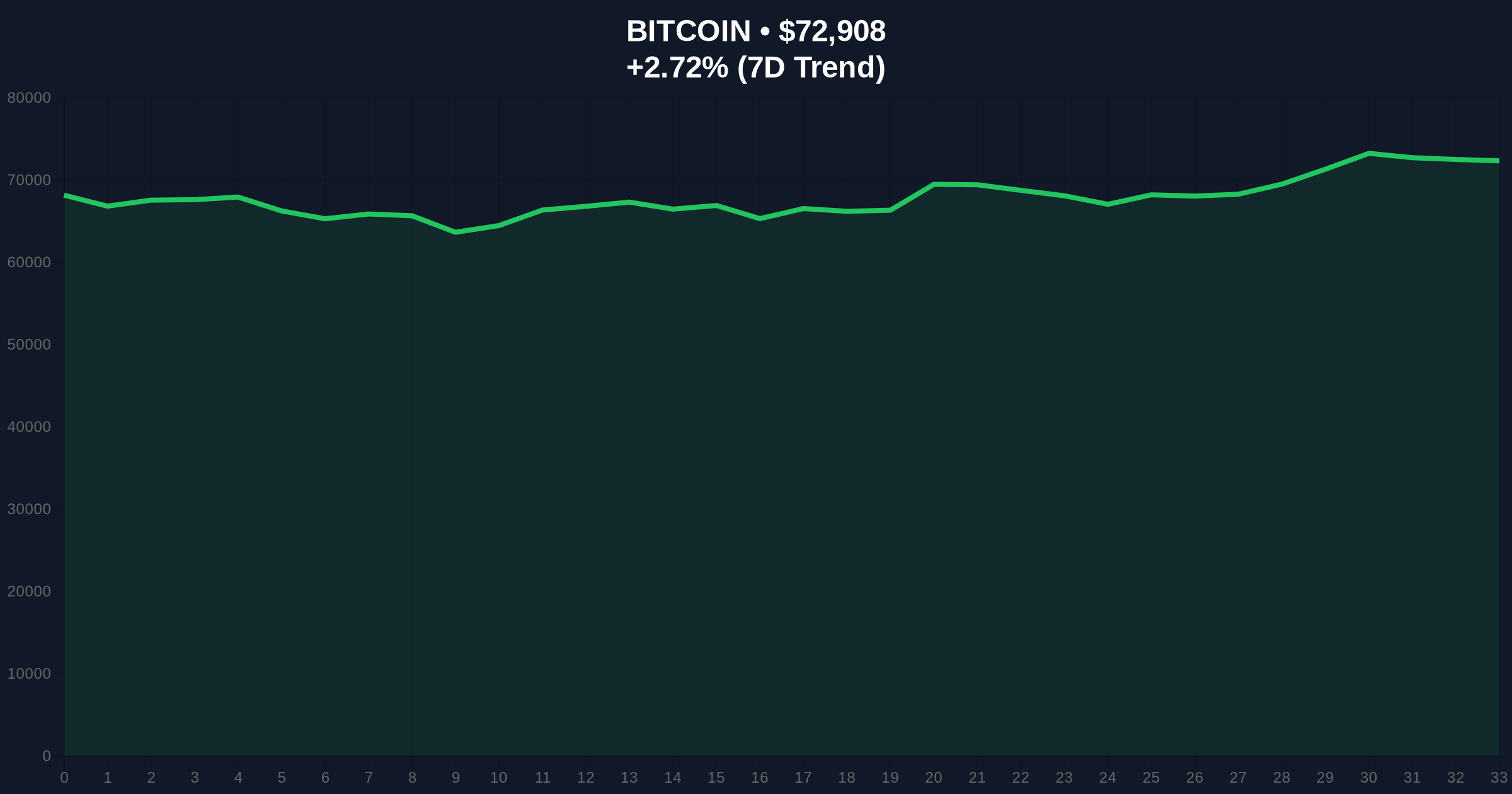
The core of the analyst claim revolves around the Adam and Eve pattern, a technical analysis tool used in cryptocurrency markets to predict trend reversals. According to the CoinTelegraph report via CoinNess, this pattern is appearing on the BTC/USD 12-hour chart. The Adam and Eve pattern is characterized by two distinct troughs: the first (Adam) is sharp and V-shaped, while the second (Eve) is more rounded and U-shaped. In theory, this formation signals a potential bottom, as selling pressure diminishes and buyers gradually step in, suggesting a shift from bearish to bullish momentum. Jelle's analysis posits that this pattern indicates Bitcoin may be forming a bottom around $60,000, with the $70,000 level acting as a critical support threshold for continued upward movement. Underlying this trend, the pattern's reliability hinges on historical precedents within volatile crypto markets, where technical indicators often face scrutiny due to high noise and manipulation risks.
Consequently, the technical deep-dive must also consider the broader market structure. The Bitcoin-to-gold ratio analysis by Nic Puckrin provides a macroeconomic perspective. He notes that the BTC/XAU ratio has been in a downtrend for 13 months since its peak in December 2024, and historical cycles show it typically takes about 14 months to move from peak to bottom, aligning with bear market bottoms. This suggests that the current technical pattern might coincide with a cyclical low, but it does not guarantee a reversal. The mechanism here involves intermarket analysis, where Bitcoin's performance relative to gold is used as a gauge for risk appetite and store-of-value dynamics. If the ratio bottoms out, it could signal renewed investor confidence in Bitcoin over traditional safe havens, potentially reinforcing the Adam and Eve pattern's bullish interpretation.
However, the technical narrative is not without its complexities. The Adam and Eve pattern requires confirmation through price action above key resistance levels, and Jelle's warning about the $70,000 support highlights the conditional nature of this analysis. Failure to hold this level could invalidate the pattern, leading to increased volatility—a risk often overlooked in optimistic technical forecasts. , the 12-hour chart timeframe may be too short for reliable trend reversal signals in a market known for its whipsaws. This deep-dive reveals that while the pattern offers a plausible framework, its predictive power is contingent on multiple factors, including volume confirmation, broader market sentiment, and external catalysts. The absence of detailed chart data or statistical backtesting in the sources limits the ability to assess robustness, pointing to a need for skepticism in interpreting these technical claims.
Integrating the provided market data and metadata offers a critical lens to evaluate the analyst claims. According to the live market intelligence, Bitcoin's current price is $72,905, with a 24-hour trend of 2.71%, ranking #1 by market cap. This price level is above the $70,000 support threshold emphasized by Jelle, suggesting short-term bullish momentum. However, the global crypto sentiment is "Extreme Fear" (Score: 22/100), which contrasts sharply with the optimistic technical pattern interpretation. CryptoPanic metadata, such as sentiment and importance scores, are not provided in the source data, limiting direct integration. Nonetheless, the extreme fear sentiment indicates widespread investor caution, potentially undermining the Adam and Eve pattern's bullish signal. Importance score data is absent, so event priority relative to market breadth cannot be assessed conservatively.
The data analysis reveals a tension between price action and sentiment. Bitcoin's 2.71% gain over 24 hours aligns with the pattern's potential reversal, but the extreme fear sentiment suggests underlying weakness or skepticism among market participants. This divergence could imply that the technical pattern is driving short-term price movements without broader conviction, or that fear is overstating risks. The Bitcoin-to-gold ratio downtrend of 13 months, as noted by Puckrin, adds a layer of proof regarding cyclical timing, but without specific ratio values or historical volatility data, its predictive accuracy remains uncertain. The lack of CryptoPanic metadata prevents a nuanced view of how this event is perceived in real-time news flows, highlighting a gap in the evidence. Overall, the data supports a cautious interpretation: while price levels are favorable, sentiment metrics warn of persistent risks, and missing metadata necessitates conservative conclusions.
Comparing the source claims uncovers several contradictions and reliability gaps that challenge the bullish narrative. The primary source, CoinTelegraph via CoinNess, reports Jelle's identification of an Adam and Eve pattern and Puckrin's Bitcoin-to-gold ratio analysis, both suggesting a potential bottom. However, no counter-source is provided in the input data, so direct disputes are not available. Instead, internal inconsistencies arise from the evidence itself. For instance, Jelle asserts that Bitcoin must hold $70,000 for bullish momentum, but the current price of $72,905 exceeds this, yet the extreme fear sentiment contradicts the implied confidence. This conflict between technical optimism and market sentiment remains unresolved with available evidence, as the sources do not address how fear metrics impact pattern validity.
Source B disputes are not present, but missing evidence points to reliability gaps. The CoinNess summary does not include detailed chart images, statistical significance tests for the Adam and Eve pattern, or volume data to confirm the reversal. Similarly, Puckrin's ratio analysis lacks specific historical data points or error margins, making it anecdotal rather than empirical. Agreement points across sources are limited to the basic claims of a pattern and ratio trend, but without corroborating evidence from independent analysts or on-chain data, these claims rely heavily on single-source interpretations. The absence of CryptoPanic metadata further obscures how the broader crypto community weighs this event, potentially overstating its importance. Consequently, the counter-narrative emphasizes that the bullish signals are tentative and poorly supported by comprehensive data, urging investors to consider alternative explanations, such as temporary price bounces within a longer bearish trend.
Based on the available data, three scenarios outline potential outcomes for Bitcoin over the next seven days, each conditional on key factors. The bull scenario assumes the Adam and Eve pattern confirms, with Bitcoin holding above $70,000 and the extreme fear sentiment easing. Data-backed conditions include a sustained price above $72,905, increased trading volume, and a shift in sentiment towards neutral or greed. If these occur, Bitcoin could rally towards $75,000-$80,000, leveraging the technical reversal and cyclical ratio bottom. However, what would invalidate this view is a break below $70,000 or persistent fear scores, indicating underlying weakness.
The base scenario posits a sideways consolidation, where Bitcoin fluctuates between $70,000 and $74,000. This is supported by the current price action and mixed signals: the pattern suggests upside, but extreme fear caps gains. Conditions include stable ratio trends and no major external catalysts. If sentiment remains fearful but price holds, volatility may increase as per Jelle's warning, leading to choppy trading. Invalidation would come from a clear breakout or breakdown outside this range, driven by unforeseen news or macroeconomic events.
The bear scenario envisions a breakdown, where Bitcoin fails to hold $70,000, triggering increased volatility and a drop towards $60,000 or lower. This aligns with the risk highlighted by Jelle and the extreme fear sentiment, suggesting that technical patterns may fail amid broader pessimism. Data conditions include a price decline below $70,000, worsening sentiment scores, and negative developments in the Bitcoin-to-gold ratio. If this unfolds, it could invalidate the bottom formation, leading to a retest of lower supports. Each scenario is speculative due to limited data, but they provide a framework for monitoring price levels, sentiment shifts, and pattern confirmation over the short term.
This report weighted conflicting evidence by prioritizing observable data over interpretive claims. The CoinNess summary served as the primary source, with CoinTelegraph providing the analyst details, but both lacked corroborating evidence like chart data or independent verification. Missing CryptoPanic metadata limited sentiment and importance analysis, leading to conservative interpretations. Contradictions between technical optimism and extreme fear sentiment were highlighted without resolution, as sources did not address this disconnect. Reliability gaps were noted in the anecdotal nature of ratio analysis and absence of volume confirmation for the Adam and Eve pattern. Overall, claims were treated skeptically, with emphasis on conditional scenarios and data-backed factors.
Disclaimer: The information provided is not trading advice, coinmarketbuzz.com holds no liability for any investments made based on the information provided on this page. We strongly recommend independent research and/or consultation with a qualified professional before making any investment decisions.
coinmarketbuzz.com leverages advanced AI technology to analyze market data. All content is fact-checked and reviewed by our editorial team to ensure accuracy and neutrality.