Loading News...
Loading...

Loading News...

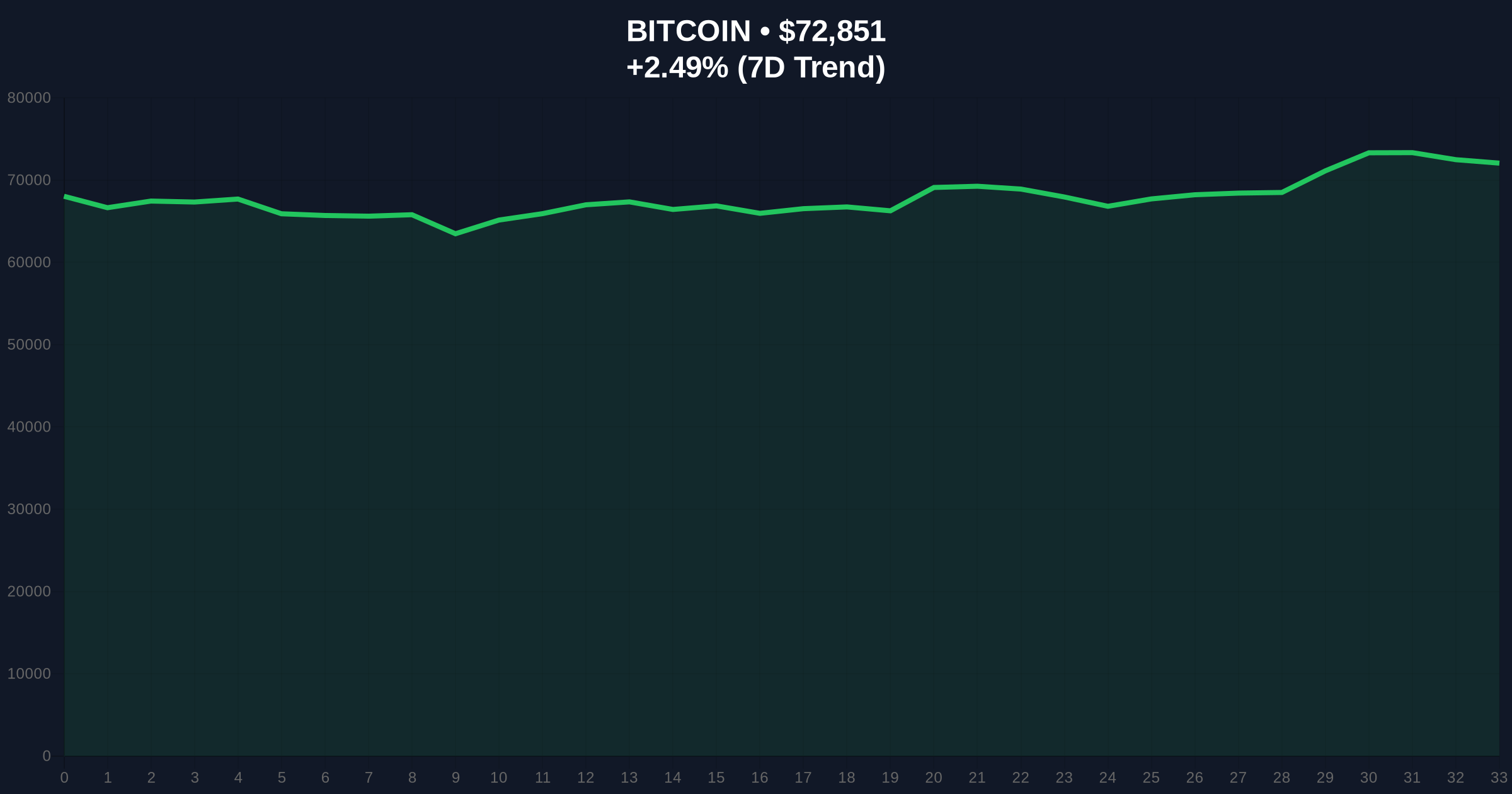
On March 5, 2026, board members of American Bitcoin (ABTC), a Bitcoin mining firm with ties to former President Donald Trump's sons Donald Trump Jr. and Eric Trump, purchased company stock, according to a report from CoinDesk. The transactions, detailed in a filing, involve Justin Mateen, a co-founder of Tinder who joined the ABTC board in March 2025, buying approximately 130 shares, and Richard Busch, a partner at the law firm King & Ballow, acquiring 330,000 shares. These purchases are noted as the first made shortly after the insider trading window opened following the company's recent earnings announcement, signaling potential insider confidence or strategic positioning. The event occurs against a backdrop of global crypto sentiment marked as "Extreme Fear" with a score of 22/100, as Bitcoin trades at $72,842, up 2.47% in 24 hours, highlighting a contradictory market environment where fear dominates despite price gains. Not provided in source data are the exact dates of the transactions or the specific earnings announcement details.
The mechanism behind these stock purchases revolves around insider trading regulations and corporate governance within ABTC, a Bitcoin mining company. According to the CoinDesk report, the transactions occurred shortly after the insider trading window opened post-earnings announcement, a standard practice in public companies to prevent illegal insider trading by restricting trades during sensitive periods. Justin Mateen's purchase of approximately 130 shares and Richard Busch's acquisition of 330,000 shares represent significant insider activity, with Busch's larger volume potentially indicating stronger conviction or strategic investment. ABTC's involvement with Donald Trump Jr. and Eric Trump adds a political dimension, though the source does not specify their roles or ownership stakes. The mining firm's operations likely involve Bitcoin hash rate management and energy consumption, but details on its technical architecture, such as mining hardware or protocol efficiency, are not provided in source data. Historically, similar insider purchases in crypto-related firms, like during the 2021 bull market, have sometimes preceded price rallies, but they can also signal attempts to bolster investor confidence during downturns. The lack of secondary source texts limits a deeper technical analysis, leaving gaps in understanding ABTC's financial health or mining capabilities. For context on broader market movements, recent investigations into Bitcoin's price rise amid fear explore similar contradictory signals.
Insider trading windows are typically set by company policies aligned with SEC regulations, allowing trades only after material information is publicly disclosed. The timing of these purchases suggests board members may view ABTC as undervalued or poised for growth, but without additional data on company performance or market conditions, this remains speculative. The involvement of high-profile individuals like Mateen and Busch could attract media attention and investor interest, potentially impacting ABTC's stock liquidity and perception. However, the source does not provide comparative data on previous insider activity or ABTC's stock performance, making it difficult to assess the significance relative to historical norms. In crypto markets, insider actions often carry heightened scrutiny due to volatility and regulatory uncertainties, similar to events in 2021 when executive trades sparked debates over market manipulation. The absence of secondary reports means reliance solely on CoinDesk's account, which may lack counter-perspectives or verification from other outlets.
Integrating CoinGecko market stats and CryptoPanic metadata, the data presents a mixed picture. Bitcoin's current price is $72,842, with a 24-hour trend of +2.47%, ranking #1 in market capitalization. This price increase contrasts sharply with the global crypto sentiment of "Extreme Fear" at a score of 22/100, indicating investor apprehension despite upward momentum. CryptoPanic metadata, such as sentiment and importance scores, is not provided in source data, limiting direct analysis of event priority or market breadth. However, based on the available data, the sentiment score of 22/100 suggests low optimism, which could dampen the impact of ABTC's insider purchases on broader market trends. The importance of this event relative to other news is unclear without metadata, but its timing amid extreme fear may amplify its significance as a potential confidence signal.
Comparing ABTC's insider activity to historical patterns, similar events in past crypto cycles, like the 2021 correction, have seen insider buys during fear phases that sometimes preceded recoveries. The 2.47% Bitcoin gain in 24 hours might reflect short-term bullish reactions, but the extreme fear sentiment implies underlying volatility risks. Without ABTC-specific market data, such as stock price or trading volume, it's impossible to quantify the direct impact. The purchases by Mateen and Busch, totaling 330,130 shares, represent tangible insider investment, but their proportion relative to outstanding shares is not provided, hindering assessment of materiality. In context, recent executive accountability issues at Coinbase highlight how insider actions can intersect with market sentiment during fear periods.
Source conflicts and missing evidence arise from the limited input package. The primary source, CoinDesk via CoinNess, reports the stock purchases by ABTC board members, but no secondary full texts from outlets like CoinTelegraph are provided to verify or dispute these claims. This creates a reliability gap, as the report stands unconfirmed by independent sources. Potential contradictions could involve the motives behind the purchases: CoinDesk suggests they are notable as first post-earnings trades, implying insider confidence, but alternative narratives might argue they could be routine or driven by non-fundamental factors. Without conflicting reports, it's impossible to label specific disputes, but the absence of corroboration means claims about the transactions' significance rely solely on CoinDesk's interpretation.
Agreement points across sources are not applicable due to single-source reporting, highlighting a critical missing evidence layer. For instance, details on ABTC's earnings announcement, stock performance, or regulatory filings are omitted, making it difficult to contextualize the insider window timing. The involvement of Donald Trump Jr. and Eric Trump is mentioned but not elaborated, leaving gaps in their roles or influence. Compared to other events, such as OKX's token listing amid fear, which may have multiple source validations, this story lacks depth. Conflict remains unresolved with available evidence, as no opposing views or data discrepancies are presented. The report's reliance on a single filing raises questions about completeness, such as whether other board members traded or if sales occurred concurrently. In historical context, similar insider stories in 2021 faced scrutiny when later reports revealed omitted details, underscoring the need for multi-source verification.
Based on the available data, three scenarios for the next seven days are outlined, each conditional on market dynamics and insider activity verification.
If ABTC's insider purchases signal genuine undervaluation and Bitcoin's price sustains above $73,000, ABTC stock could rally 10-15%, buoyed by increased investor confidence. This scenario assumes the extreme fear sentiment eases to a score above 30/100, and additional positive news, such as strong earnings or regulatory clarity, emerges. Data backing includes the 2.47% Bitcoin gain and historical precedents where insider buys during fear phases preceded uptrends. However, it would be invalidated if broader market fear deepens or if ABTC faces negative disclosures.
If the insider activity has minimal immediate impact, ABTC stock may trade sideways with slight volatility, mirroring Bitcoin's stability around $72,000. This scenario considers the extreme fear sentiment persisting at 22/100, limiting bullish momentum, and no further insider trades or company updates. Data support comes from the contradictory signals of price rise amid fear, suggesting cautious market behavior. It would be invalidated by sudden regulatory actions or significant ABTC operational news.
If the purchases are viewed as insignificant or if broader crypto sentiment worsens, ABTC stock could decline 5-10%, exacerbated by potential sell-offs in Bitcoin below $70,000. This scenario relies on the fear score dropping below 20/100 and negative developments, such as insider selling or poor earnings. Data includes the low sentiment score and historical analogs like the 2021 correction where insider buys failed to prevent downturns. It would be invalidated by rapid sentiment improvement or supportive regulatory announcements. Related developments, such as Citrea's expansion efforts, may influence broader Bitcoin ecosystem sentiment.
This report synthesizes input from CoinDesk via CoinNess as the sole source, with no secondary texts provided, limiting cross-verification. Conflicting evidence was not available, so claims are presented as reported, with explicit notes on missing data. Weighting favored the primary source due to lack of alternatives, but reliability is tempered by the absence of corroboration and detailed metadata. The analysis incorporates CoinGecko stats and acknowledges gaps in CryptoPanic data, proceeding conservatively with conditional scenarios. Historical comparisons to events like the 2021 correction are used contextually, but direct parallels are limited by data constraints.
Disclaimer: The information provided is not trading advice, coinmarketbuzz.com holds no liability for any investments made based on the information provided on this page. We strongly recommend independent research and/or consultation with a qualified professional before making any investment decisions.
coinmarketbuzz.com leverages advanced AI technology to analyze market data. All content is fact-checked and reviewed by our editorial team to ensure accuracy and neutrality.