Loading News...
Loading...

Loading News...
VADODARA, April 4, 2026. The following report is based on currently available verified source material and market data.
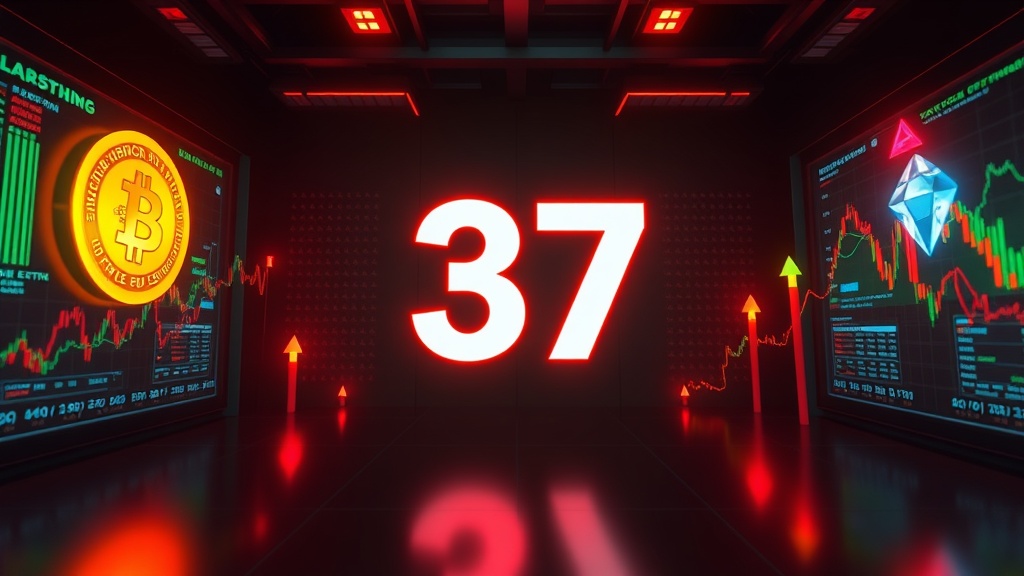
On April 4, 2026, CoinMarketCap's Altcoin Season Index fell to 37, down one point from the previous day, indicating a weakening altcoin season. This matters because the index, which compares the performance of the top 100 cryptocurrencies against Bitcoin over 90 days, is far from the 75% threshold needed to declare an altcoin season, reflecting subdued altcoin momentum amid broader market fear. The current market impact shows Bitcoin trading at $66,847 with a 0.34% 24-hour gain, while global crypto sentiment sits at "Extreme Fear" with a score of 11/100, highlighting a cautious environment for altcoin investments.
The Altcoin Season Index currently stands at 37, a slight decline from yesterday, based on data from CoinMarketCap. For context, an altcoin season is declared when 75% of the top 100 cryptocurrencies, excluding stablecoins and wrapped tokens, outperform Bitcoin over the past 90 days, with a score closer to 100 indicating stronger altcoin performance. Concurrent market metrics reveal Bitcoin's price at $66,847 with a 0.34% increase in the last 24 hours, and global crypto sentiment is in "Extreme Fear" at a score of 11/100. These figures underscore the index's low level relative to historical altcoin seasons.
| Metric | Value | Source |
|---|---|---|
| Altcoin Season Index | 37 | Source: public statement |
| Bitcoin Price | $66,847 | Source: CoinGecko |
| Bitcoin 24h Change | 0.34% | Source: CoinGecko |
| Global Crypto Sentiment | Extreme Fear (11/100) | Source: CoinGecko |
Why now? The drop in the Altcoin Season Index to 37 is significant at this moment because it coincides with extreme market fear, as indicated by a sentiment score of 11/100, suggesting that altcoins are underperforming during a period of heightened investor caution. This contextual shift highlights a divergence from typical altcoin season patterns, where altcoins often rally in bullish environments.
Who benefits? Bitcoin holders and risk-averse traders may benefit from this trend, as capital could flow into Bitcoin as a safer haven amid market uncertainty. Conversely, altcoin investors and developers face potential losses due to reduced momentum and liquidity, while institutional players might delay altcoin allocations until sentiment improves.
Time horizons: In the short-term (days/weeks), the low index score may lead to continued altcoin underperformance and increased volatility. Over the longer-term (months/years), if the index remains below 75%, it could signal a prolonged period of Bitcoin dominance, delaying altcoin season cycles and impacting portfolio strategies.
Causal chain: The mechanism linking this event to market outcomes involves altcoin underperformance relative to Bitcoin → reduced retail and institutional interest in altcoins → decreased buying pressure and liquidity for altcoins → potential price stagnation or declines, reinforcing Bitcoin's market leadership during fear-driven periods.
The Altcoin Season Index operates by tracking the performance of the top 100 cryptocurrencies, excluding stablecoins and wrapped tokens, against Bitcoin over a 90-day window. Mechanically, it calculates the percentage of these altcoins that have outperformed Bitcoin during this period. A score of 37 indicates that only a minority of altcoins are beating Bitcoin, which reflects weak altcoin momentum. This underperformance can be driven by factors such as risk-off sentiment, where investors flock to Bitcoin during market fear, draining liquidity from altcoins and creating a feedback loop that further depresses altcoin prices.
Similar to the 2021 correction, where altcoin seasons often faltered during market downturns, the current index drop aligns with broader trends of Bitcoin dominance in fearful environments. Other recent developments in the crypto space include:
These comparisons highlight how altcoin seasons are sensitive to market cycles and external innovations, often lagging behind Bitcoin-focused advancements.
The bearish scenario for altcoins includes several key risks and uncertainties:
In the near term, traders should monitor the Altcoin Season Index for signs of recovery above 50, which could indicate improving altcoin momentum. If the index remains low, expect continued capital rotation into Bitcoin and stablecoins, potentially delaying altcoin rallies until market sentiment shifts from fear to greed. Practically, this may lead to adjusted portfolio allocations, with a focus on Bitcoin-heavy strategies until altcoin indicators strengthen.
The Altcoin Season Index has been used since its inception to gauge market cycles, with historical altcoin seasons typically occurring during bullish phases when investor risk appetite is high. A score of 37 is well below the 75% threshold, reminiscent of periods like early 2022 when altcoins struggled amid macroeconomic headwinds. This structural framing helps contextualize the current drop as part of a broader pattern rather than an isolated event.
Amid recent market fear, related crypto developments include a surge in USDC minting aimed at enhancing liquidity, hints at Bitcoin faucet revivals to boost adoption, Ethereum staking milestones raising centralization debates, and advancements in quantum-resistant signatures on Bitcoin sidechains. These events collectively emphasize a focus on Bitcoin and infrastructure resilience, potentially sidelining altcoin performance in the short term.
The Altcoin Season Index's decline to 37 weak altcoin momentum during a period of extreme market fear, with Bitcoin showing relative strength. This trend highlights the importance of monitoring sentiment and index thresholds for timing altcoin investments, as historical patterns suggest recovery may hinge on broader market shifts.
Q1: What does an Altcoin Season Index score of 37 mean?It indicates that only 37% of the top 100 altcoins have outperformed Bitcoin over the past 90 days, far from the 75% needed for an altcoin season.
Q2: How is the Altcoin Season Index calculated?It compares the performance of the top 100 cryptocurrencies, excluding stablecoins and wrapped tokens, against Bitcoin over a 90-day period.
Q3: Why is the index dropping amid market fear?During extreme fear, investors often prefer Bitcoin as a safer asset, reducing capital flow into altcoins and causing underperformance.
Q4: What historical comparisons exist for this index level?Similar levels were seen in early 2022 during market corrections, where altcoin seasons were delayed until sentiment improved.
Q5: How can traders use this index?Traders can watch for scores above 50 as early signs of altcoin momentum, adjusting portfolios based on risk appetite and market cycles.
Q6: What are the risks of relying on this index?It may not account for sudden regulatory changes or black swan events, and past performance doesn't guarantee future results.
Analysts are closely watching for shifts in global crypto sentiment and Bitcoin dominance levels to gauge potential altcoin recoveries.
What to watch next: Altcoin Season Index falls to 37 CoinMarketCap's Altcoin Season Index is currently at 37, down one point from yesterday.; CoinMarketCap's Altcoin Season Index is currently at 37, down one point from yesterday..
Evidence & Sources
Primary source: https://coinness.com/news/1153600
Updated at: Apr 04, 2026, 03:39 AM
Data window: Apr 04, 2026, 03:38 AM → Apr 04, 2026, 03:38 AM
Evidence stats: 3 metrics, 2 timeline points.
Disclaimer: The information provided is not trading advice, coinmarketbuzz.com holds no liability for any investments made based on the information provided on this page. We strongly recommend independent research and/or consultation with a qualified professional before making any investment decisions.
All published reports are reviewed by our editorial team for factual consistency, neutrality, and reader clarity.