Loading News...
Loading...

Loading News...

VADODARA, April 8, 2026. The following report is based on currently available verified source material and market data.
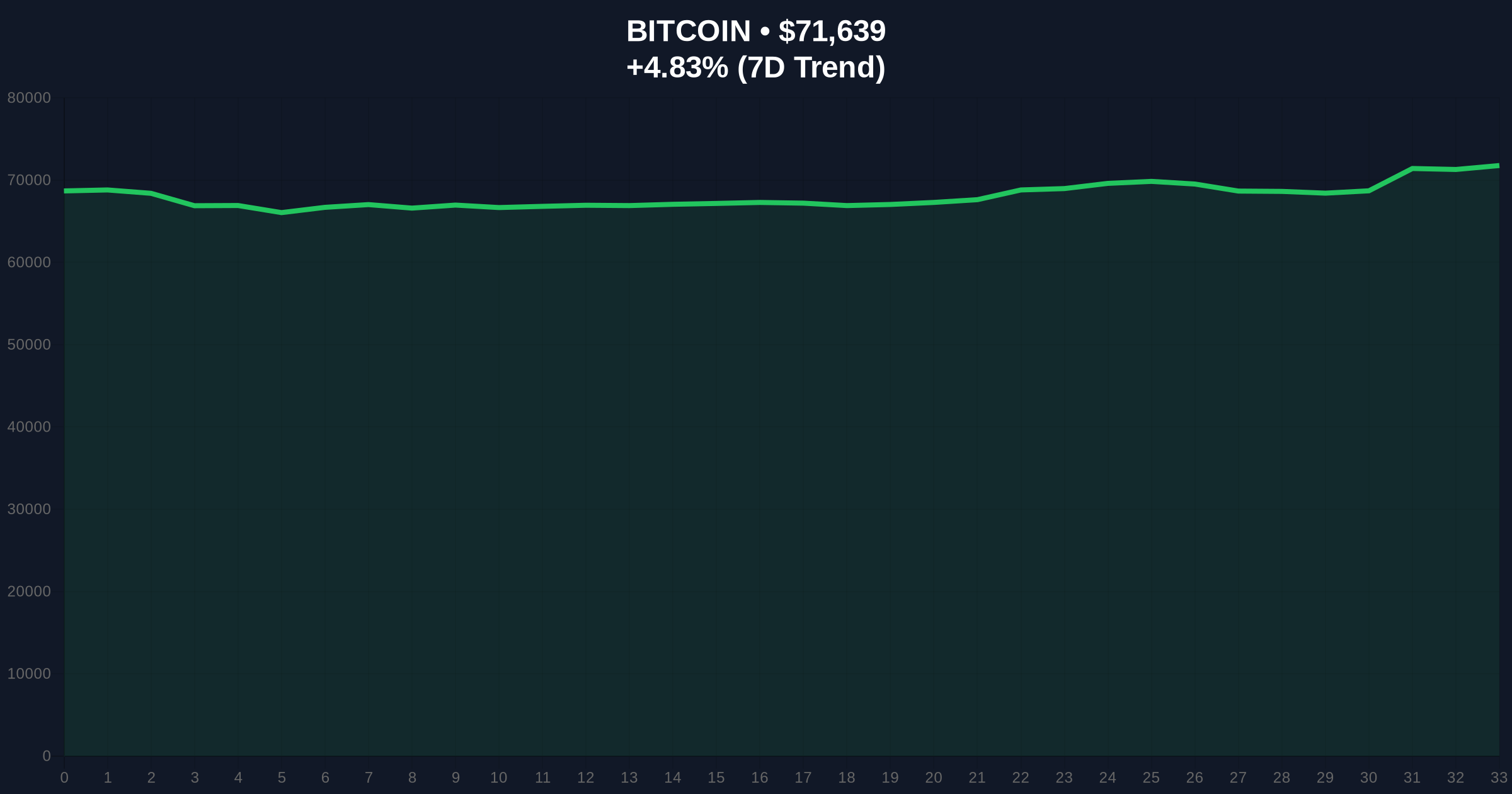
On April 8, 2026, Adam Back, CEO of Bitcoin infrastructure developer Blockstream, publicly denied being Satoshi Nakamoto, refuting a New York Times investigative report that identified him as the probable anonymous creator of Bitcoin. This denial, issued via a post on X, addresses a high-profile claim about Bitcoin's origins during a period of market uncertainty, with Bitcoin trading at $71,632 amid "Extreme Fear" sentiment. The event matters because it reinforces the foundational narrative of Bitcoin's decentralized, creator-agnostic nature, potentially impacting market psychology and institutional perceptions of the asset's legitimacy.
The denial centers on Adam Back's rebuttal of linguistic analysis evidence presented by NYT journalist John Carreyrou, with Back arguing it suffers from confirmation bias due to his extensive historical writing in cypherpunk circles. Concurrent market data shows Bitcoin experiencing volatility, with a 24-hour price trend of 4.82% at the time of the statement. Source: public statement. The following table summarizes key metrics:
| Metric | Value | Source |
|---|---|---|
| Bitcoin Price | $71,632 | CoinGecko |
| 24h Trend | 4.82% | CoinGecko |
| Global Crypto Sentiment | Extreme Fear (Score: 17/100) | Market Intelligence |
| Event Date | April 8, 2026 | CoinNess |
Specific event timeline points are not provided in source data.
Why now? This denial emerges as Bitcoin navigates a market phase characterized by extreme fear, where narratives about its origins could influence investor confidence. The timing coincides with heightened scrutiny of cryptocurrency fundamentals, making Back's rebuttal a stabilizing counter-narrative. Who benefits? Bitcoin maximalists and decentralized advocates gain, as the denial preserves Satoshi's anonymity, reinforcing Bitcoin's perception as a scarce digital resource rather than a centralized creation. Conversely, speculative media outlets face credibility challenges if their investigative methods are flawed. Time horizons: In the short-term, this may dampen sensationalist speculation, while long-term, it solidifies Bitcoin's mythos, potentially enhancing its store-of-value narrative. Causal chain: The NYT report triggers public speculation → Back denies with statistical arguments → market attention shifts from creator identity to asset properties → reduced narrative risk supports price stability amid volatility.
The underlying mechanism involves linguistic analysis and statistical rebuttal. The New York Times report used writing style comparisons to link Back to Satoshi, a method Back disputes by highlighting his voluminous output in relevant forums since 1992. Mechanically, this means that with more text exposure, random matches become statistically likely, undermining the analysis's validity. Consequently, the denial works by exposing potential methodological flaws in investigative journalism, shifting the discourse from speculative identification to empirical critique. This process helps insulate Bitcoin from personality-driven narratives, maintaining focus on its technological and economic attributes.
This event contrasts with other cryptocurrency developments where founder identity plays a central role. For instance, many altcoins and DeFi projects rely on visible leadership for marketing and trust, whereas Bitcoin's value proposition is enhanced by creator anonymity. Relatedly, recent industry events highlight varying narrative impacts:
The bearish scenario hinges on unresolved uncertainties and potential narrative shifts. Key risks include:
Practically, this denial sets a precedent for how high-profile claims about Bitcoin's origins are handled, likely encouraging more rigorous scrutiny of similar reports. In the near-term, expect reduced media speculation on Satoshi's identity, allowing market participants to focus on macroeconomic factors and on-chain metrics. Institutions may view this as a positive, as it reinforces Bitcoin's narrative stability, potentially supporting adoption in uncertain sentiment environments.
Adam Back is a renowned cypherpunk and CEO of Blockstream, a company in Bitcoin's infrastructure development. His historical involvement since 1992 in ideas precursor to Bitcoin makes him a plausible candidate for Satoshi, but he has consistently denied such associations. The New York Times report by John Carreyrou represents a significant media intrusion into Bitcoin's foundational mystery, highlighting ongoing public fascination with its origins.
Cross-market reactions are minimal in the source data, but this event occurs alongside broader crypto news. For context, recent reports include Argentine political figures linked to crypto scams, whale profits from commodity shorts, AI payment integrations, and DeFi liquidity crises, illustrating the diverse narrative Bitcoin navigates.
Adam Back's denial effectively counters a high-profile claim about Bitcoin's creation, leveraging statistical arguments to preserve Satoshi's anonymity. This reinforces Bitcoin's decentralized ethos during a period of market fear, potentially stabilizing narrative-driven volatility. The event the importance of methodological rigor in investigative journalism and Bitcoin's resilience to personality-centric narratives.
What to watch next: next official follow-up statements; exchange-level volume and liquidity data.
Evidence & Sources
Primary source: https://coinness.com/news/1153956
Updated at: Apr 08, 2026, 04:31 PM
Data window: Apr 08, 2026, 12:54 PM → Apr 08, 2026, 01:17 PM
Evidence stats: 2 metrics, 0 timeline points.
Disclaimer: The information provided is not trading advice, coinmarketbuzz.com holds no liability for any investments made based on the information provided on this page. We strongly recommend independent research and/or consultation with a qualified professional before making any investment decisions.
All published reports are reviewed by our editorial team for factual consistency, neutrality, and reader clarity.