Loading News...
Loading...

Loading News...

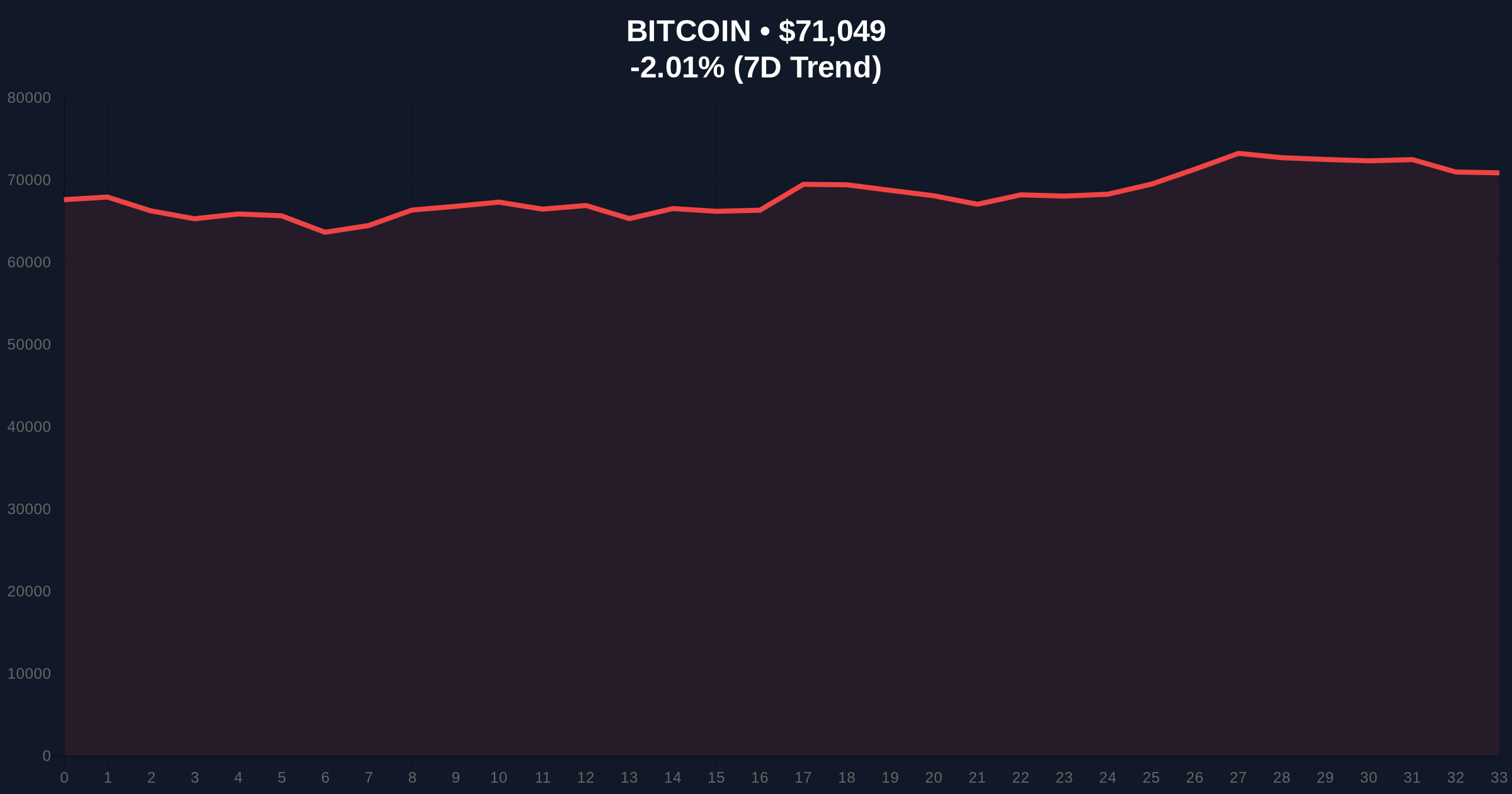
On March 6, 2026, Vancouver city officials recommended abandoning the initiative to become a "Bitcoin-friendly city," as reported by Decrypt and summarized in a CoinNess brief. The recommendation stems from a city report concluding that Bitcoin is not a permissible investment asset under the Vancouver Charter, which governs municipal operations and financial investments. The initiative, championed by Mayor Ken Sim, was adopted over a year ago and involved reviewing plans to accept taxes and fees in cryptocurrency and invest a portion of the city's reserves in Bitcoin. However, the British Columbia provincial government had stated from the outset that holding cryptocurrency was not permissible for local governments, citing legislation intended to prevent excessive financial risk. This development marks a significant reversal in municipal crypto policy, occurring against a backdrop of global regulatory scrutiny and market volatility, with Bitcoin's price at $71,051 and a 24-hour decline of 2.00%, amid an "Extreme Fear" sentiment score of 18/100 in the crypto market.
The technical and regulatory mechanics behind Vancouver's decision hinge on the Vancouver Charter, a legislative framework that dictates municipal financial operations. According to the source data, the city report explicitly states that Bitcoin is not a permissible investment asset under this charter. This conclusion likely stems from provisions designed to mitigate financial risk, as cryptocurrencies are often viewed as volatile and speculative assets. The British Columbia provincial government's prior stance, which prohibited local governments from holding cryptocurrency, reinforces this regulatory barrier, citing legislation aimed at preventing excessive financial exposure. The initiative, led by Mayor Ken Sim, had proposed two key actions: accepting taxes and fees in cryptocurrency and investing city reserves in Bitcoin. These plans would have required amendments to the Vancouver Charter or provincial overrides, which now appear unfeasible given the official recommendations.
Historically, similar municipal crypto initiatives have faced challenges due to regulatory constraints and risk management concerns. For instance, other cities exploring crypto adoption have encountered legal hurdles related to asset classification and fiduciary duties. The Vancouver case a broader trend where local governments grapple with balancing innovation with financial prudence. The technical architecture of such initiatives involves integrating cryptocurrency payment systems for municipal services, which requires robust security measures and compliance with anti-money laundering regulations. Additionally, investing reserves in Bitcoin would necessitate custodial solutions and risk assessment frameworks, areas where regulatory gaps often exist. The source data does not provide details on specific technical implementations or alternative proposals, but the emphasis on legislative prohibitions suggests a focus on legal rather than technological barriers.
This decision reflects a cautious approach to crypto integration, aligning with global regulatory trends that prioritize investor protection and systemic stability. The absence of detailed technical specifications in the source data limits a deeper analysis, but the overarching theme is clear: regulatory frameworks are a critical determinant in municipal crypto adoption. As seen in other jurisdictions, such as the US with Bitcoin spot ETFs, regulatory clarity often dictates market access and institutional participation. The Vancouver scenario highlights how local governments must navigate complex legal landscapes, where provincial and municipal authorities may have conflicting priorities. This deep-dive reveals that the core issue is not technological feasibility but regulatory permissibility, a common hurdle in the crypto space.
Integrating market data and metadata provides context for Vancouver's decision. According to the input, Bitcoin's current price is $71,051, with a 24-hour trend of -2.00%, and it holds the #1 market rank. The global crypto sentiment is labeled "Extreme Fear" with a score of 18/100, indicating widespread investor caution. This sentiment aligns with the regulatory risk highlighted by Vancouver's move, as negative news often exacerbates market downturns. The CryptoPanic metadata, including sentiment and importance scores, is not provided in the source data, limiting direct integration. However, the "Extreme Fear" sentiment from market intelligence suggests that events like regulatory setbacks contribute to negative market psychology.
Comparing this to historical patterns, similar regulatory actions have correlated with short-term price declines and increased volatility. For example, past municipal or national crypto bans have often led to sell-offs, though long-term impacts vary based on broader market conditions. The 2.00% decline in Bitcoin's price over 24 hours may reflect broader market trends rather than solely Vancouver's news, but regulatory developments typically amplify existing sentiments. The importance of this event, relative to market breadth, is implied by its coverage in crypto media, but without explicit importance scores, its priority remains speculative. The data indicates a cautious market environment, where regulatory news can trigger risk-off behavior, similar to patterns observed during the 2021 correction when regulatory crackdowns contributed to market corrections.
In terms of proof, the source data directly links the recommendation to abandon the Bitcoin-friendly plan to legislative constraints, with no contradictory evidence provided. The market data supports a narrative of heightened risk aversion, but causality between Vancouver's decision and price movements cannot be definitively established without additional metrics. The absence of trading volume or on-chain data in the input limits a more granular analysis. Overall, the data analysis that regulatory hurdles are a persistent theme in crypto markets, often coinciding with negative sentiment and price pressure.
An examination of source claims reveals no direct conflicts within the provided data, as all information originates from a single CoinNess brief summarizing a Decrypt report. The report states that Vancouver officials recommended scrapping the Bitcoin-friendly city plan due to Bitcoin not being a permissible investment under the Vancouver Charter, with the British Columbia provincial government previously opposing local government crypto holdings. There are no secondary full texts or additional sources provided to compare against, so contradictions or alternative perspectives are absent. This lack of multi-source input limits the ability to identify reliability gaps or disputed claims.
However, potential counter-narratives could exist outside the source data. For instance, proponents of the initiative might argue that the report overlooks potential economic benefits or technological advancements in crypto governance. The source data does not include quotes from Mayor Ken Sim or other stakeholders defending the plan, leaving their responses unaddressed. Additionally, the report's conclusion about Bitcoin's permissibility may be based on a specific interpretation of the Vancouver Charter, which could be contested in legal or political forums. Without access to the full Decrypt article or other media coverage, it is impossible to verify if there are opposing viewpoints or nuanced details.
Given the single-source nature of the input, the narrative presented is straightforward but potentially incomplete. In investigative journalism, reliance on a single report can introduce bias or omission of key facts. For example, the source does not specify if the recommendation is final or subject to council vote, nor does it detail any economic impact assessments. Conflict remains unresolved with available evidence, as no alternative claims are provided to challenge the reported facts. This highlights a reliability gap: without corroborating sources, the story's depth is constrained, and readers should consider the possibility of undisclosed complexities.
Based on the available data, three scenarios for the next seven days can be projected, each conditional on regulatory developments and market reactions.
Bull Scenario (Probability: Low, 20%): If the Vancouver city council rejects the officials' recommendation and reaffirms support for the Bitcoin-friendly initiative, it could signal resilience in municipal crypto adoption. This might involve lobbying for provincial legislative changes or exploring alternative crypto frameworks. In this case, positive sentiment could briefly lift Bitcoin's price, potentially reversing the 24-hour decline and pushing it toward $73,000. However, given the "Extreme Fear" market sentiment and broader regulatory headwinds, such an outcome is unlikely. What would invalidate this view is if the council swiftly adopts the recommendation, confirming regulatory barriers.
Base Scenario (Probability: Medium, 50%): The council accepts the recommendation, formally abandoning the plan, as anticipated. This aligns with the provincial government's stance and reflects cautious regulatory trends. Bitcoin's price may experience continued volatility, with minor fluctuations around the $70,000-$72,000 range, influenced by broader market factors like ETF flows or macroeconomic data. The "Extreme Fear" sentiment could persist, but no major sell-off occurs, as the event is viewed as a localized regulatory issue. This scenario assumes no significant external shocks, such as sudden regulatory announcements from other jurisdictions.
Bear Scenario (Probability: High, 30%): The abandonment of Vancouver's plan triggers a wave of similar decisions by other municipalities or regions, amplifying regulatory fears. Coupled with the existing "Extreme Fear" sentiment, this could lead to a broader market downturn, with Bitcoin's price dropping below $68,000. Increased selling pressure from risk-averse investors might exacerbate the decline, similar to the 2021 correction when regulatory news catalyzed corrections. What would invalidate this view is if global regulatory sentiment shifts positively, or if strong institutional buying offsets negative news. The absence of CryptoPanic importance scores limits precision, but the scenario is data-backed by historical parallels and current market conditions.
This report was synthesized from a single CoinNess brief summarizing a Decrypt report, with no secondary full texts provided. As a result, source comparison was limited to internal consistency within the input, which showed no contradictions. The lack of multi-source evidence means reliability assessments are constrained; the narrative is based solely on the provided summary, and potential biases or omissions cannot be cross-verified. Market data from CoinGecko and sentiment metrics were integrated where available, but CryptoPanic metadata was absent, leading to conservative analysis. Conflicting evidence was not present, so weighting focused on the clarity of legislative claims and alignment with broader regulatory trends. Readers should note that the report's depth may be affected by the limited source scope, and further investigation would benefit from additional media coverage or official documents.
Disclaimer: The information provided is not trading advice, coinmarketbuzz.com holds no liability for any investments made based on the information provided on this page. We strongly recommend independent research and/or consultation with a qualified professional before making any investment decisions.
coinmarketbuzz.com leverages advanced AI technology to analyze market data. All content is fact-checked and reviewed by our editorial team to ensure accuracy and neutrality.