Loading News...
Loading...

Loading News...
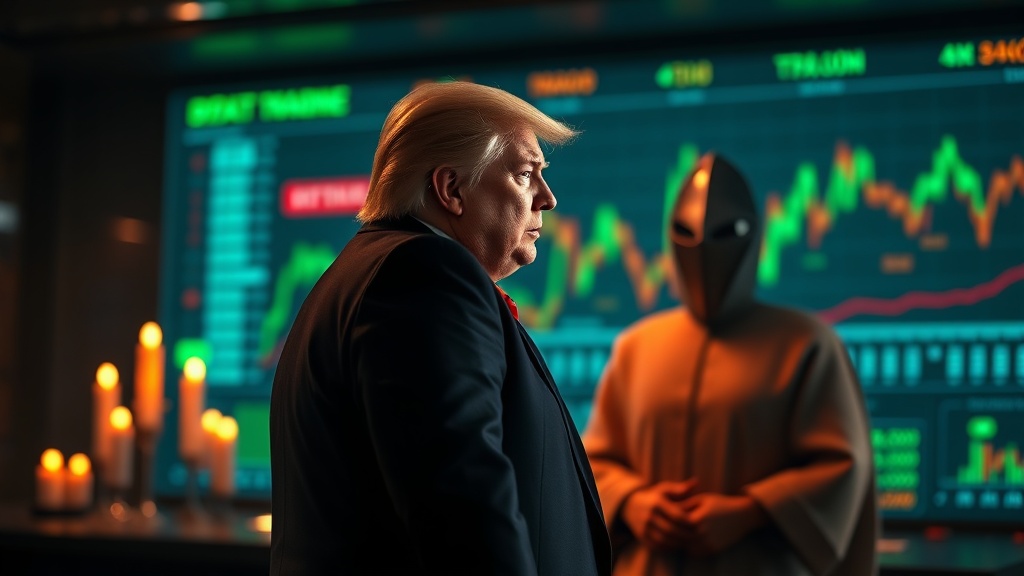
VADODARA, April 8, 2026. The following report is based on currently available verified source material and market data.
Trump's Strait of Hormuz Joint Venture Proposal: A Geopolitical Gambit Amid Crypto Market 'Extreme Fear' developed into a market-moving story within the reported window. The initial source indicates immediate relevance for crypto sentiment, while fuller validation is still tied to cited datasets and official statements.
On April 8, 2026, U.S. President Donald Trump suggested a potential joint venture with Iran to protect the security of the Strait of Hormuz, a critical global oil chokepoint, following a two-week truce. This geopolitical development emerges as the cryptocurrency market, often sensitive to macro instability, registers "Extreme Fear" sentiment with Bitcoin trading at $71,704, up 4.90% in 24 hours. The proposal, framed as a mechanism to secure the strait while limiting multilateral involvement, introduces new uncertainty into energy markets and, by extension, risk assets like crypto, at a moment of heightened investor anxiety.
The announcement is a direct public statement from President Trump, with no immediate crypto-specific metrics provided beyond broader market indicators. The primary data points anchoring this analysis are the concurrent crypto market conditions, which serve as a contextual backdrop for potential ripple effects.
| Metric | Value | Source |
|---|---|---|
| Bitcoin Price (24h Change) | $71,704 (+4.90%) | Source: CoinGecko |
| Global Crypto Sentiment Index | 17/100 ("Extreme Fear") | Source: CoinGecko |
| Announcement Date | April 8, 2026 | Source: public statement |
Specific metrics on oil price volatility, regional military deployments, or direct market reactions to the statement are not provided in source data.
Why now? The timing is critical, occurring during a fragile truce and amid "Extreme Fear" in crypto markets. Geopolitical shocks can amplify existing market volatility, particularly when they involve key energy corridors like the Strait of Hormuz, through which about 20% of global oil passes. This creates a dual-layer of risk: direct disruption to energy supplies and indirect contagion to risk-on assets.
Who benefits? In the short term, uncertainty typically benefits volatility traders and safe-haven assets, though crypto's role as a "digital gold" in such scenarios remains contested. Potentially, nations or entities with diversified energy portfolios or those less reliant on Hormuz transit could see relative stability. Conversely, traditional energy markets and regions dependent on the strait face immediate disruption risks.
Time horizons: Short-term (days/weeks), the market impact hinges on whether the proposal de-escalates or inflames tensions. A successful joint venture could stabilize energy flows, indirectly supporting risk assets. Failure could trigger oil price spikes and broader market panic. Long-term (months/years), the precedent of U.S.-Iran cooperation on strategic infrastructure could reshape regional alliances and commodity market dynamics.
Causal chain: The mechanism works as: Geopolitical proposal → increased uncertainty in energy markets → potential oil price volatility → altered inflation and risk-appetite expectations → impact on liquidity and sentiment in correlated assets like cryptocurrencies. The current "Extreme Fear" sentiment suggests markets are primed for negative shocks, potentially magnifying any adverse developments.
The underlying mechanism linking this event to crypto markets is not direct but operates through macro-financial channels. The Strait of Hormuz is a linchpin for global oil supply. Any threat to its security, or any diplomatic maneuver perceived as unstable, can trigger oil price spikes. Higher oil prices can feed into inflation expectations, potentially influencing central bank policies and global liquidity conditions. Cryptocurrencies, particularly Bitcoin, have shown sensitivity to shifts in liquidity and risk sentiment, though the correlation is inconsistent. Thus, the pathway is: geopolitical statement → oil market reaction → macro liquidity and sentiment adjustment → crypto market impact. The 4.90% Bitcoin gain amid "Extreme Fear" suggests other factors are currently dominant, but the situation remains fluid.
This development occurs alongside other regulatory and institutional moves in crypto, though direct parallels are limited. The proposal is a geopolitical event, distinct from the sector-specific news shaping the.
The bullish narrative, that this proposal could stabilize a key region and reduce oil market volatility, faces significant counterpoints and risks.
Practically, traders should monitor oil prices and Middle East diplomatic developments over the coming days. A breakdown in talks could trigger risk-off moves across assets. For crypto, the key near-term implication is whether this event exacerbates or alleviates the prevailing "Extreme Fear" sentiment. Institutional players may adjust hedging strategies if oil volatility spikes, potentially affecting liquidity in crypto derivatives markets.
The Strait of Hormuz has long been a flashpoint in global energy security, with periodic tensions involving Iran, the U.S., and regional powers. Trump's proposal echoes past attempts at cooperative security arrangements but comes amid a complex backdrop of truces and enrichment disputes. Crypto markets have historically shown mixed reactions to geopolitical events, sometimes acting as a risk-off asset, other times correlating with equities.
While this event is geopolitical, it intersects with a crypto marked by:
Trump's joint venture suggestion introduces a new variable into an already tense geopolitical and market environment. While the direct crypto impact is unclear, the mechanism of oil market volatility affecting macro conditions warrants close watch. The proposal's success or failure will hinge on diplomatic follow-through in a region with deep-seated conflicts.
Q1: How does the Strait of Hormuz affect cryptocurrency markets?Indirectly, through oil price volatility influencing inflation, liquidity, and global risk sentiment, which can impact crypto as a risk-on asset.
Q2: Why is crypto sentiment in "Extreme Fear" despite Bitcoin's price rise?Sentiment indices often lag price action or reflect broader anxieties beyond immediate price moves, such as regulatory or macro uncertainties.
Q3: What is the likelihood this joint venture will be implemented?Not provided in source data, but historical U.S.-Iran tensions and conflicting statements on enrichment suggest high implementation barriers.
Q4: Should crypto traders adjust strategies based on this news?Traders might monitor oil markets and geopolitical developments, but crypto's reaction is uncertain; diversification and risk management remain key.
Q5: Are there direct crypto metrics linked to this event?Not provided in source data; current data shows only broader market conditions like Bitcoin price and sentiment.
Q6: What happens if negotiations fail?Potential escalation could spike oil prices, increase market volatility, and possibly deepen "Extreme Fear" sentiment, affecting crypto liquidity.
Analysts are watching for Iran's official response and April 10 peace talks for clues on whether this proposal stabilizes or destabilizes a key global chokepoint.
What to watch next: President Donald Trump said today that he could pursue a joint venture with Iran to protect the security of the Strait of Hormuz, following a two...; President Donald Trump said today that he could pursue a joint venture with Iran to protect the security of the Strait of Hormuz, following a two-week truce announced a day earlier..
Evidence & Sources
Primary source: https://coinness.com/news/1153964
Updated at: Apr 09, 2026, 01:01 AM
Data window: Apr 08, 2026, 01:52 PM → Apr 08, 2026, 01:56 PM
Evidence stats: 2 metrics, 2 timeline points.
Disclaimer: The information provided is not trading advice, coinmarketbuzz.com holds no liability for any investments made based on the information provided on this page. We strongly recommend independent research and/or consultation with a qualified professional before making any investment decisions.
All published reports are reviewed by our editorial team for factual consistency, neutrality, and reader clarity.