Loading News...
Loading...

Loading News...

VADODARA, April 10, 2026. The following report is based on currently available verified source material and market data.
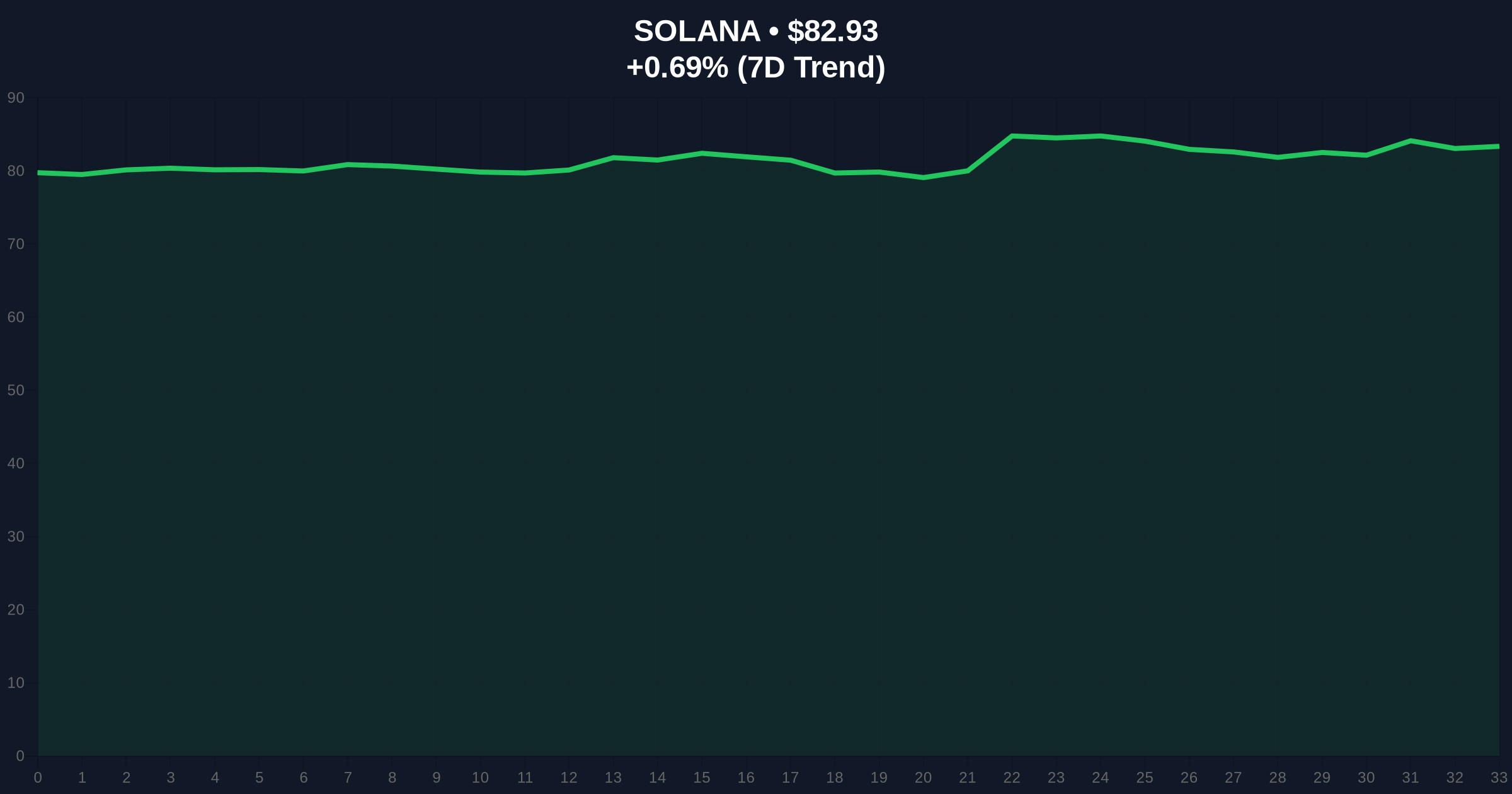
Solana spot ETFs recorded their largest single-day withdrawal since launch on April 9, 2026, signaling weakening institutional demand as SOL faces technical resistance at $88. The token trades at $83.82 as of April 10, up 6.3% weekly after bouncing from $78 support, but ETF outflows and bearish derivatives data point to potential downside. This development matters because it highlights a divergence between Solana's adoption metrics, including $1 billion in ETF assets and the upcoming Alpenglow upgrade, and its price action, occurring amid extreme market fear with a global sentiment score of 16/100.
Key metrics from the event include Solana's price at $83.82 as of April 10, representing a 6.3% weekly gain, with support at $78 and resistance at $88. SOL spot ETFs posted their largest single-day outflow since launch on April 9, though specific outflow amounts are not provided in source data. The global crypto sentiment is "Extreme Fear" with a score of 16/100, and Solana's current price is $82.94 with a 24-hour trend of 0.70%, ranking #7 by market cap. Source: CoinGecko, Source: public statement.
| Metric | Value | Source |
|---|---|---|
| SOL Price (April 10) | $83.82 | Public statement |
| Weekly Gain | 6.3% | Public statement |
| Support Level | $78 | Public statement |
| Resistance Level | $88 | Public statement |
| Global Sentiment Score | 16/100 (Extreme Fear) | CoinGecko |
Why now? This matters because Solana's ETF outflows coincide with a rejection from key resistance and extreme market fear, suggesting institutional caution despite positive fundamentals like $1 billion in ETF assets. Who benefits? Short-term traders may capitalize on volatility near support/resistance levels, while long-term holders face uncertainty from weakening ETF demand. Retail investors eyeing alternative opportunities like presale tokens could shift capital away from SOL. Time horizons: In the short term (days/weeks), SOL faces pressure from ETF outflows and technical bearishness; longer-term (months/years), the Alpenglow upgrade and adoption curve could support prices if ETF flows reverse. Causal chain: ETF outflows → reduced institutional buying pressure → increased selling pressure on SOL → price struggles at resistance → retail sentiment turns cautious amid extreme fear.
The mechanism involves ETF flows directly impacting market liquidity and price discovery. When spot ETFs experience outflows, institutional investors redeem shares, forcing ETF providers to sell underlying SOL holdings. This selling increases supply on the market, absorbing buy-side liquidity and creating downward pressure on price. Consequently, as SOL approached the $88 resistance level, the ETF outflow signal exacerbated bearish momentum, aligning with derivatives data turning negative. Underlying this trend, the extreme fear sentiment (score 16/100) reflects broader market anxiety, potentially amplifying sell-offs as traders react to technical breakdowns.
Solana's situation contrasts with broader crypto trends where regulatory shifts and institutional predictions shape market dynamics. For instance, recent developments include:
The bearish scenario for SOL includes several key risks:
Practically, near-term implications involve traders watching the $78-$88 range for breakout or breakdown signals. If SOL holds support, it could retest resistance, but continued ETF outflows may lead to consolidation or further declines. The Alpenglow upgrade in mid-2026 targeting sub-150ms finality could provide a fundamental boost, but price may lag if institutional flows remain weak. Investors should monitor ETF flow reports and derivatives sentiment for shifts, as these will drive short-term price action more than long-term upgrades.
Solana has seen significant adoption with ETF assets crossing $1 billion and ongoing network improvements, but price has not fully followed this curve. The current event builds on a pattern where technical levels and institutional behavior intersect, reminiscent of past cycles where early movers capitalized on presale opportunities. Historically, SOL has faced volatility around key levels, making the $83 zone a critical battleground for market sentiment.
Cross-market reactions include increased interest in alternative investments like presale tokens during extreme fear periods. For example, Pepeto's presale has raised $8.86 million, highlighting capital rotation from assets like SOL to higher-risk opportunities. Additionally, broader crypto news such as regulatory changes in Japan and predictions about crypto ubiquity add context but do not directly impact SOL's ETF dynamics. These related trends underscore how Solana's outflows are part of a larger narrative of market fear and diversification.
Key takeaways are that Solana's ETF outflows signal near-term bearish pressure despite positive fundamentals, with price action hinging on the $78 support level. The extreme fear sentiment amplifies risks, but long-term upgrades like Alpenglow offer potential recovery if institutional flows stabilize. Traders must weigh technical signals against adoption metrics in a cautious market environment.
What to watch next: Sitting around for the next SOL forecast makes no sense when the presale fills today and the Binance listing moves closer with every stage.; exchange-level volume and liquidity data.
Evidence & Sources
Primary source: https://coinpedia.org/press-release/sol-price-prediction-changes-after-one-signal-while-pepeto-fills
Updated at: Apr 10, 2026, 10:30 AM
Data window: Apr 10, 2026, 09:54 AM → Apr 10, 2026, 10:29 AM
Evidence stats: 9 metrics, 1 timeline points.
Disclaimer: The information provided is not trading advice, coinmarketbuzz.com holds no liability for any investments made based on the information provided on this page. We strongly recommend independent research and/or consultation with a qualified professional before making any investment decisions.
All published reports are reviewed by our editorial team for factual consistency, neutrality, and reader clarity.