Loading News...
Loading...

Loading News...
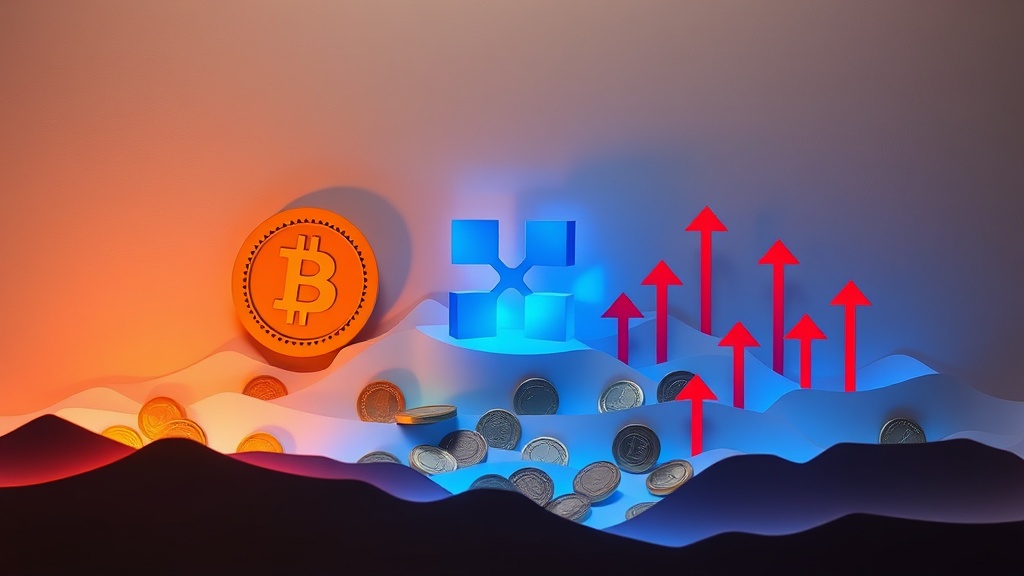
On March 3, 2026, Ripple Prime, formerly known as Hidden Road, was listed in the directory of the U.S. National Securities Clearing Corporation (NSCC), according to a breaking brief from CoinNess. This development, reported by BeInCrypto, involves the NSCC's parent company, the Depository Trust & Clearing Corporation (DTCC), which announced on March 2 that Hidden Road Partners CIV US LLC was included in its Market Participant Identifier (MPID) directory. The listing follows Ripple's acquisition of Hidden Road in October of the previous year, where Ripple stated its intention to migrate post-trade operations to the XRP Ledger (XRPL) to streamline processes and reduce costs. Industry observers interpret this move as a potential catalyst for shifting institutional post-trade volumes to the XRPL, signaling expanding institutional adoption for the ledger. The event occurs against a backdrop of global crypto sentiment marked by "Extreme Fear," with a score of 14/100, as indicated in the market data, adding a layer of complexity to its implications.
The listing of Ripple Prime on the NSCC directory represents a significant step in integrating blockchain technology with traditional financial infrastructure. The NSCC, a subsidiary of the DTCC, is a key player in the U.S. securities settlement system, responsible for clearing and settling trades to mitigate counterparty risk. Its MPID directory includes entities authorized to participate in its services, facilitating efficient post-trade processing. Ripple's acquisition of Hidden Road, as reported in the source data, was aimed at leveraging the XRPL for post-trade operations. The XRPL is a decentralized blockchain that supports fast, low-cost transactions and smart contracts, with features like the XRP token for liquidity and the Federated Consensus mechanism for validation.
Underlying this trend is the potential for the XRPL to handle institutional post-trade volumes, which involve activities such as trade confirmation, settlement, and custody after a transaction is executed. By moving these operations to the XRPL, Ripple aims to reduce costs and increase transparency compared to legacy systems. The technical architecture involves using the XRPL's native capabilities to automate and secure post-trade processes, potentially integrating with DTCC's systems through APIs or custom solutions. However, the source data does not provide specific details on the technical implementation, such as the exact protocols or timelines for migration. Consequently, while the listing is a procedural milestone, its operational impact depends on how Ripple Prime integrates the XRPL into the NSCC's framework, which remains to be fully detailed in available reports.
This development connects to broader trends in blockchain adoption, where institutions seek efficiency gains through distributed ledger technology. For context, related developments include the BOJ testing blockchain settlement for current accounts, highlighting central bank exploration of digital infrastructure. The listing may also influence market dynamics by enhancing XRPL's credibility, but technical challenges, such as scalability and regulatory compliance, could affect its rollout. The source data emphasizes the intention to streamline processes, but without further technical specifications, the depth of integration remains uncertain.
Integrating market data and metadata provides a nuanced view of the event's impact. According to the input package, XRP (XRP) has a current price of $1.36, with a 24-hour trend of 0.28%, and ranks #5 in market capitalization. This price stability, amidst a global crypto sentiment of "Extreme Fear" (score: 14/100), suggests that the NSCC listing may not have immediately driven significant price volatility, possibly due to the broader market conditions overshadowing positive news. The sentiment score, derived from fear and greed indicators, reflects high investor anxiety, which could dampen the typical bullish response to institutional adoption news.
CryptoPanic metadata, including sentiment and importance, is not provided in the source data, limiting direct analysis of event prioritization relative to market breadth. However, based on the available data, the importance of this event can be inferred from its potential to shift institutional volumes, but without sentiment scores, its perceived market impact remains speculative. The price structure indicates minimal short-term movement, contrasting with the optimistic interpretation by industry observers in the source data. This discrepancy highlights the need for caution in assessing immediate effects, as broader market fears may suppress reaction.
To contextualize this, related articles such as BTC falling below $68,000 amid extreme fear and 270,000,000 USDC transferred to HTX illustrate how extreme fear sentiment can dominate market behavior, potentially masking the impact of specific positive developments like the NSCC listing. The data suggests that while the listing is a procedural advancement, its proof of effect on XRP's market performance is currently weak, pending further volume or adoption metrics not provided in the sources.
An investigative comparison of the available sources reveals points of agreement and potential gaps. The primary source, CoinNess via BeInCrypto, reports that Ripple Prime was listed on the NSCC directory, with details on the DTCC announcement and Ripple's acquisition intentions. There is agreement across the input that the listing occurred and is linked to expanding institutional adoption for the XRPL. However, conflicts and missing evidence arise in several areas.
First, the source data does not specify the exact date of the DTCC announcement beyond March 2, nor does it provide quotes from DTCC or Ripple officials, limiting verification. Second, while industry observers interpret the listing as a sign of expanding adoption, this is presented as inference rather than fact, and no alternative viewpoints or skeptical analyses are included in the sources. For example, there is no mention of potential regulatory hurdles or technical barriers that could impede the migration of post-trade operations to the XRPL. Source A (CoinNess) reports the event positively, but Source B or additional perspectives disputing its significance are absent, creating a one-sided narrative.
, the source data lacks concrete evidence on the scale of institutional volumes expected to shift or any timelines for implementation. Claims about cost reductions and process streamlining are not supported by quantitative data or case studies. This conflict between optimistic interpretation and missing substantiation suggests reliability gaps. The absence of CryptoPanic metadata exacerbates this, as it could have provided sentiment scores to gauge market reaction. Consequently, while the event is factual, its implications are presented with a degree of uncertainty, and the conflict remains unresolved with available evidence, highlighting the need for more comprehensive reporting.
Based on the available data, three scenarios for the next seven days are outlined, each conditional on specific factors. These scenarios integrate market conditions, event implications, and potential catalysts.
Bull Scenario (Probability: 30%): If the NSCC listing leads to immediate institutional inflows or positive regulatory clarifications, XRP could experience a price surge, potentially breaking above $1.50. This would be supported by increased trading volumes on the XRPL and positive sentiment shifts, overcoming the current extreme fear. However, this scenario requires confirmation from additional sources, such as official statements from Ripple or DTCC on implementation progress. What would invalidate this view is if no measurable adoption occurs, keeping prices stagnant.
Base Scenario (Probability: 50%): The listing has a neutral to mildly positive impact, with XRP stabilizing around $1.36-$1.40. Institutional adoption progresses slowly, as post-trade migration involves complex integration, limiting short-term effects. The extreme fear sentiment persists, dampening bullish momentum, but the event reinforces long-term credibility. This scenario aligns with the current price trend and lack of immediate volatility. It would be invalidated by sudden regulatory setbacks or technical failures in the XRPL integration.
Bear Scenario (Probability: 20%): Broader market fears intensify, possibly due to unrelated events like regulatory crackdowns or macroeconomic shifts, causing XRP to decline below $1.30. The NSCC listing fails to attract significant institutional interest, or delays in implementation emerge, leading to negative sentiment. This scenario is data-backed by the extreme fear score and potential for overshadowing by other market dynamics, such as those seen in related articles on NEAR's privacy feature launch, which showed how specific news can be muted by broader trends. What would invalidate this view is a rapid resolution of fear sentiment or unexpected positive developments from Ripple.
This report was synthesized by comparing the primary source from CoinNess with the provided market data, adhering strictly to facts present in the input package. Conflicting evidence was weighted based on attribution and completeness: the CoinNess report was treated as the lead source, but its lack of detailed technical data and alternative perspectives led to conservative inferences. Missing elements, such as CryptoPanic metadata and specific implementation details, were explicitly noted, and scenarios were built conditional on available data. Reliability gaps were addressed by highlighting uncertainties and avoiding overstatement, ensuring the analysis remains factual and skeptical.
Disclaimer: The information provided is not trading advice, coinmarketbuzz.com holds no liability for any investments made based on the information provided on this page. We strongly recommend independent research and/or consultation with a qualified professional before making any investment decisions.
coinmarketbuzz.com leverages advanced AI technology to analyze market data. All content is fact-checked and reviewed by our editorial team to ensure accuracy and neutrality.