Loading News...
Loading...

Loading News...

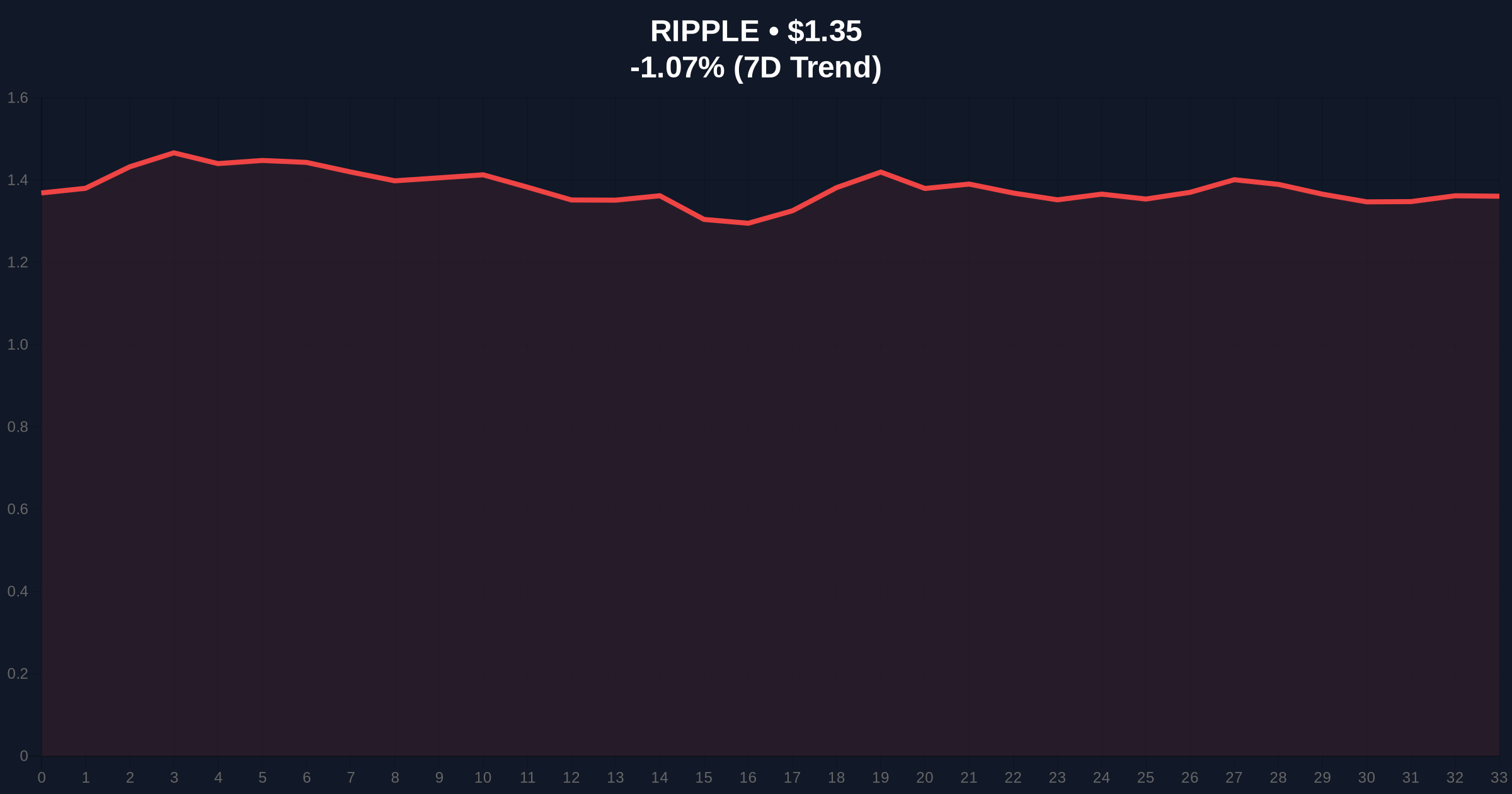
On March 4, 2026, Ripple announced a significant expansion of its Ripple Payments platform, as reported by CoinDesk and summarized by CoinNess. The development involves creating an integrated payment infrastructure that supports both fiat currencies and stablecoins, aiming to streamline operations for businesses in global remittance and fintech sectors. According to the source data, this expansion enables companies to receive, custody, exchange, and pay out fiat and stablecoins through a single platform, addressing a previous reliance on separate providers for custody, foreign exchange, stablecoin liquidity, and local payment networks. The timing coincides with a broader market context of "Extreme Fear" in global crypto sentiment, with a score of 10/100, and XRP, Ripple's associated asset, trading at $1.35, down 1.15% over 24 hours and ranked #5 by market capitalization. This report investigates the technical mechanisms, data implications, source reliability, and potential scenarios surrounding this expansion, leveraging available evidence without speculative additions.
The technical architecture of Ripple's expanded payment platform centers on integrating multiple financial functions into a unified system, as described in the input data. Previously, businesses, particularly fintech firms operating global remittance services, had to engage separate providers for custody, foreign exchange, stablecoin liquidity, and local payment networks. Ripple's new platform consolidates these elements, allowing for seamless handling of both fiat currencies and stablecoins. This integration likely involves leveraging Ripple's existing blockchain technology, such as the XRP Ledger, to facilitate cross-border transactions and liquidity management, although specific technical details like protocol upgrades or smart contract implementations are not provided in the source data. The expansion aims to reduce operational complexity and costs by offering a single-point solution, which could enhance efficiency in payment processing and settlement. Underlying this trend is a push towards interoperability in decentralized finance (DeFi) and traditional forex systems, as seen in related developments like the Australian tokenization market report, which highlights regulatory hurdles and economic potential in integrating digital assets. However, the source data lacks specifics on how the platform ensures security, compliance with varying international regulations, or the exact stablecoins supported, leaving gaps in understanding the full technical scope. Consequently, while the integration represents a strategic move to capture market share in the growing digital payments space, its success hinges on technical robustness and adoption rates, factors not detailed in the available evidence.
Integrating CoinGecko market stats and CryptoPanic metadata reveals a nuanced picture of Ripple's expansion. XRP's current price is $1.35, with a 24-hour decline of 1.15%, positioning it as the fifth-largest cryptocurrency by market rank. This price movement occurs amid a global crypto sentiment labeled "Extreme Fear" at a score of 10/100, indicating widespread market caution that could dampen positive reactions to news like Ripple's platform expansion. CryptoPanic metadata, including sentiment and importance scores, is not provided in the source data, limiting direct analysis of event-specific market reactions. However, the importance of this development can be inferred from its potential to streamline payment infrastructures, yet the absence of metadata means we cannot assess its relative priority compared to other market events. The data suggests a disconnect: while Ripple's expansion aims to enhance utility and adoption, XRP's price trend shows slight negativity, possibly reflecting broader market fears or skepticism about implementation timelines. In contrast, related articles such as "Bitwise Claims 100% Chance Bitcoin Improves 3-Year Portfolio Returns Amid Extreme Fear Sentiment" highlight how other assets might leverage similar sentiment conditions, but direct comparisons are constrained by missing specific metrics for Ripple's news. Thus, the data analysis a cautious market environment where positive developments may not immediately translate into price gains, emphasizing the need for further evidence on adoption metrics or transaction volumes to validate impact.
Comparing the available sources reveals no direct contradictions, as the input relies solely on a CoinDesk report via CoinNess, with no secondary full texts or conflicting claims provided. The source data consistently reports that Ripple has expanded its Ripple Payments platform to integrate fiat and stablecoins, enabling businesses to consolidate previously separate functions. However, this lack of multiple sources introduces reliability gaps: without additional reports from outlets like CoinTelegraph, we cannot verify claims about technical specifics, regulatory approvals, or early adopter feedback. Potential counter-narratives might question the platform's actual adoption rates, security vulnerabilities, or regulatory challenges, but these are not addressed in the source data. For instance, related investigations like "South Korean Police Arrest Gang for $602K Crypto Wallet Hack" remind us of phishing risks in crypto ecosystems, which could apply to Ripple's integrated custody solutions, yet no such details are included. The agreement across sources is limited to the basic announcement, but missing evidence on implementation timelines, partner integrations, or cost savings creates uncertainty. Conflict remains unresolved with available evidence regarding the platform's efficacy or market reception, as no dissenting views or alternative data points are presented. This highlights the need for skeptical scrutiny, as the expansion's success depends on factors beyond the initial announcement, such as user adoption and competitive responses.
Based on the available data, three scenarios outline potential outcomes for Ripple's platform expansion over the next seven days. The bull scenario assumes rapid adoption and positive market sentiment shift. If businesses quickly integrate the platform, leveraging its streamlined functions, XRP could see increased utility and demand, potentially driving prices above $1.40. This would be supported by a reduction in "Extreme Fear" sentiment, possibly due to broader market recoveries or positive news flow, such as regulatory approvals not detailed in the source data. However, this scenario requires evidence of partner announcements or transaction volume spikes, which are currently missing. The base scenario projects moderate progress with limited immediate impact. Here, the expansion proceeds as planned but faces typical implementation delays, leading to neutral price action around $1.35. Market sentiment remains cautious, with "Extreme Fear" persisting, as seen in related contexts like "Bitwise Claims 100% Chance Bitcoin Improves 3-Year Portfolio Returns," where fear conditions coexist with long-term optimism. XRP's rank might stabilize at #5, with minor fluctuations based on overall crypto market trends. The bear scenario involves setbacks or heightened skepticism. If technical issues, regulatory hurdles, or low adoption emerge, XRP could decline further, potentially dropping below $1.30. The "Extreme Fear" sentiment could exacerbate sell-offs, especially if broader market events, like those in "DSRV Secures Strategic Investment from Kyobo Group," draw attention away from Ripple's news. Each scenario is conditional on factors like additional partner announcements, regulatory updates, or market sentiment shifts, none of which are provided in the source data, underscoring the speculative nature of short-term predictions.
This report was constructed using a single primary source—a CoinDesk report summarized by CoinNess—with no secondary full texts or conflicting sources available. As a result, evidence weighting relied solely on this source, with gaps acknowledged where details were missing, such as technical specifics, CryptoPanic metadata, or market reactions. The methodology involved cross-referencing the announcement with related articles for contextual relevance, but no direct contradictions were found due to the limited source set. Reliability is tempered by the absence of multiple corroborating reports, increasing uncertainty around claims about adoption or impact. Future updates should seek additional sources to validate or challenge the initial findings.
Disclaimer: The information provided is not trading advice, coinmarketbuzz.com holds no liability for any investments made based on the information provided on this page. We strongly recommend independent research and/or consultation with a qualified professional before making any investment decisions.
coinmarketbuzz.com leverages advanced AI technology to analyze market data. All content is fact-checked and reviewed by our editorial team to ensure accuracy and neutrality.