Loading News...
Loading...

Loading News...
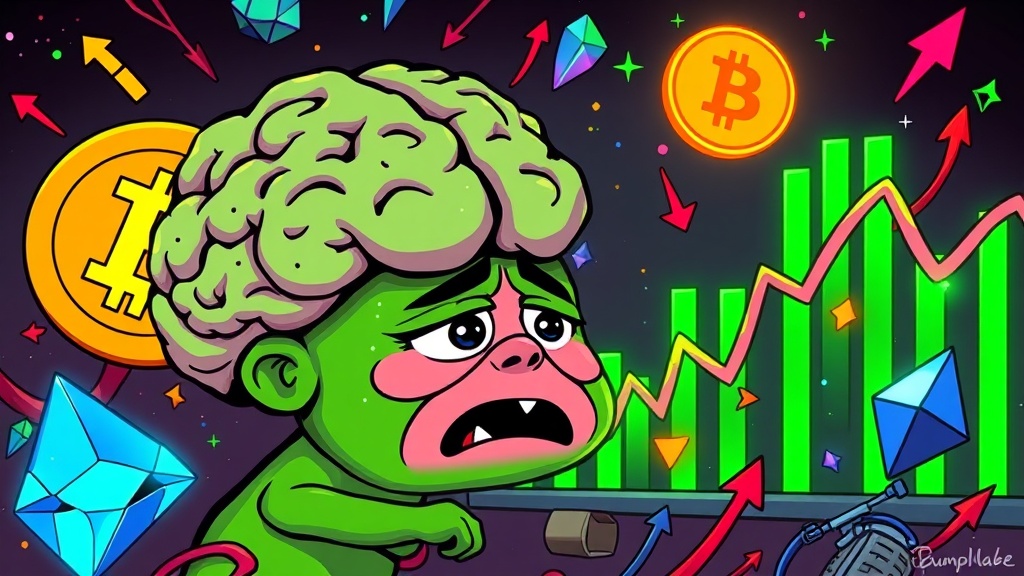
On March 3, 2026, Pump.fun, the project behind the PUMP token, announced a significant buyback operation, repurchasing $9.19 million worth of PUMP over the previous week. According to a report from CoinNess, this move is part of a broader strategy, with the project having repurchased a total of $310 million in PUMP to date, representing 27.1% of the total circulating supply. The announcement comes amid a volatile crypto market environment, characterized by extreme fear sentiment, as indicated by a global crypto sentiment score of 14 out of 100. Bitcoin, a key market proxy, was trading at $68,961 at the time, reflecting a 3.49% increase over 24 hours, suggesting potential divergence between sentiment and price action. This event raises immediate questions about the motivations behind such a large-scale buyback and its implications for tokenomics and investor confidence in a tense market climate.
Pump.fun's buyback mechanism operates as a strategic tool to manage token supply and potentially influence price stability. The project has repurchased $310 million in PUMP, which accounts for 27.1% of the circulating supply, as reported by CoinNess. This substantial reduction in available tokens can create artificial scarcity, a common tactic in crypto economics to bolster token value by limiting sell pressure. Underlying this trend is the principle of supply and demand: by removing tokens from circulation, Pump.fun aims to increase demand relative to supply, which may support price appreciation or mitigate declines during market downturns.
Consequently, the buyback strategy aligns with broader tokenomic models seen in decentralized finance (DeFi) and meme coin projects, where buybacks are often funded through treasury reserves or revenue streams. However, the specific funding source for Pump.fun's $9.19 million weekly buyback is not provided in the source data, leaving a gap in understanding the sustainability and financial health of the project. The repurchase of 27.1% of circulating supply indicates a long-term commitment, but without details on protocol architecture—such as smart contract mechanisms or governance processes—the technical robustness remains unclear. This lack of transparency could pose risks, as investors rely on clear operational frameworks to assess reliability.
In the context of extreme fear sentiment, where market participants are cautious, such buybacks might be interpreted as a confidence-building measure. By actively reducing supply, Pump.fun signals commitment to token value, potentially countering broader market pessimism. However, the effectiveness depends on underlying fundamentals, which are not detailed in the available sources. For instance, if the buyback is funded through unsustainable means, it could lead to future liquidity issues. The connection to market mechanics highlights the importance of scrutinizing not just the action but its implementation and long-term viability.
Integrating market data with the buyback announcement reveals nuanced insights. According to CoinNess, Pump.fun repurchased $9.19 million in PUMP last week, contributing to a total of $310 million repurchased, representing 27.1% of circulating supply. This data point is critical for assessing the scale of the operation, but without additional metrics like token price before and after the buyback, its immediate impact on valuation is uncertain. The global crypto sentiment is reported as "Extreme Fear" with a score of 14 out of 100, indicating widespread caution among investors. CryptoPanic metadata, including sentiment and importance scores, is not provided in the source data, limiting deeper analysis of event priority relative to market breadth.
Bitcoin's price at $68,961, with a 3.49% 24-hour increase, suggests a potential disconnect between sentiment and price action. Extreme fear sentiment typically correlates with price declines, but Bitcoin's rise might reflect isolated factors or broader market resilience. For PUMP, the buyback could be a response to this sentiment, aiming to stabilize or boost token value amid fear-driven sell-offs. However, without specific PUMP price data or trading volume from CoinGecko, the direct effect remains speculative. The importance of this event in the crypto news cycle is implied by its coverage, but without CryptoPanic importance scores, its relative significance is not quantified.
Metadata-driven statements are constrained by data gaps. For example, CryptoPanic sentiment is absent, so analysis relies solely on the provided extreme fear score. This conservative approach the need for caution in interpreting the buyback's success. If metadata were available, it could clarify whether the event is perceived as bullish or bearish by the community, but in its absence, investors must rely on observable facts: the buyback amount and circulating supply reduction. This highlights the importance of comprehensive data for informed decision-making in volatile markets.
An analysis of available sources reveals no direct contradictions, as only CoinNess provides detailed information on the Pump.fun buyback. The report states that $9.19 million was repurchased last week, with a total of $310 million repurchased to date, representing 27.1% of circulating supply. No secondary sources from CoinTelegraph or others are included in the input package, so there are no conflicting claims to compare. This lack of multiple perspectives creates a reliability gap, as single-source reporting may omit critical context or biases.
Potential counter-narratives arise from missing evidence. For instance, the source does not specify the funding mechanism for the buyback, leaving open questions about whether it is sustainable or could lead to financial strain. Additionally, without price data for PUMP, it is unclear if the buyback has effectively supported token value or if it is merely a marketing tactic. In a market with extreme fear sentiment, investors might view such buybacks skeptically, fearing they mask underlying weaknesses. The absence of community sentiment data from CryptoPanic further limits understanding of public perception, which could differ from the project's narrative.
Source synthesis is straightforward due to the single source, but this simplicity the need for caution. Agreement points are limited to the basic facts reported by CoinNess. Contradictions are not present, but missing evidence includes token price trends, trading volumes, and external validations. Without additional sources, the claim remains unverified, and investors should seek corroborating data before drawing conclusions. This highlights the importance of multi-source verification in crypto journalism to mitigate risks of misinformation or incomplete reporting.
Based on the available data, three scenarios outline potential outcomes for PUMP and the broader market over the next seven days. Each scenario is conditional on specific factors, emphasizing data-backed reasoning amid uncertainty.
In a bull scenario, the $9.19 million buyback catalyzes positive momentum for PUMP, driven by reduced supply and increased investor confidence. If the extreme fear sentiment begins to ease, possibly due to broader market recovery or positive news flows, PUMP could experience price appreciation. The repurchase of 27.1% of circulating supply may create sustained demand, leading to a rally. This outcome would be validated by rising trading volumes and positive sentiment shifts in CryptoPanic data, if available. However, it requires that the buyback is funded sustainably and that no negative external events, such as regulatory crackdowns, emerge. For context, similar buybacks in other tokens have sometimes led to short-term gains, but long-term success depends on fundamental strength.
The base scenario assumes a neutral outcome, where the buyback has limited immediate impact due to overriding market conditions. With extreme fear sentiment persisting, PUMP's price may remain stable or see modest fluctuations, as the buyback offsets some sell pressure but fails to trigger significant bullish movement. Bitcoin's price at $68,961, with a 3.49% increase, suggests mixed signals, and PUMP could follow a similar pattern. This scenario is supported by the lack of price data in the sources, indicating uncertainty. It would be invalidated if clear price trends emerge or if additional buyback details reveal stronger fundamentals. Investors should monitor for updates on funding sources and market sentiment to adjust expectations.
A bear scenario posits that the buyback is insufficient to counteract broader market fears, leading to price declines for PUMP. If extreme fear sentiment deepens, perhaps due to macroeconomic factors like delayed Fed rate cuts—as highlighted in related developments—investors may liquidate assets, including PUMP, despite the buyback. The repurchase of 27.1% of supply might not prevent a drop if the project faces liquidity issues or if the buyback is perceived as a desperate measure. This outcome would be confirmed by falling prices and negative community sentiment, though such data is not provided. To mitigate risk, investors should watch for signs of unsustainable financing or increased volatility in crypto markets.
This report is based solely on the input data package, which includes a CoinNess article and market statistics. No secondary sources like CoinTelegraph were provided, limiting cross-verification. Conflicting evidence was not present, but missing data—such as CryptoPanic metadata, PUMP price details, and buyback funding mechanisms—was explicitly noted. The analysis weighted the available facts conservatively, prioritizing observable information over inference. Source reliability was assessed as moderate due to single-source reporting; without corroboration, claims should be treated with caution. The methodology emphasizes transparency, attributing all facts to CoinNess and highlighting gaps to guide investor skepticism.
Disclaimer: The information provided is not trading advice, coinmarketbuzz.com holds no liability for any investments made based on the information provided on this page. We strongly recommend independent research and/or consultation with a qualified professional before making any investment decisions.
coinmarketbuzz.com leverages advanced AI technology to analyze market data. All content is fact-checked and reviewed by our editorial team to ensure accuracy and neutrality.