Loading News...
Loading...

Loading News...
VADODARA, April 17, 2026. The following report is based on currently available verified source material and market data.
On Friday, April 17, 2026, traders on the Polymarket prediction market platform placed the odds of the Strait of Hormuz returning to normal traffic by May 31, 2026, at 73%, spiking from earlier levels following news of a temporary reopening as part of a ceasefire deal. This development matters because the Strait of Hormuz is a critical global oil chokepoint, and its normalization could reduce geopolitical risk premiums, impacting energy prices and broader financial markets, including cryptocurrencies like Bitcoin which surged briefly to $78,000 in response. The current market impact includes heightened volatility and a shift in investor sentiment as geopolitical tensions ease temporarily.
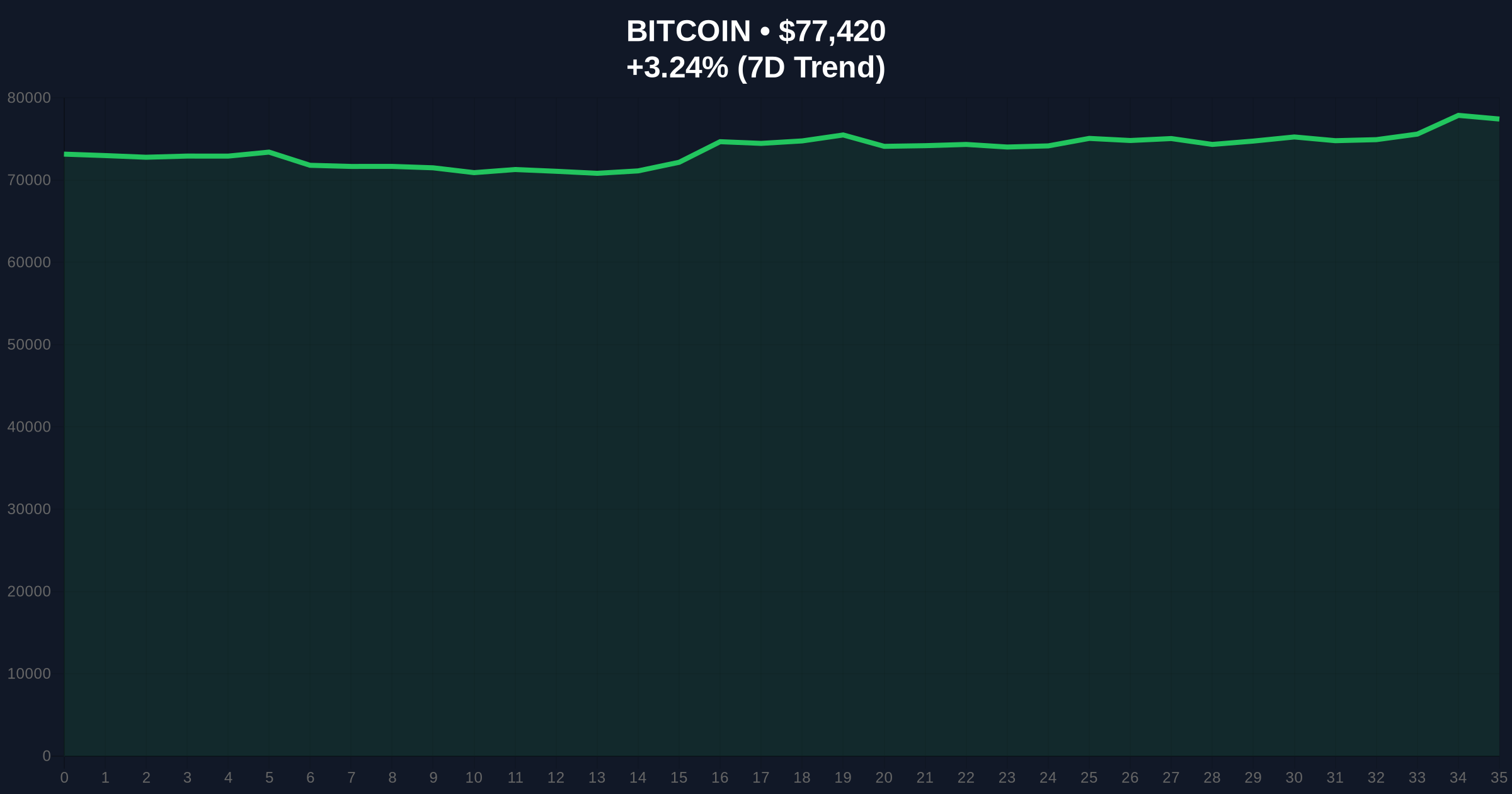
The data reveals significant movements in prediction market odds and Bitcoin prices. Polymarket odds for the Strait of Hormuz returning to normal traffic by end of May 2026 climbed to a high of 82% on Friday before settling at 73%, while odds for normalization by end of April remained at just 40%. Concurrently, Bitcoin's price surged to $78,000 before retracing to $77,358 at the time of publication, reflecting a 3.23% 24-hour increase to $77,412 as per CoinGecko data. Global crypto sentiment is currently in "Extreme Fear" with a score of 21/100, indicating underlying market anxiety despite the price rally.
| Metric | Value | Source |
|---|---|---|
| Polymarket odds (May 31 normalization) | 73% (high: 82%) | Source: public statement |
| Polymarket odds (April 30 normalization) | 40% | Source: public statement |
| Bitcoin price peak | $78,000 | Source: public statement |
| Bitcoin current price | $77,412 (3.23% 24h) | Source: CoinGecko |
| Global crypto sentiment | Extreme Fear (21/100) | Source: CoinGecko |
Why now? The significance stems from the ongoing Iran conflict, which has sent shockwaves through financial markets since early 2026, making any de-escalation a moment for risk assets. Who benefits? Short-term traders and institutions positioned in cryptocurrencies and oil-sensitive assets stand to gain from reduced geopolitical premiums, while long-term investors may see improved market stability. Time horizons: In the short-term (days/weeks), price rallies and volatility are expected, but longer-term (months/years) implications depend on ceasefire sustainability and broader economic factors like interest rate cuts, which analyst Nic Puckrin suggests may be pushed back to Q3 2026. Causal chain: The ceasefire announcement → Strait of Hormuz temporary reopening → decreased oil supply disruption fears → lower risk premiums → Bitcoin price surge as a hedge asset gains appeal amid reduced geopolitical uncertainty.
The mechanism linking these events involves prediction markets acting as real-time sentiment gauges and geopolitical developments directly impacting asset prices. Initially, Iranian Foreign Minister Seyed Abbas Araghchi's announcement on X about the Strait of Hormuz being open triggered a spike in Polymarket odds to 82%, reflecting trader optimism about normalized traffic. This news mechanically reduced perceived supply chain risks for oil, leading to decreased selling pressure in risk-off assets like Bitcoin, which saw a momentum cascade as buyers absorbed thin sell-side liquidity around the $78,000 level. The retracement to $77,358 indicates profit-taking and ongoing uncertainty, with the "Extreme Fear" sentiment score of 21/100 underscoring that broader market anxiety persists despite the rally.
Similar to the 2021 correction when geopolitical events drove crypto volatility, this development highlights how prediction markets and cryptocurrencies increasingly react in tandem to global news. In adjacent sectors:
The bearish scenario presents several risks that could invalidate the current optimistic narrative:
Practically, near-term implications include continued volatility in crypto and oil markets as traders monitor ceasefire developments and Polymarket odds for further shifts. If the Strait of Hormuz normalizes by May, it could support lower oil prices toward $80, as noted by Puckrin, which might alleviate stagflation fears and help Bitcoin reclaim the $90,000 level. However, any escalation could delay interest rate cuts and prolong market uncertainty, impacting investment strategies across asset classes.
Historically, the Strait of Hormuz handles about 20% of global oil trade, making it a flashpoint for geopolitical tensions. The Iran conflict has previously disrupted traffic, leading to spikes in energy prices and correlated movements in cryptocurrencies as investors seek hedges. This structural framing explains why prediction market odds and Bitcoin prices are so sensitive to announcements about the Strait's status, with past events showing similar patterns of market reaction to Middle Eastern developments.
Cross-market reactions include increased regulatory scrutiny, such as US senators demanding updates on Binance compliance amid Iran sanctions, which could add layers of complexity to crypto market dynamics. Additionally, other geopolitical de-escalation events have sparked similar rallies, highlighting a pattern where crypto assets serve as barometers for global risk sentiment.
Key takeaways include the spike in Polymarket odds to 73% reflecting trader optimism about Strait of Hormuz normalization, Bitcoin's brief surge to $78,000 on ceasefire news, and the underlying "Extreme Fear" sentiment indicating persistent market anxiety. The interplay between prediction markets and crypto prices how geopolitical developments are increasingly driving short-term asset movements, with sustainability hinging on ceasefire stability.
What to watch next: Written by Vince Quill,Staff Writer Reviewed by Robert Lakin,Staff Editor Polymarket odds of Hormuz Strait traffic normalizing by end of May spike to 73% 34 minutes ago Traders on the Polymarket prediction market platform place the odds of the Strait returning to normal traffic by May 31, 2026, at 73%.; exchange-level volume and liquidity data.
Evidence & Sources
Primary source: https://cointelegraph.com/news/polymarket-strait-hormuz-return-normal-may-73
Updated at: Apr 17, 2026, 11:51 PM
Data window: Apr 17, 2026, 11:12 PM → Apr 17, 2026, 11:50 PM
Evidence stats: 9 metrics, 1 timeline points.
Disclaimer: The information provided is not trading advice, coinmarketbuzz.com holds no liability for any investments made based on the information provided on this page. We strongly recommend independent research and/or consultation with a qualified professional before making any investment decisions.
All published reports are reviewed by our editorial team for factual consistency, neutrality, and reader clarity.