Loading News...
Loading...

Loading News...

VADODARA, April 11, 2026. The following report is based on currently available verified source material and market data.
On April 11, 2026, the price of Nomina (NOM) crashed 39% after a whale or institution holding 59% of its circulating supply deposited 1.44 billion tokens, worth approximately $7.67 million, to Binance. This massive transfer, tracked by on-chain monitor EmberCN, triggered immediate selling pressure and liquidity drain, raising critical questions about market manipulation and token concentration risks in low-cap cryptocurrencies. The event the extreme vulnerability of altcoins to single-entity actions, especially amid a global crypto sentiment of "Extreme Fear" (Score: 15/100).
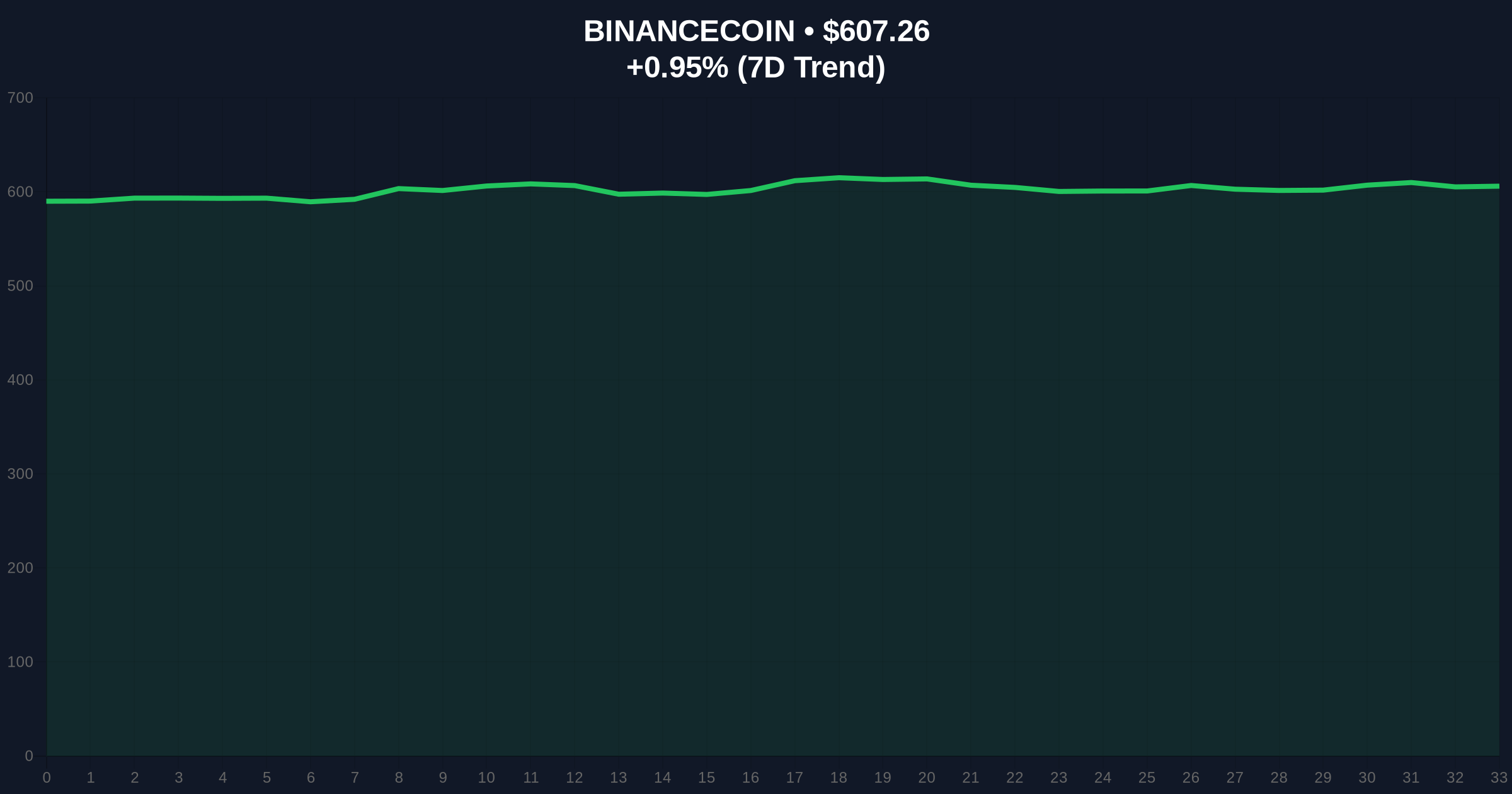
The data reveals a stark correlation between whale activity and price collapse. According to EmberCN, the entity transferred 768 million NOM (worth $3.73 million) to Binance today, following a total of 1.442 billion NOM ($7.67 million) moved since yesterday. Source: exchange data. Concurrently, NOM's price fell 39% over 24 hours. Source: exchange data. For context, broader market metrics show BNB at $607.27 with a 0.95% 24h trend, ranking #4 by market cap. Source: CoinGecko. The global crypto sentiment is "Extreme Fear" (Score: 15/100), indicating a risk-averse environment that may amplify sell-offs.
| Metric | Value | Source |
|---|---|---|
| NOM Price Drop | 39% | Exchange data |
| Whale Holding | 59% of circulating supply | Exchange data |
| Total Deposit Value | $7.67 million | Exchange data |
| BNB Price | $607.27 | CoinGecko |
| Global Sentiment | Extreme Fear (15/100) | CoinGecko |
This event matters critically for four reasons. First, why now? It occurs during "Extreme Fear" sentiment, where panic selling can cascade easily due to thin liquidity. Second, who benefits? The whale likely aims to exit positions at minimal loss, while retail holders face steep losses; exchanges gain fee revenue from heightened trading. Third, time horizons: short-term, price may stabilize if selling halts, but long-term, trust in NOM's decentralization is damaged. Fourth, causal chain: whale deposits → increased sell-side liquidity → panic selling from retail → price drop → further sell-offs as stop-losses trigger.
The mechanism involves on-chain movement directly impacting market microstructure. A whale holding 59% of circulating supply deposits tokens to Binance, increasing available sell orders on the exchange. This mechanically works by flooding the order book, absorbing buy-side liquidity, and creating downward price pressure. As price falls, retail traders may panic-sell, exacerbating the drop. The high concentration means even partial selling can dominate trading volume, distorting price discovery. This is a classic example of how whale actions in illiquid markets can trigger reflexive sell-offs.
Compared to other crypto events, this highlights unique risks in low-cap tokens versus larger assets. While Bitcoin and Ethereum face whale movements, their deeper liquidity often absorbs such actions with less volatility. In contrast, altcoins like NOM are prone to extreme swings. Related developments show similar patterns: for instance, RaveDAO (RAVE) recently jumped 500%, raising questions about short-term momentum versus real adoption. However, NOM's case involves concentrated selling rather than buying, emphasizing the bearish side of token concentration.
The bearish scenario includes several risks and uncertainties. First, data gaps exist: the whale's identity and motives are unknown, leaving room for speculation about whether this is a strategic exit or temporary move. Second, the failure condition would be if the whale reverses course by buying back, but no evidence supports this. Third, broader market risks, such as regulatory crackdowns or macroeconomic shifts, could further depress prices. Key risks include:
Practically, this event may lead to increased scrutiny of token distribution and whale tracking tools. Traders might demand more transparency from projects like NOM regarding supply concentration. In the near term, price could see volatility if the whale continues selling or if retail sentiment shifts. Projects may face pressure to implement vesting schedules or lock-ups to prevent similar incidents.
Nomina (NOM) is a cryptocurrency with a circulating supply heavily influenced by a single entity, as evidenced by the 59% holding. Historically, such concentration has been a red flag in crypto, often associated with pump-and-dump schemes or centralization risks. This event fits a pattern where low-cap tokens experience dramatic price moves due to limited liquidity and large holder actions.
Cross-market reactions are minimal, but broader context includes regulatory and geopolitical factors. For example, recent regulatory meetings, such as between U.S. regulators and bank CEOs over AI threats, could influence crypto market stability. Additionally, geopolitical events, like discussions on nuclear deals, may affect investor risk appetite. However, these are not directly linked to NOM's price drop, emphasizing the isolated nature of this whale-driven event.
The NOM price crash serves as a cautionary tale about the dangers of token concentration and thin liquidity in altcoins. While whale deposits mechanically explain the 39% drop, underlying issues of market structure and investor protection remain unresolved. Traders should prioritize assets with more distributed holdings to mitigate such risks.
Q1: What caused NOM's price to drop 39%? A whale holding 59% of circulating supply deposited 1.44 billion tokens to Binance, increasing sell pressure and triggering panic selling.
Q2: How much was the whale deposit worth? The total deposit was valued at approximately $7.67 million, with $3.73 million moved today.
Q3: What is the global crypto sentiment during this event? The sentiment is "Extreme Fear" with a score of 15/100, which may have amplified the sell-off.
Q4: Could this be market manipulation?
While not confirmed, the concentration and timing raise suspicions; however, motives are unknown without further data.
Q5: How does this compare to other crypto events? It highlights risks in low-cap tokens versus more liquid assets like BNB, which showed minimal volatility.
Q6: What should investors watch next? Monitor for further whale movements, changes in NOM's liquidity, and any project updates on token distribution.
Traders and analysts are closely watching for any follow-up transactions from the whale and potential recovery signals in NOM's trading volume to gauge market resilience.
Evidence & Sources
Primary source: https://coinness.com/news/1154259
Updated at: Apr 11, 2026, 11:45 AM
Data window: Apr 11, 2026, 11:30 AM → Apr 11, 2026, 11:33 AM
Evidence stats: 6 metrics, 2 timeline points.
Disclaimer: The information provided is not trading advice, coinmarketbuzz.com holds no liability for any investments made based on the information provided on this page. We strongly recommend independent research and/or consultation with a qualified professional before making any investment decisions.
All published reports are reviewed by our editorial team for factual consistency, neutrality, and reader clarity.