Loading News...
Loading...

Loading News...

VADODARA, April 8, 2026. The following report is based on currently available verified source material and market data.
Morgan Stanley Launches Cheapest Bitcoin ETF Amid Market Fear, Challenging BlackRock and Fidelity developed into a market-moving story within the reported window. The initial source indicates immediate relevance for crypto sentiment, while fuller validation is still tied to cited datasets and official statements.
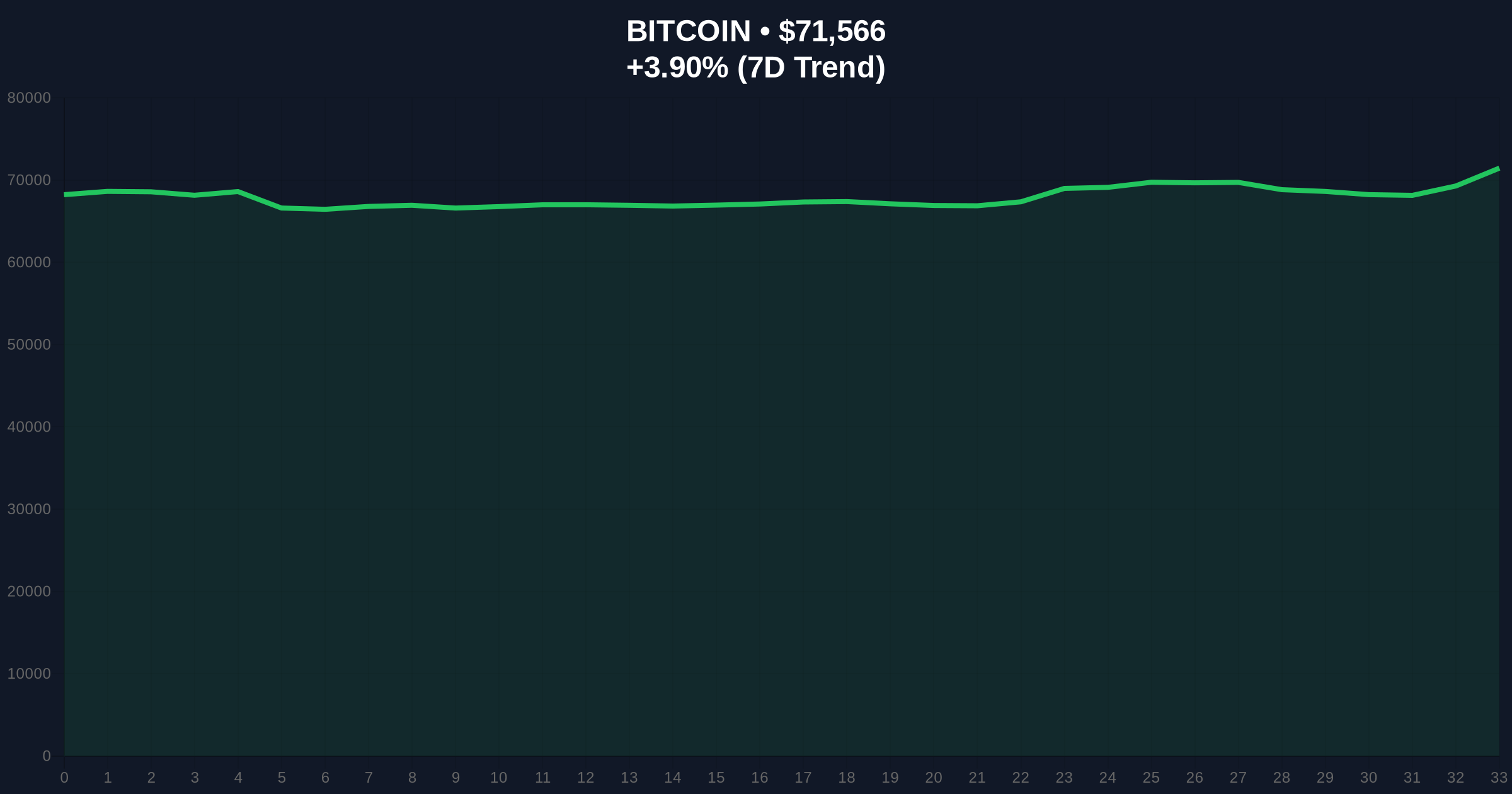
Morgan Stanley's Bitcoin exchange-traded fund (ETF) is set to debut on the NYSE Arca stock exchange on Wednesday, April 8, 2026, making it the first major commercial bank to offer a Bitcoin ETF in the US. The launch of the Morgan Stanley Bitcoin Trust (MSBT) introduces the cheapest Bitcoin ETF on the market with an ultra-low 0.14% fee, potentially pressuring rivals like BlackRock and Fidelity in a competitive. This development occurs as Bitcoin trades at $71,565 with a 24-hour gain of 3.90%, despite global crypto sentiment registering "Extreme Fear" at a score of 17/100, highlighting a critical moment for institutional adoption amid market volatility.
The Morgan Stanley Bitcoin Trust (MSBT) enters a market dominated by established players, with BlackRock's iShares Bitcoin Trust ETF (IBIT) and Fidelity Wise Origin Bitcoin Fund (FBTC) having tallied a combined $74.3 billion in net inflows since launching in January 2024, according to Farside Investors data. MSBT's 0.14% fee undercuts competitors, aiming to attract assets through cost efficiency. Morgan Stanley manages $6 trillion in assets through 16,000 advisors, positioning it as a significant gatekeeper for institutional and high-net-worth investors. Concurrently, Bitcoin's price stands at $71,565, up 3.90% in 24 hours, reflecting ongoing market activity despite fearful sentiment.
| Metric | Value | Source |
|---|---|---|
| MSBT Fee | 0.14% | Source: exchange data |
| Combined Inflows (IBIT/FBTC) | $74.3 billion | Source: public statement |
| Bitcoin Price | $71,565 | Source: CoinGecko |
| 24h Trend | 3.90% | Source: CoinGecko |
| Global Crypto Sentiment | Extreme Fear (17/100) | Source: CoinGecko |
This launch matters now because it represents the first spot Bitcoin ETF from a major US commercial bank in nearly two years, since Grayscale's Bitcoin Mini Trust ETF in July 2024, signaling renewed institutional interest during a period of market fear. Who benefits? Morgan Stanley stands to gain by capturing fee revenue and expanding its crypto offerings, while investors access a low-cost Bitcoin exposure vehicle; however, existing ETF providers like BlackRock and Fidelity may face pressure to reduce fees to stay competitive. In the short-term, MSBT's entry could increase Bitcoin buying pressure as Morgan Stanley's advisors allocate client assets, but longer-term implications include potential fee wars and broader bank adoption of crypto products. The causal chain is straightforward: Morgan Stanley's low fee attracts inflows → reduces selling pressure from cost-conscious investors → supports Bitcoin price stability → encourages other banks to launch similar products, fostering institutional adoption.
Morgan Stanley's ETF launch operates through a structured market mechanism: the bank lists MSBT on NYSE Arca, allowing traditional investors to buy shares backed by physical Bitcoin held by custodians Coinbase and Bank of New York Mellon. This creates a direct link between stock market demand and Bitcoin's underlying supply. The ultra-low 0.14% fee mechanically undercuts competitors by reducing investor costs, which can drive asset allocation from higher-fee ETFs into MSBT. As Morgan Stanley's 16,000 advisors recommend the product to clients managing $6 trillion, inflows into the ETF translate into increased Bitcoin purchases by the trust, providing buying pressure that supports prices. This process leverages the bank's existing client networks to funnel institutional capital into crypto, bypassing direct Bitcoin ownership complexities.
Morgan Stanley's move aligns with broader industry trends but stands out due to its banking pedigree and aggressive fee strategy. Compared to other developments:
Despite the bullish narrative, several risks could undermine MSBT's impact:
Uncertainty exists around the exact timeline of MSBT's launch and its immediate inflow numbers, which are not provided in source data. The failure condition would be if Morgan Stanley's advisors fail to recommend MSBT to clients, resulting in low adoption and negligible market impact.
Practically, MSBT's launch sets a precedent for other major banks to enter the Bitcoin ETF space, potentially leading to a wave of similar products from institutions like JPMorgan or Goldman Sachs. In the near term, traders should monitor fee adjustments by competitors and inflow data from Farside Investors to gauge MSBT's success. This could also accelerate Morgan Stanley's other crypto initiatives, such as its staked Ether ETF and trust banking charter, broadening the bank's digital asset footprint.
Morgan Stanley has been aggressively expanding into crypto, selecting Coinbase and Bank of New York Mellon as custodians for its ETF and applying for a national trust banking charter in February 2026. The bank's move follows years of institutional adoption trends, with spot Bitcoin ETFs gaining traction since 2024. MSBT's launch marks a significant step in bridging traditional finance and digital assets, leveraging the bank's extensive advisor network to democratize Bitcoin access.
In related market movements, recent events highlight the interconnected nature of crypto and broader factors. For instance, geopolitical tensions have influenced market volatility, as seen in incidents affecting regional stability. Additionally, shifts in ETF flows and exchange actions, such as suspensions for network upgrades, demonstrate the ongoing evolution of crypto infrastructure and investor behavior. These developments underscore the importance of monitoring external factors alongside institutional launches like MSBT.
Morgan Stanley's Bitcoin ETF launch represents a strategic entry into a competitive market, driven by low fees and institutional reach. While it offers new opportunities for investors, risks around sentiment and competition remain. The success of MSBT will depend on advisor adoption and market response, shaping the future of bank-led crypto products.
Q1: What is the fee for Morgan Stanley's Bitcoin ETF?A1: The Morgan Stanley Bitcoin Trust (MSBT) has an ultra-low fee of 0.14%, making it the cheapest Bitcoin ETF on the market.
Q2: When does MSBT launch?A2: MSBT is set to debut on the NYSE Arca stock exchange on Wednesday, April 8, 2026.
Q3: How does MSBT compare to other Bitcoin ETFs?A3: MSBT enters a market led by BlackRock and Fidelity, which have $74.3 billion in combined inflows, but undercuts them on fees to attract investors.
Q4: What is Morgan Stanley's role in crypto beyond ETFs?A4: Morgan Stanley has applied for a national trust banking charter and filed for staked Ether and Solana ETFs, indicating a broader crypto strategy.
Q5: What is the current Bitcoin price and sentiment?A5: Bitcoin trades at $71,565 with a 3.90% 24-hour gain, despite global crypto sentiment being "Extreme Fear" at a score of 17/100.
Q6: Who are the custodians for MSBT?A6: Morgan Stanley selected Coinbase and Bank of New York Mellon as the proposed custodians for its Bitcoin ETF.
Traders and analysts are closely watching initial inflow data for MSBT and any fee adjustments by competitors to assess its market impact and the broader trend of bank adoption in crypto.
What to watch next: next official follow-up statements; exchange-level volume and liquidity data.
Evidence & Sources
Primary source: https://cointelegraph.com/news/morgan-stanley-bitcoin-etf-debut-wednesday
Updated at: Apr 08, 2026, 06:55 AM
Data window: Apr 08, 2026, 06:42 AM → Apr 08, 2026, 06:55 AM
Evidence stats: 6 metrics, 0 timeline points.
Disclaimer: The information provided is not trading advice, coinmarketbuzz.com holds no liability for any investments made based on the information provided on this page. We strongly recommend independent research and/or consultation with a qualified professional before making any investment decisions.
All published reports are reviewed by our editorial team for factual consistency, neutrality, and reader clarity.