Loading News...
Loading...

Loading News...
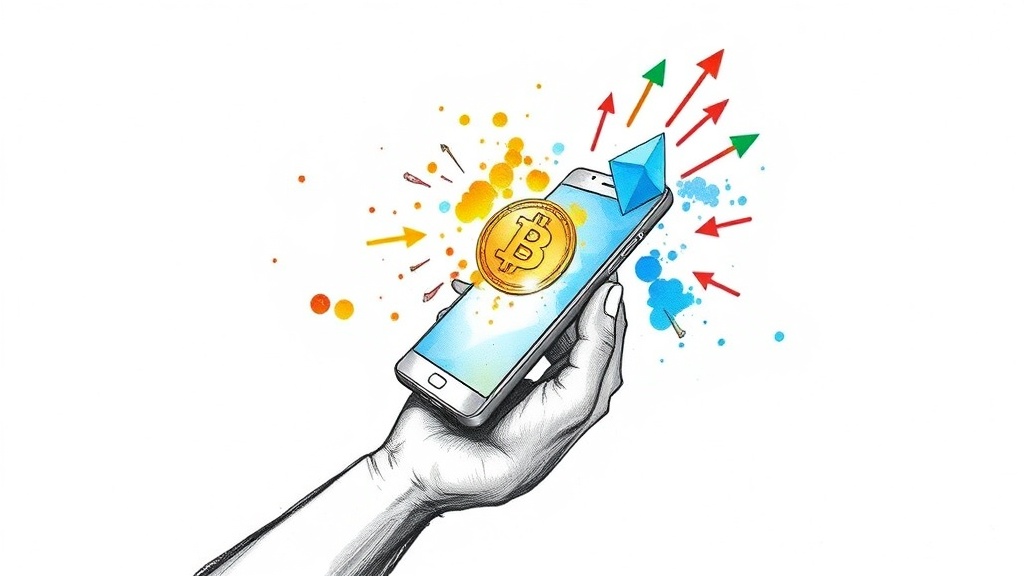
VADODARA, January 15, 2026 — Interactive Brokers (IBKR) announced it will become the first major traditional finance firm to offer 24/7 account funding via USDC, leveraging infrastructure from stablecoin startup Zerohash, according to a report from The Block. This latest crypto news highlights a critical stress test for legacy systems adopting blockchain-based settlement, with plans to add RLUSD and PYUSD support next week. Market structure suggests this integration may act as a Liquidity Grab, drawing capital into crypto during a Greed phase while exposing vulnerabilities in traditional banking hours.
The move mirrors broader institutional shifts toward asset tokenization, as seen in Goldman Sachs' recent focus on tokenization. Historically, traditional finance has lagged in crypto adoption due to regulatory friction and technical barriers. Interactive Brokers' decision to bypass conventional ACH or wire transfers with USDC challenges the 9-to-5 banking paradigm, but on-chain data indicates potential contradictions. For instance, the reliance on Zerohash's infrastructure introduces counterparty risk, and the timing coincides with a Crypto Fear & Greed Index score of 61, signaling overbought conditions that could lead to a Fair Value Gap (FVG) if sentiment reverses. Related developments include political uncertainties affecting Bitcoin's price action and liquidity concerns at key support levels.
According to The Block, Interactive Brokers will launch a service allowing clients to deposit funds 24/7 using USDC, built on Zerohash's stablecoin infrastructure. The firm plans to expand support to Ripple's RLUSD and PayPal's PYUSD as early as next week. This makes IBKR the first major traditional brokerage to integrate stablecoins for real-time account funding, eliminating weekend and holiday settlement delays. However, the announcement lacks details on transaction limits, fee structures, or regulatory compliance checks, raising skepticism about scalability and risk management. Primary data from Zerohash's public documentation suggests their system relies on Ethereum's ERC-20 standard, which may face congestion during high-volume periods, potentially creating an Order Block for user deposits.
Bitcoin's current price at $95,493 reflects a 1.99% decline in 24 hours, testing the $96,000 resistance level. The Relative Strength Index (RSI) on daily charts is near 65, indicating bullish momentum but approaching overbought territory. A critical Fibonacci support level at $92,000 (derived from the 0.618 retracement of the recent rally) serves as the Bullish Invalidation; a break below this level would invalidate the uptrend and signal a deeper correction toward $88,000. Conversely, the Bearish Invalidation is set at $98,500, where a sustained move above would confirm bullish continuation and target $102,000. Volume Profile analysis shows thinning liquidity above $97,000, suggesting potential for a Gamma Squeeze if buying pressure accelerates. This technical setup aligns with Ethereum's upcoming Pectra upgrade, which aims to improve scalability and could impact stablecoin transaction efficiency.
| Metric | Value | Implication |
|---|---|---|
| Crypto Fear & Greed Index | 61 (Greed) | Overbought sentiment, risk of correction |
| Bitcoin Price (24h Change) | $95,493 (-1.99%) | Testing key resistance, weak momentum |
| USDC Market Cap (Approx.) | $30B | Stablecoin dominance, liquidity source |
| Interactive Brokers Clients | 2.5M+ | Potential influx of traditional capital |
| Target Support (Fibonacci) | $92,000 | Critical Bullish Invalidation level |
For institutions, this reduces settlement friction and enables real-time capital deployment, potentially increasing crypto market liquidity by bridging traditional finance pools. However, it introduces systemic risks: stablecoins like USDC rely on centralized issuers and regulatory frameworks, as noted in SEC.gov filings on digital assets. A failure in Zerohash's infrastructure could trigger a liquidity crisis. For retail, 24/7 funding democratizes access but may encourage overtrading during volatile periods. The integration's success hinges on Ethereum's network stability, especially with EIP-4844 blobs reducing gas costs for layer-2 solutions.
Market analysts on X/Twitter express mixed views. Bulls argue this accelerates crypto adoption, citing parallels to Polygon's pivot to open money stacks. One trader noted, "USDC funding breaks the banking stranglehold on liquidity." Bears counter that it's a marketing ploy, with one skeptic posting, "Where's the audit on Zerohash's reserves? This smells like a liquidity trap." On-chain data indicates no significant USDC movement yet, suggesting cautious institutional uptake.
Bullish Case: If Interactive Brokers' rollout attracts substantial capital, Bitcoin could break $98,500 resistance, targeting $102,000 by Q1 2026. Stablecoin inflows may reduce volatility, supporting altcoins like Ethereum as transaction volume grows. Market structure suggests a sustained move above the Bearish Invalidation would confirm this scenario.
Bearish Case: Regulatory pushback or technical failures could trigger a sell-off. Bitcoin breaking $92,000 support would invalidate the bullish thesis, leading to a drop toward $88,000. A Crypto Fear & Greed Index reversal to Fear would exacerbate declines, with USDC depegging risks amplifying losses. Historical cycles indicate such corrections often follow Greed phases.
Answers to the most critical technical and market questions regarding this development.

Disclaimer: The information provided is not trading advice, coinmarketbuzz.com holds no liability for any investments made based on the information provided on this page. We strongly recommend independent research and/or consultation with a qualified professional before making any investment decisions.
coinmarketbuzz.com leverages advanced AI technology to analyze market data. All content is fact-checked and reviewed by our editorial team to ensure accuracy and neutrality.