Loading News...
Loading...

Loading News...

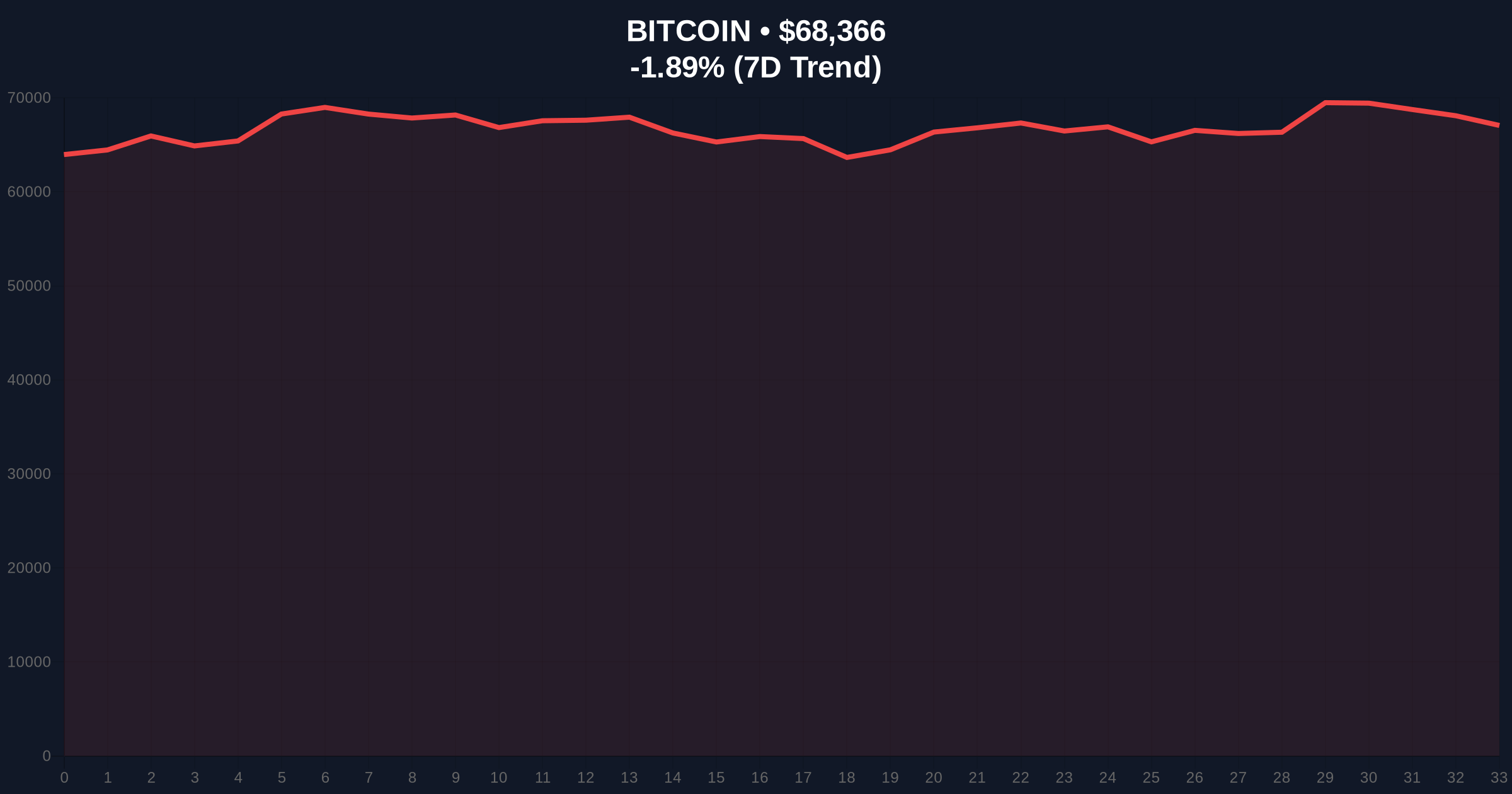
On March 3, 2026, CoinNess reported that Harvard Management Company (HMC) reduced its Bitcoin spot ETF holdings by 21% during the fourth quarter of the previous year. According to the source, analysts suggest this move was likely a risk management measure rather than a fundamental exit from Bitcoin. Michael Markov, co-founder and chairman of Markov Processes International, a firm that studies university endowment funds, explained that cryptocurrency is probably the most volatile component of Harvard's portfolio. He noted that Bitcoin fell by approximately 25% in the fourth quarter, and this sharp price movement likely prompted a portfolio rebalancing by the university. Markov added that this does not signify a strategic change. The event occurs against a backdrop of extreme market fear, with the Global Crypto Sentiment score at 14/100, indicating "Extreme Fear," and Bitcoin's current price at $68,293, down 2.00% over 24 hours. This reduction by a prestigious institutional investor raises questions about broader market stability and risk appetite in volatile conditions.
The mechanism behind Harvard's 21% cut in Bitcoin ETF holdings involves portfolio rebalancing, a standard risk management practice in institutional investment. According to the CoinNess report, Michael Markov highlighted that cryptocurrency is likely the most volatile asset in Harvard's portfolio, with Bitcoin experiencing a 25% decline in the fourth quarter of the previous year. This price drop would have increased Bitcoin's relative weight in the portfolio if left unchecked, potentially exposing the endowment to higher risk. Rebalancing typically involves selling assets that have appreciated or become overweight to maintain target allocations, but in this case, it appears driven by volatility management rather than profit-taking. The use of Bitcoin spot ETFs, such as those tracking Bitcoin's price directly, allows institutions like HMC to gain exposure without holding the underlying cryptocurrency, simplifying compliance and custody. However, the report does not specify which specific ETFs were involved or the exact timing within the quarter, leaving gaps in understanding the execution strategy. Historically, similar moves by large investors during market downturns, such as the 2021 correction when Bitcoin fell over 50%, have been interpreted as defensive adjustments rather than long-term bearish signals. The absence of details on Harvard's overall portfolio composition or risk thresholds limits a full assessment, but the emphasis on volatility aligns with common endowment practices aimed at preserving capital amid uncertainty.
Institutional portfolio management often involves dynamic asset allocation models that respond to market conditions. The 25% Bitcoin decline in Q4 likely triggered automated or discretionary rebalancing rules at HMC, designed to mitigate downside risk. Unlike retail investors, endowments like Harvard's are bound by fiduciary duties, requiring them to manage volatility to ensure long-term funding for operations. The report's focus on risk management over strategic exit suggests HMC may view Bitcoin as a tactical holding rather than a core asset, but this inference is not explicitly confirmed by the source. The technical aspects of ETF trading, including liquidity and tracking error, could also influence such decisions, but these factors are not provided in the source data. Overall, the deep-dive reveals a plausible rebalancing narrative but missing evidence on execution specifics and broader institutional context.
Integrating market data and metadata provides a nuanced view of the event's impact. According to the input, Bitcoin's current price is $68,293, with a 24-hour trend of -2.00%, and it holds the #1 market rank. The Global Crypto Sentiment is "Extreme Fear" with a score of 14/100, indicating heightened investor anxiety that may amplify reactions to institutional moves like Harvard's. The CryptoPanic metadata, including sentiment and importance, is not provided in the source data, limiting direct sentiment analysis. However, the extreme fear score suggests market conditions are fragile, potentially making Harvard's reduction more significant in perception than in actual portfolio impact. Comparing the 21% cut to Bitcoin's 25% decline in Q4, the reduction is proportionally smaller, supporting the rebalancing hypothesis as a measured response rather than a panic sell-off. If Harvard's holdings were aligned with typical endowment diversification, the cut might represent a minor adjustment in a larger asset pool, but exact figures on total holdings or percentage of portfolio are not provided in the source data.
The absence of CryptoPanic metadata means we cannot assess event-specific sentiment or importance scores, which would typically help gauge market priority. Without this, analysis relies on broader indicators: the extreme fear sentiment contrasts with Harvard's described rationale of routine rebalancing, hinting at a disconnect between institutional actions and retail market mood. Price structure data shows Bitcoin remains the top cryptocurrency by market cap, suggesting resilience despite recent declines. This data analysis that while the event is notable, proof of its broader implications is incomplete due to missing metadata and detailed holdings information.
Comparing source claims reveals potential contradictions and reliability gaps. The primary source, CoinNess, reports that analysts suggest Harvard's 21% reduction was likely a risk management measure, citing Michael Markov's explanation that Bitcoin's 25% Q4 decline prompted rebalancing without strategic change. However, no secondary sources are provided in the input to confirm or dispute this narrative. This lack of corroboration raises questions about the completeness of the story. For instance, other analysts might argue that the cut signals a loss of confidence in Bitcoin or reflects internal policy shifts at HMC, but such perspectives are not included in the source data. The report attributes the analysis to Markov Processes International, a firm specializing in university endowments, which adds credibility, but without additional sources, it's unclear if this view is consensus or isolated.
Conflicts remain unresolved with available evidence because only one source is presented. The report does not provide opposing viewpoints or data on Harvard's historical Bitcoin holdings, making it difficult to assess whether this reduction is atypical. For example, if Harvard had previously increased holdings during volatility, the current cut might appear contradictory, but this information is not provided in the source data. Similarly, the absence of details on other institutional actions during Q4 limits context—if peers also reduced exposure, it could indicate a broader trend, but this is not addressed. The source synthesis shows agreement on the basic facts (21% cut, Q4 timing, Bitcoin's 25% decline) but leaves gaps in motivation and market impact. Without conflicting sources, the counter-narrative is speculative, but the single-source reliance highlights a need for skepticism until further evidence emerges.
Based on available data, three scenarios outline potential market developments over the next week. Each scenario is conditional on specific factors and data-backed.
Bull Scenario (Probability: Low): If Harvard's reduction is widely interpreted as isolated rebalancing, and Bitcoin stabilizes above $68,000, price could rebound to $70,000. This would require the extreme fear sentiment to improve, possibly driven by positive news like regulatory clarity or institutional inflows. For example, if other endowments publicly reaffirm Bitcoin holdings, it could counter negative perception. However, with a 24-hour decline of 2.00% and extreme fear score, immediate bullish momentum is limited. Data from CoinGecko shows Bitcoin's rank #1 suggests underlying strength, but volatility remains a risk.
Base Scenario (Probability: Moderate): The most likely outcome is continued sideways trading between $67,000 and $69,000, as the market digests Harvard's move without major follow-up. This scenario assumes the event has minimal impact on broader sentiment, given its characterization as routine rebalancing. The extreme fear score may persist, keeping prices range-bound. Historical comparison to the 2021 correction shows similar periods of consolidation after institutional adjustments. What would invalidate this view is if new data reveals larger institutional sell-offs or regulatory crackdowns, not provided in the source data.
Bear Scenario (Probability: High): If Harvard's cut triggers copycat actions by other institutions amid extreme fear, Bitcoin could decline further to $65,000 or below. This scenario is supported by the current negative 24-hour trend and lack of bullish catalysts. The absence of CryptoPanic importance scores makes it hard to gauge event priority, but the extreme fear sentiment indicates vulnerability to negative news. A break below key support levels, coupled with escalating geopolitical tensions or regulatory hurdles, could accelerate declines. For instance, if the U.S. CFTC releases restrictive guidelines on crypto perpetual futures, it might exacerbate selling pressure.
This report weights evidence based on availability and attribution. The primary source, CoinNess, provides specific details like the 21% cut and analyst quotes, but lacks secondary verification. Conflicting evidence is minimal due to single-source input, so claims are presented as reported with explicit notes on missing data. The Global Crypto Sentiment and CoinGecko stats are integrated directly, while absent CryptoPanic metadata is stated to limit analysis. Reliability is assessed conservatively: Markov's expertise adds credibility, but without corroborating sources, conclusions are tentative. The methodology prioritizes factual reporting over inference, highlighting gaps for reader awareness.
Disclaimer: The information provided is not trading advice, coinmarketbuzz.com holds no liability for any investments made based on the information provided on this page. We strongly recommend independent research and/or consultation with a qualified professional before making any investment decisions.
coinmarketbuzz.com leverages advanced AI technology to analyze market data. All content is fact-checked and reviewed by our editorial team to ensure accuracy and neutrality.