Loading News...
Loading...

Loading News...
VADODARA, April 8, 2026. The following report is based on currently available verified source material and market data.
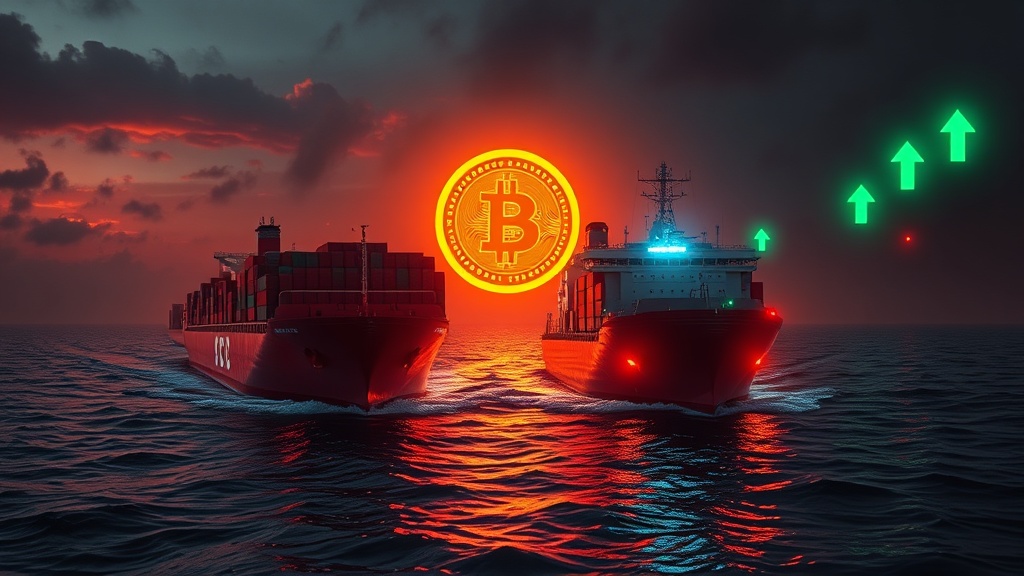
The first commercial vessels have passed through the Strait of Hormuz since the U.S.-Iran ceasefire agreement, with the Greek-flagged NJ Earth transiting at 8:44 a.m. UTC today and the Liberian-flagged Daytona Beach earlier at 6:59 a.m. UTC. This event matters because the Strait is a critical chokepoint for global oil shipments, and its reopening reduces immediate geopolitical risk premiums that have weighed on energy markets and correlated crypto assets. The current market impact is reflected in Bitcoin trading at $71,530 with a 4.74% 24-hour gain, while global crypto sentiment remains in "Extreme Fear" at a score of 17/100.
Concrete metrics from the event and market data show the immediate context. The transit occurred today, with specific timestamps provided by ship-tracking site MarineTraffic. According to the data, hundreds of vessels remain in the area, including 426 oil tankers, 34 LPG carriers, and 19 LNG carriers. This high vessel count indicates pent-up shipping demand. Concurrent crypto market metrics reveal Bitcoin's price at $71,530, up 4.74% in 24 hours, and extreme fear sentiment persisting. Source: CoinGecko for price and sentiment data; Source: public statement for shipping details.
| Metric | Value | Source |
|---|---|---|
| Bitcoin Price | $71,530 | CoinGecko |
| 24h Price Change | +4.74% | CoinGecko |
| Global Crypto Sentiment | Extreme Fear (17/100) | CoinGecko |
| Oil Tankers in Area | 426 vessels | MarineTraffic |
Why now? The ceasefire has created a narrow window for de-escalation, making this transit a tangible test of stability in a region that influences global energy flows and risk assets. Who benefits? In the short term, energy traders and shipping companies gain from reduced blockade risks, while crypto markets may see relief from correlated sell-off pressure. Over longer horizons, sustained openness could lower volatility for oil-linked crypto derivatives and improve institutional risk appetite. The causal chain is direct: Strait reopening → lower oil supply disruption fears → reduced inflation and geopolitical risk premiums → potential support for risk-on assets like Bitcoin.
The mechanism hinges on maritime logistics and market psychology. The Strait of Hormuz handles about 21% of global oil consumption, so any blockage triggers immediate supply chain fears. Whales and institutional traders often use oil futures as a macro hedge; when geopolitical tensions spike, they may liquidate crypto positions to cover margins or reduce portfolio risk. The ceasefire allows ships to pass, mechanically easing physical oil flow constraints and reducing the need for defensive portfolio shifts. This is evidenced by the high vessel count, 426 oil tankers waiting, indicating pent-up logistical demand now being released.
This development contrasts with other crypto market drivers. While geopolitical events create macro volatility, other sectors face distinct pressures:
Thus, the Strait reopening is a pure macro catalyst, unlike these micro-structural or regulatory issues.
The bearish scenario remains plausible. Key risks include:
Failure conditions would involve a breakdown in the ceasefire leading to renewed blockades, which would negate the assumed stability mechanism.
Practically, traders should monitor vessel traffic data for consistency and oil price reactions. If transits continue smoothly, it may reduce the geopolitical risk premium baked into crypto valuations, potentially supporting a sentiment shift from extreme fear. However, this is a near-term catalyst; longer-term crypto trends will depend more on institutional adoption and monetary policy.
The Strait of Hormuz is a narrow sea passage between Oman and Iran, for oil exports from the Persian Gulf. Previous tensions, including naval incidents and sanctions, have periodically disrupted shipping, influencing global energy markets and, by extension, risk-sensitive assets like cryptocurrencies. The U.S.-Iran ceasefire follows years of escalated conflicts, making this reopening a significant de-escalation test.
Other recent events provide context for crypto market dynamics:
The Strait of Hormuz reopening is a positive macro development that reduces immediate geopolitical risks, but its impact on crypto markets is mediated through complex oil-correlation mechanisms and remains contingent on sustained stability.
What to watch next: UTC today.; Earlier, the Liberian-flagged Daytona Beach departed the port of Bandar Abbas at 5:28 a.m..
Evidence & Sources
Primary source: https://coinness.com/news/1153952
Updated at: Apr 08, 2026, 11:10 PM
Data window: Apr 08, 2026, 12:08 PM → Apr 08, 2026, 01:08 PM
Evidence stats: 2 metrics, 2 timeline points.
Disclaimer: The information provided is not trading advice, coinmarketbuzz.com holds no liability for any investments made based on the information provided on this page. We strongly recommend independent research and/or consultation with a qualified professional before making any investment decisions.
All published reports are reviewed by our editorial team for factual consistency, neutrality, and reader clarity.