Loading News...
Loading...

Loading News...
VADODARA, April 2, 2026. The following report is based on currently available verified source material and market data.
DOJ Sting Exposes Crypto Wash Trading: FBI Token Reveals Pervasive Market Manipulation developed into a market-moving story within the reported window. The initial source indicates immediate relevance for crypto sentiment, while fuller validation is still tied to cited datasets and official statements.
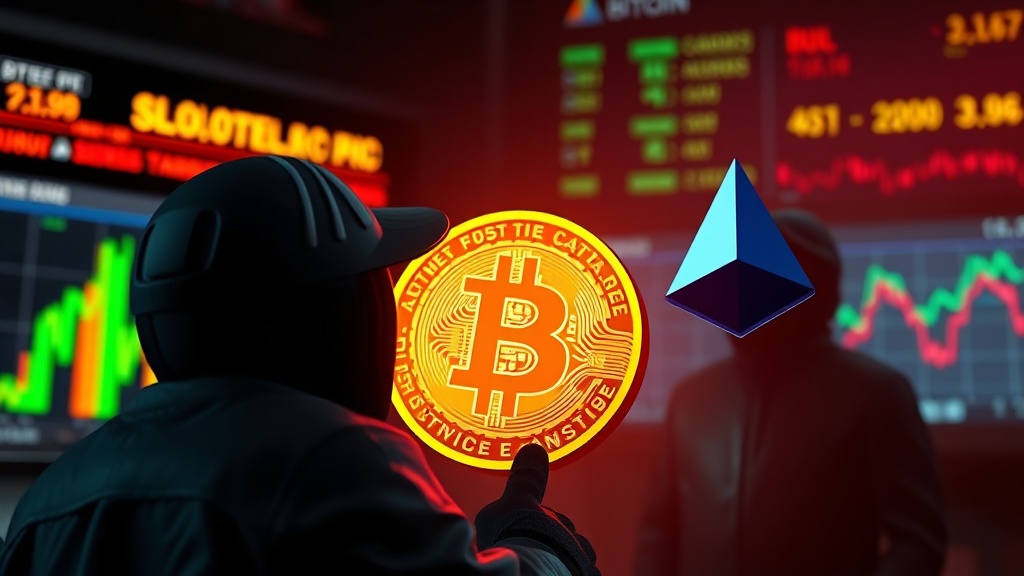
On April 2, 2026, U.S. prosecutors charged 10 individuals tied to crypto firms including Gotbit, Vortex, Antier, and Contrarian with orchestrating wash trading and pump-and-dump schemes, uncovered through an undercover FBI token sting. This enforcement action signals a tougher global crackdown on practices once dismissed as market making, with experts warning that wash trading remains pervasive, especially in smaller tokens and on lightly regulated exchanges. The case impacts market trust and price discovery, as artificial volume distorts liquidity signals and misallocates capital, pushing crypto markets toward higher transparency and institutional standards.
The Department of Justice (DOJ) indictment reveals concrete metrics highlighting the scale and consequences of wash trading. Gotbit Founder Aleksei Andriunin pleaded guilty to wire fraud and conspiracy to commit market manipulation last year, agreeing to forfeit $23 million. Source: public statement. A Columbia University analysis of Polymarket found roughly 25% of historical volume showed signs of wash trading. Source: blockchain analytics. Concurrently, broader market data shows Bitcoin trading at $66,429, down 3.04% in 24 hours, with global crypto sentiment at "Extreme Fear" (score: 12/100). Source: CoinGecko.
| Metric | Value | Source |
|---|---|---|
| Forfeiture Amount | $23 million | Public statement |
| Wash Trading Volume (Polymarket) | 25% | Blockchain analytics |
| Bitcoin Price | $66,429 | CoinGecko |
| Bitcoin 24h Change | -3.04% | CoinGecko |
| Global Crypto Sentiment | Extreme Fear (12/100) | CoinGecko |
This enforcement matters now because it coincides with a market environment of "Extreme Fear," where trust in crypto liquidity is critical. The DOJ's use of an FBI-created token marks a shift from regulatory warnings to active prosecution, signaling that crypto market structure is firmly in enforcement territory. Who benefits? Legitimate market participants and institutional investors stand to gain from reduced manipulation and improved transparency, while retail investors relying on inflated volume data are at risk. In the short term, the crackdown may increase volatility as artificial liquidity is removed, but over the long term, it could enhance market integrity and attract more institutional capital. The causal chain is clear: wash trading inflates volume → creates illusion of liquidity and demand → distorts price discovery → leads to capital misallocation and investor losses.
Wash trading operates through a straightforward mechanical process. Coordinated accounts, often managed by market-making firms, trade tokens back and forth to simulate organic demand. This artificially inflates trading volume and price, creating the perception of high liquidity. The incentive structure is key: token issuers face pressure to meet exchange listing requirements tied to volume, leading them to pay for these services. Consequently, the inflated volume attracts retail investors and listings, while the perpetrators sell into the artificial demand at higher prices. This mechanism is particularly effective on smaller exchanges with limited oversight, where detection tools are less sophisticated.
The DOJ crackdown aligns with broader regulatory trends and market developments. While this case focuses on wash trading, other sectors face similar scrutiny over transparency and manipulation.
Despite the enforcement action, significant risks and uncertainties remain. The bearish scenario includes potential failure conditions that could undermine market integrity.
Practically, the DOJ case sets a precedent for using undercover operations to prosecute market manipulation, likely leading to more investigations and charges. Exchanges may face pressure to enhance surveillance tools and adopt metrics beyond headline volume, such as order book depth and counterparty diversity. For investors, this signals a need to scrutinize volume data more critically, especially for lower-cap tokens. The market may see a short-term shakeout as artificial liquidity dries up, but over time, it could foster a healthier environment conducive to institutional participation.
Wash trading has long been a contentious issue in crypto markets, often blurred with legitimate market making. Historically, it was dismissed as a minor concern, but as the industry matures, regulators are applying traditional financial fraud statutes like wire fraud and market manipulation. The FBI's creation of a token for this sting operation represents a novel enforcement approach, highlighting how authorities are adapting to crypto-specific challenges. This case builds on earlier research, such as Dune Analytics data suggesting tens of billions in NFT volume on Ethereum stemmed from similar activity, indicating a persistent problem across different crypto sectors.
In related market movements, Metaplanet acquired 5,075 BTC, becoming the third-largest Bitcoin treasury company, amid broader institutional interest despite regulatory crackdowns. Additionally, the Solana DeFi platform Drift confirmed an "active attack" with over $200 million leaving the platform, underscoring ongoing security risks in decentralized finance. These events occur against a backdrop of "Extreme Fear" sentiment, where regulatory actions and market vulnerabilities intersect to shape investor behavior.
The DOJ's wash trading bust exposes a pervasive manipulation issue that undermines crypto market integrity. While enforcement signals progress toward transparency, the deep-rooted incentives for fake volume suggest challenges ahead. Investors should prioritize due diligence on liquidity metrics, and the industry must balance innovation with regulatory compliance to build lasting trust.
Q1: What is wash trading in crypto?Wash trading involves coordinated buying and selling of assets to create artificial volume and demand, misleading investors about liquidity.
Q2: Why is the DOJ case significant?It uses an FBI-created token in an undercover sting, marking a shift from warnings to active prosecution of crypto market manipulation.
Q3: How common is wash trading?Experts describe it as pervasive, with research indicating up to 25% of volume on some platforms shows signs of wash trading.
Q4: Who is affected by wash trading?Retail investors relying on inflated volume data are most at risk, while legitimate projects and institutions benefit from reduced manipulation.
Q5: What are the penalties for wash trading?Penalties can include forfeiture of funds, as seen with the $23 million forfeiture in this case, and criminal charges like wire fraud.
Q6: How can investors detect wash trading?Look beyond headline volume to metrics like order book depth, slippage, and counterparty diversity, and be cautious with lower-cap tokens on unregulated exchanges.
Traders and analysts are now watching for further DOJ actions and exchange responses to see if this crackdown leads to measurable reductions in artificial volume and improved market transparency.
What to watch next: Finance Share Share this article Copy linkX (Twitter)LinkedInFacebookEmail The ‘wash trading’ bust: Why the feds are finally calling out crypto’s dirty little liquidity secret An FBI-created token helped expose how firms allegedly engineered fake volume and why the incentives behind it remain deeply entrenched By Olivier Acuna|Edited by Jamie Crawley Apr 2, 2026, 11:03 a.m.; A Columbia University analysis of Polymarket found roughly 25% of historical volume showed signs of wash trading, while earlier Dune Analytics data suggested tens of billions in NFT volume on Ethereum stemmed from similar activity..
Evidence & Sources
Primary source: https://www.coindesk.com/business/2026/04/02/doj-sting-exposes-crypto-wash-trading-continues-to-be-far-more-common-than-expected
Updated at: Apr 02, 2026, 01:09 PM
Data window: Apr 02, 2026, 01:03 PM → Apr 02, 2026, 01:07 PM
Evidence stats: 8 metrics, 5 timeline points.
Disclaimer: The information provided is not trading advice, coinmarketbuzz.com holds no liability for any investments made based on the information provided on this page. We strongly recommend independent research and/or consultation with a qualified professional before making any investment decisions.
All published reports are reviewed by our editorial team for factual consistency, neutrality, and reader clarity.