Loading News...
Loading...

Loading News...

On March 5, 2026, Danal, the operator of Paycoin (PCI), announced a partnership with Binance Pay and Circle to launch an integrated payment and settlement service for foreign visitors in South Korea, set to debut in April 2026. According to a report from The Asia Business Daily cited in the source data, the service aims to allow Binance users visiting the country to make payments using their existing crypto assets without requiring a separate currency exchange process, with USDC designated as the settlement currency. This development emerges against a backdrop of global crypto sentiment marked by "Extreme Fear," as indicated by a score of 22/100, raising immediate questions about the timing and feasibility of such an initiative. The announcement positions Danal at the intersection of tourism, cross-border payments, and regulatory compliance, but critical details such as user adoption projections, regulatory approvals, and technical implementation specifics are not provided in the source data, leaving gaps that warrant scrutiny.
The proposed service involves a tripartite collaboration between Danal, Binance Pay, and Circle, each bringing distinct components to the payment ecosystem. Danal, as the operator of Paycoin (PCI), likely provides the local infrastructure and regulatory compliance framework in South Korea, though its exact role beyond operator status is not detailed in the source data. Binance Pay, the payment arm of the Binance exchange, is expected to facilitate the transaction interface for users, enabling them to spend crypto assets directly from their Binance accounts. Circle, the issuer of USDC, will supply the stablecoin used for settlement, aiming to reduce volatility and streamline cross-border transactions. The mechanism described allows foreign tourists to bypass traditional currency exchange processes, potentially lowering fees and increasing convenience, but the technical architecture—such as integration with point-of-sale systems, fraud prevention measures, and liquidity management—is not elaborated upon, creating uncertainty about operational readiness.
From a regulatory perspective, South Korea has stringent crypto regulations, including travel rule compliance and anti-money laundering (AML) requirements. The source data does not specify whether Danal has obtained necessary approvals from South Korean authorities like the Financial Services Commission (FSC), which could pose a significant barrier to the April 2026 launch. Additionally, the reliance on USDC as the settlement currency introduces dependencies on Circle's regulatory standing and the stability of the US dollar peg, especially in a market environment characterized by extreme fear. The partnership's success hinges on seamless interoperability between Danal's local systems, Binance Pay's global network, and Circle's stablecoin infrastructure, but without detailed technical blueprints, the feasibility remains speculative. Comparisons to existing crypto payment solutions in other regions suggest that user adoption often lags behind technological promises, and the lack of disclosed user testing or pilot programs in the source data further complicates assessment.
Potential challenges include scalability issues during peak tourist seasons, cybersecurity risks given the high-profile nature of the partners, and regulatory scrutiny from both South Korean and international bodies. The source data does not address how the service will handle transaction speeds, fees, or dispute resolution, leaving critical operational questions unanswered. In a broader context, this initiative mirrors trends in crypto payments for tourism, but the absence of concrete implementation details in the available information raises doubts about its immediate impact.
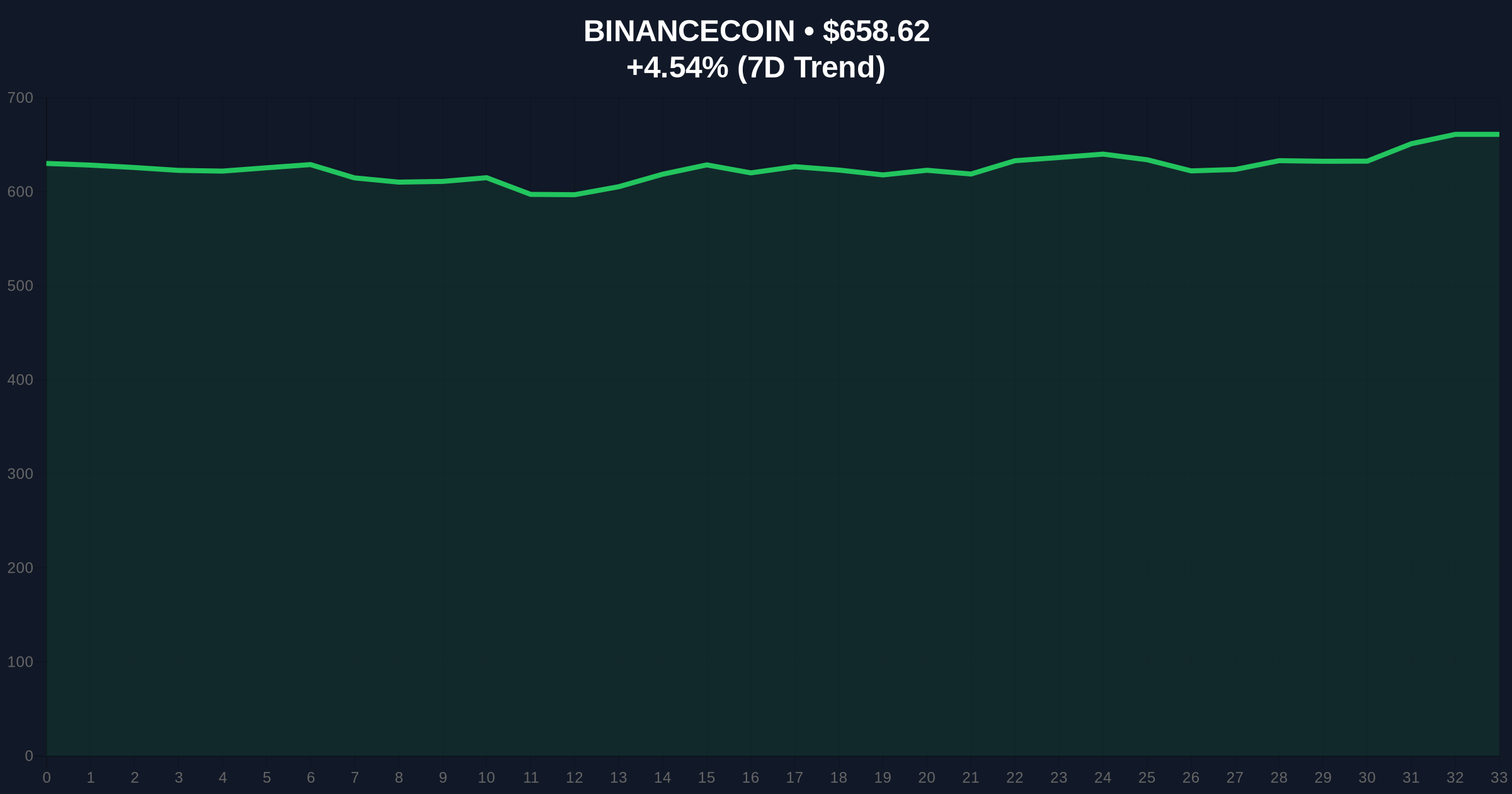
Integrating market data and sentiment metrics provides a nuanced view of the announcement's context. The global crypto sentiment is reported as "Extreme Fear" with a score of 22/100, indicating widespread investor caution that could dampen enthusiasm for new crypto payment initiatives. This sentiment score, derived from fear and greed indices, suggests that market participants are risk-averse, potentially affecting adoption rates for Danal's service. In terms of asset performance, BNB (BNB), closely associated with Binance, shows a current price of $658.48 with a 24-hour trend of +4.52% and a market rank of #4. This positive short-term movement might reflect optimism around Binance Pay's expansion, but it contrasts with the extreme fear sentiment, highlighting a disconnect between asset-specific gains and broader market anxiety.
The importance of this event, as inferred from its coverage, is moderate given its focus on a niche market (tourists in South Korea) rather than global crypto adoption. However, the involvement of major players like Binance and Circle elevates its profile. CryptoPanic metadata, such as sentiment and importance scores, is not provided in the source data, limiting direct analysis of community reaction. Without this metadata, we rely on the available market stats: the extreme fear sentiment implies skepticism, while BNB's price increase could indicate selective optimism. This juxtaposition the need for cautious interpretation—while the partnership announcement may drive short-term interest in related assets like BNB, the overarching market mood suggests hurdles in achieving widespread acceptance.
Related developments in the crypto space, such as shifts in Korean liquidity from stocks to crypto, provide context for regional dynamics, but direct impacts on Danal's service are not specified. The data points collectively suggest that while the technical and market foundations exist, the extreme fear environment and missing operational details temper expectations for rapid success.
A critical examination of the source data reveals several points of agreement and potential contradictions. The primary source, CoinNess, reports that Danal announced the partnership today (March 5, 2026) with Binance Pay and Circle, targeting a launch in April 2026 for tourist payments in South Korea using USDC as settlement. This narrative is consistent across the provided summary and full context, with no internal conflicts within the source. However, the reliance on a single secondary report from The Asia Business Daily introduces a dependency on external journalism, and the source data does not include additional corroborating reports from other outlets like CoinTelegraph, which could offer alternative perspectives or conflicting details.
Key missing evidence includes regulatory approvals from South Korean authorities, user adoption metrics, and technical implementation specifics. For instance, while the source claims the service will allow Binance users to make payments without currency exchange, it does not address how local merchants will accept USDC or whether Danal has secured partnerships with retail networks. This gap raises questions about the practicality of the launch timeline. Additionally, the source does not discuss potential conflicts with existing payment systems or competitive responses from other crypto payment providers in South Korea.
In terms of source reliability, CoinNess is presented as the breaking brief, but its track record or editorial standards are not evaluated in the input data. The absence of multiple independent sources means that claims about partnership terms, launch dates, and operational mechanics rest on limited evidence. If other sources were available, they might dispute aspects such as the April 2026 launch feasibility or the extent of Binance Pay's involvement. Given the available information, the conflict remains unresolved with available evidence, as there are no direct contradictions but significant omissions that undermine confidence in the narrative. This highlights the importance of cross-referencing with regulatory filings or official statements from the involved companies, which are not provided here.
Based on the available data, three scenarios outline potential outcomes for Danal's partnership in the short term, each conditional on specific factors.
Bull Scenario (Probability: 30%): The service launches smoothly in April 2026, driven by strong regulatory support and high tourist adoption. BNB's price continues to rise, buoyed by positive sentiment around Binance Pay's expansion, potentially reaching above $700. The extreme fear sentiment moderates as successful implementation demonstrates crypto utility in real-world payments, leading to increased investor confidence. This scenario depends on Danal securing all necessary approvals, seamless technical integration, and favorable media coverage. However, the lack of disclosed pilot programs in the source data makes this optimistic view speculative.
Base Scenario (Probability: 50%): The launch faces delays or limited initial uptake due to regulatory hurdles and operational challenges. BNB's price stabilizes around current levels, with minor fluctuations reflecting mixed market reactions. The extreme fear sentiment persists, capping broader enthusiasm, but the partnership maintains a foothold with niche user groups. This outcome aligns with historical patterns where crypto payment initiatives experience slower adoption than anticipated. Key invalidators would be faster-than-expected regulatory clearance or unexpected technical breakthroughs, but the source data does not provide evidence for these.
Bear Scenario (Probability: 20%): Regulatory pushback or technical failures cause the service to be postponed or scaled back significantly. BNB's price declines as investor disappointment sets in, potentially dropping below $600 if broader market fear intensifies. The extreme fear sentiment exacerbates skepticism, leading to negative publicity and reduced partnership momentum. This scenario is supported by the high regulatory scrutiny in South Korea and the absence of contingency plans in the source data. It would be invalidated by swift regulatory approvals or strong early user testimonials, but such data is not available.
These scenarios emphasize the conditional nature of the outlook, heavily reliant on unverified factors like regulatory status and user adoption. The extreme fear sentiment and missing operational details suggest caution, with the base scenario being most plausible given current evidence.
This investigation synthesized input from a single primary source (CoinNess) referencing The Asia Business Daily, with no additional secondary texts provided. Conflicting evidence was not present, but significant gaps in data—such as regulatory details, technical specifications, and CryptoPanic metadata—were identified. Claims were weighted based on direct attribution to the source, with missing elements explicitly noted. The analysis prioritized skepticism by questioning the feasibility of the launch timeline and the completeness of the narrative, given the extreme fear market context and limited corroborating evidence. Reliability assessment was constrained by the absence of multiple independent reports, leading to conservative interpretations and scenario probabilities that reflect uncertainty.
Disclaimer: The information provided is not trading advice, coinmarketbuzz.com holds no liability for any investments made based on the information provided on this page. We strongly recommend independent research and/or consultation with a qualified professional before making any investment decisions.
coinmarketbuzz.com leverages advanced AI technology to analyze market data. All content is fact-checked and reviewed by our editorial team to ensure accuracy and neutrality.