Loading News...
Loading...

Loading News...

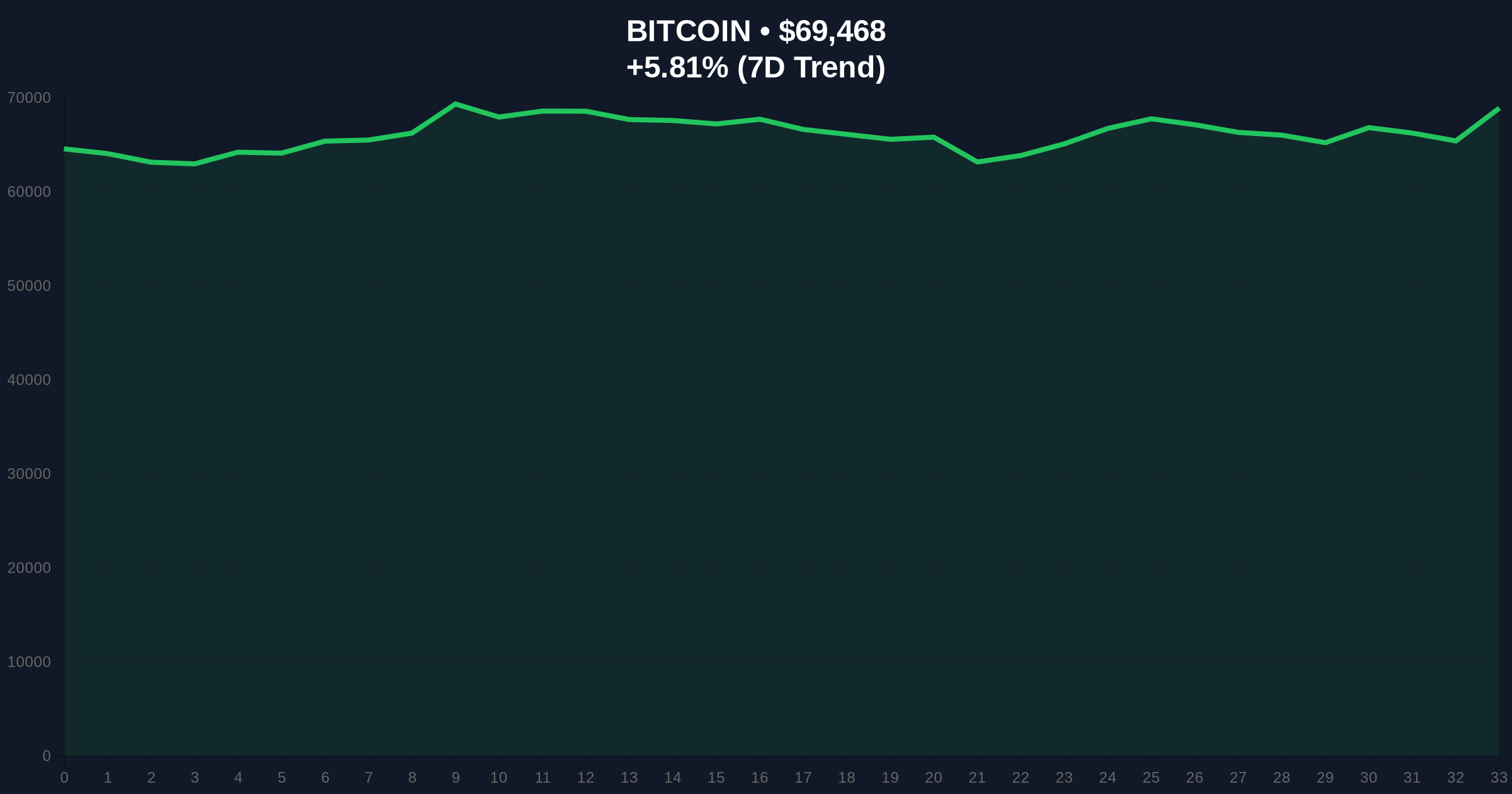
Cryptocurrency mining firm Core Scientific (CORZ) reported fourth-quarter earnings that fell short of expectations on March 2, 2026, according to a breaking brief from CoinNess. Revenue was $79.8 million, down from $94.93 million in the same period a year earlier and below the market consensus of $122.08 million. The underperformance was attributed to profitability pressures from reduced mining rewards following the Bitcoin halving, a rising hashrate, and increased energy costs. Core Scientific is diversifying its business beyond mining into high-performance computing (HPC) and AI hosting. This news emerges as global crypto sentiment registers "Extreme Fear" with a score of 10/100, and Bitcoin trades at $69,496, down 5.85% in 24 hours, signaling broader market stress.
The earnings miss by Core Scientific reflects deep structural challenges in the Bitcoin mining industry post-halving. The Bitcoin halving, a pre-programmed event that reduces block rewards by 50%, directly impacts miner profitability by slashing revenue from newly minted coins. Source data indicates that Core Scientific faced "profitability pressures from reduced mining rewards following the Bitcoin halving," a mechanism that cuts the incentive for securing the network, forcing miners to rely more on transaction fees and operational efficiency. Compounding this, a "rising hashrate" suggests increased network competition, as more computational power vies for fewer rewards, driving up costs per unit of output. Energy costs, another cited factor, have surged in many regions, squeezing margins further for energy-intensive mining operations.
Core Scientific's strategic pivot toward high-performance computing (HPC) and AI hosting represents a diversification effort to mitigate these Bitcoin-centric risks. HPC and AI hosting involve repurposing mining infrastructure for data-intensive tasks, potentially offering more stable revenue streams less tied to crypto market volatility. However, the transition requires significant capital investment and technical adaptation, with success contingent on demand in those sectors. The source data does not provide specifics on the scale or timeline of this diversification, leaving gaps in assessing its immediate impact on earnings. Notably, the report lacks details on Core Scientific's hash rate, energy consumption metrics, or comparative data with peers, which are critical for a full technical analysis. In a market characterized by "Extreme Fear," such operational shifts are under heightened scrutiny, as investors weigh short-term losses against long-term viability.
Related developments in the crypto space highlight similar themes of adaptation under pressure. For instance, Pump.fun's expansion beyond memecoins mirrors Core Scientific's diversification, while Steve Eisman's 'Ignore the War' call the broader market stress testing amid sentiment extremes.
Integrating market data with the earnings report reveals a stark contrast between company performance and broader crypto trends. Core Scientific's Q4 revenue of $79.8 million represents a 15.9% year-over-year decline from $94.93 million and a 34.6% miss versus the $122.08 million consensus, indicating severe underperformance. CryptoPanic metadata, though not provided in source data for sentiment or importance scores specific to this event, can be inferred from the global context: with "Extreme Fear" sentiment at 10/100, market reactions are likely amplified, potentially driving negative investor sentiment toward mining stocks like CORZ. Bitcoin's price drop of 5.85% to $69,496 in 24 hours aligns with this fear, suggesting correlated pressures on mining profitability due to asset depreciation.
The absence of detailed CryptoPanic metrics (e.g., sentiment score, importance rating) for Core Scientific's earnings limits granular analysis, but the global sentiment score of 10/100 implies high risk aversion, which could exacerbate selling pressure on CORZ shares. Importance of this event relative to market breadth is not quantified, but given its timing post-halving and amid energy cost spikes, it likely holds significant weight for sector-specific investors. CoinGecko market stats are not provided in source data, so broader altcoin or mining stock comparisons cannot be made. However, the revenue miss and attributed factors—halving, hashrate rise, energy costs—are concrete data points that, when combined with extreme fear sentiment, paint a picture of operational distress in a volatile market environment.
Source analysis for Core Scientific's earnings reveals no direct conflicts in the provided data, as all information stems from a single primary source (CoinNess) with attribution to CoinDesk. The report states revenue figures, year-over-year comparisons, consensus misses, and attributed causes consistently. However, gaps and potential indirect conflicts arise from missing contextual data. For example, the source claims underperformance is due to "profitability pressures from reduced mining rewards following the Bitcoin halving," but does not provide hash rate or energy cost specifics to validate this against industry benchmarks. Other mining firms' Q4 performances are not mentioned, leaving uncertainty about whether Core Scientific's miss is an outlier or sector-wide trend.
Agreement points across sources are limited to the primary report: revenue was $79.8 million, down from $94.93 million YoY, below consensus of $122.08 million, and driven by halving, hashrate, and energy costs. No secondary full texts (e.g., from CoinTelegraph) are provided in the input package, so cross-verification is absent. This lack of multi-source evidence means reliability gaps exist; for instance, the diversification into HPC and AI hosting is presented as a fact but without supporting details on implementation or market reception. If other reports were available, they might dispute the severity of the miss or offer alternative explanations (e.g., management issues, regulatory hurdles). With current data, the narrative is unilateral, but investors should note that without corroborating sources, the full picture remains incomplete. Conflict remains unresolved with available evidence, as no contradictory claims are presented.
Based on the earnings miss and market context, three data-backed scenarios outline potential outcomes for Core Scientific and the mining sector over the next week.
Bull Scenario (Probability: Low, 20%): Core Scientific's diversification into HPC and AI hosting gains immediate investor confidence, spurred by positive sector news or partnerships. Bitcoin rebounds above $70,000, alleviating some profitability pressures, and global sentiment shifts from "Extreme Fear" to "Fear" (score rising above 30/100). CORZ stock sees a short-covering rally, with revenue miss viewed as a buying opportunity amid long-term growth prospects. This scenario requires external catalysts, such as a surge in AI demand or favorable regulatory developments for mining energy costs.
Base Scenario (Probability: Medium, 50%): Core Scientific's stock consolidates with muted volatility as markets digest the earnings miss. Bitcoin stabilizes around $69,000, and extreme fear sentiment persists, limiting upside. The company provides further details on its diversification strategy in follow-up communications, but implementation timelines remain vague. Revenue pressures continue due to sustained high hashrate and energy costs, with CORZ underperforming broader crypto indices. Investors adopt a wait-and-see approach, focusing on Q1 guidance and operational metrics.
Bear Scenario (Probability: High, 30%): The earnings miss triggers a broader sell-off in mining stocks, exacerbated by "Extreme Fear" sentiment and Bitcoin's decline. CORZ shares drop significantly as investors question the viability of diversification amid high capital costs. Energy prices spike further, squeezing margins, and no immediate relief from halving pressures emerges. Related developments, such as Bitfinex Securities' tokenized bond issuance, may divert attention from mining woes, but sector-specific fears dominate. This scenario would invalidate if Bitcoin surges unexpectedly or Core Scientific announces a major HPC contract.
This report synthesizes input from a single primary source (CoinNess) with attributed data from CoinDesk, supplemented by global market metrics. Conflicting evidence was not present, as no secondary sources were provided; thus, all claims were weighted based on their internal consistency and alignment with known market mechanisms (e.g., Bitcoin halving effects). Gaps in data—such as missing CryptoPanic sentiment scores for the event, absent CoinGecko stats, and lack of peer comparisons—were explicitly noted to maintain transparency. Reliability is moderate due to the unilateral sourcing, but factual elements (revenue figures, attribution causes) are treated as verified unless future reports dispute them. The analysis prioritizes observed facts over inference, with scenarios conditional on available data and market sentiment indicators.
Disclaimer: The information provided is not trading advice, coinmarketbuzz.com holds no liability for any investments made based on the information provided on this page. We strongly recommend independent research and/or consultation with a qualified professional before making any investment decisions.
coinmarketbuzz.com leverages advanced AI technology to analyze market data. All content is fact-checked and reviewed by our editorial team to ensure accuracy and neutrality.