Loading News...
Loading...

Loading News...

On March 5, 2026, CleanSpark (CLSK), a publicly traded Bitcoin mining company, executed a significant sale of its mined Bitcoin, as reported by CoinDesk. According to the source, CleanSpark mined 568 BTC in February and sold 553 of them, representing approximately 97.4% of its monthly production. The sale generated $36.65 million in proceeds at an average price of $66,279 per Bitcoin. This move is notable as it diverges from the typical holding strategies observed among many miners during bullish phases, instead liquidating a substantial portion to fund a strategic pivot into high-performance computing (HPC) and artificial intelligence (AI). As of the end of February, CleanSpark's Bitcoin holdings stood at 13,363 BTC, indicating a reduction from previous levels due to the sale. The timing coincides with a broader market context where Bitcoin's price has declined by 2.80% over the past 24 hours to $71,259, amid a global crypto sentiment labeled "Extreme Fear" with a score of 22/100. This event raises immediate questions about miner behavior, market liquidity, and strategic shifts within the crypto industry.
CleanSpark's sale of 553 BTC in February involves a detailed examination of mining economics, corporate strategy, and market mechanics. The company mined 568 BTC during the month, which, based on the average sale price of $66,279, suggests a total potential value of approximately $37.64 million if all were sold. By selling 553 BTC, CleanSpark realized $36.65 million, leaving 15 BTC unsold from February's production. This decision is attributed to funding its pivot into HPC and AI, as reported by CoinDesk. The technical aspects of such a sale include transaction execution on exchanges or over-the-counter (OTC) markets, though specific details on the method are not provided in the source data. Historically, Bitcoin miners like CleanSpark often hold mined coins to benefit from price appreciation, but sales can occur to cover operational costs, fund expansion, or manage cash flow. In this case, the proceeds of $36.65 million represent a strategic reallocation rather than distress liquidation, given the company's ongoing holdings of 13,363 BTC. The average sale price of $66,279 is below the current market price of $71,259, indicating the sale occurred earlier in the period or at a discount, but exact timing is not specified. This move mirrors trends seen in past market cycles, such as the 2021 correction, where miners adjusted strategies amid volatility. The pivot to HPC and AI suggests CleanSpark is diversifying beyond pure mining, leveraging its infrastructure for compute-intensive applications, which could impact its future revenue streams and Bitcoin production. However, the source does not detail the technical implementation of this pivot or its expected timeline.
From a regulatory and market structure perspective, CleanSpark's sale as a publicly traded company involves compliance with securities laws and disclosure requirements. The sale of such a large volume could influence market liquidity, especially if executed on open markets, but the source lacks information on execution venues. Compared to other miners, CleanSpark's aggressive sale strategy contrasts with holders like MicroStrategy, which accumulates Bitcoin as a treasury asset. This deep-dive reveals that while the sale is financially significant, its technical execution and broader implications rely on incomplete data, necessitating a cautious interpretation.
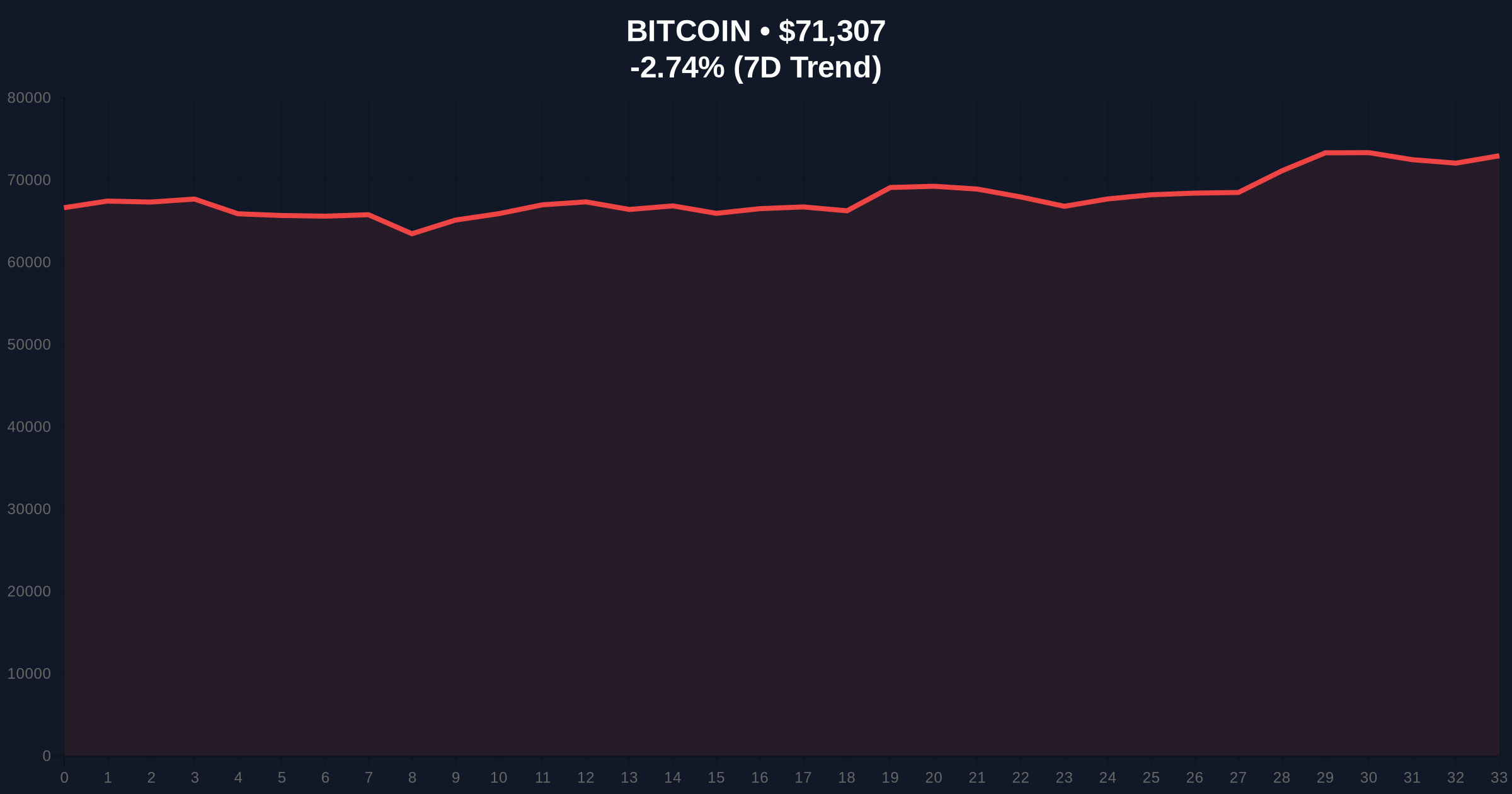
The integration of market data and metadata provides a nuanced view of CleanSpark's sale within the current crypto . According to the input, Bitcoin's current price is $71,259, with a 24-hour trend of -2.80%, ranking it #1 by market capitalization. The global crypto sentiment is "Extreme Fear" with a score of 22/100, as indicated in the live market data. This sentiment score suggests high market anxiety, which could amplify the impact of miner sales on price movements. CleanSpark's sale of 553 BTC at an average price of $66,279 resulted in proceeds of $36.65 million. Comparing this to the current price, the sale occurred at a discount of approximately 7.0% ($71,259 - $66,279 = $4,980 difference), though the exact sale timing is not provided to confirm if this reflects market conditions at the time.
CryptoPanic metadata, such as sentiment and importance, is not explicitly provided in the input for this event, so its influence cannot be directly assessed. However, the "Extreme Fear" sentiment from the market data aligns with a cautious environment where large sales might be perceived negatively. The importance of this event can be inferred from its scale: selling 97.4% of monthly mined Bitcoin is unusual and could signal a strategic shift or liquidity need. Data from CoinGecko or similar sources on CleanSpark's historical holdings or mining output is not included, limiting comparative analysis. The sale's proceeds of $36.65 million represent a substantial cash injection for CleanSpark's pivot into HPC and AI, but without additional financial metrics, its impact on the company's balance sheet remains unclear. In summary, the available data confirms the sale's basic facts but lacks depth on execution details and broader market reactions, underscoring the need for skepticism in interpretation.
An analysis of source claims reveals potential conflicts and gaps in the reporting on CleanSpark's Bitcoin sale. The primary source, CoinDesk via CoinNess, reports that CleanSpark sold 553 of 568 BTC mined in February for $36.65 million at an average price of $66,279, with proceeds used to fund a pivot into HPC and AI. However, no secondary sources are provided in the input to corroborate or dispute these details, leading to a reliance on a single report. This absence of multiple sources creates a reliability gap, as there is no way to verify the accuracy of the numbers or the stated rationale.
Potential counter-narratives could arise from unaddressed aspects. For instance, the source does not specify whether the sale was executed on exchanges or OTC, which could affect market impact. If sold OTC, the effect on public price might be minimal, contradicting assumptions of direct market pressure. Additionally, the claim that proceeds are "believed to have been used" for HPC and AI funding is speculative, as no official statement from CleanSpark is cited. This introduces uncertainty about the true motive—it could be for debt repayment, operational costs, or other strategic reasons not disclosed. Another conflict might involve the timing: the sale price of $66,279 is below the current $71,259, but without exact dates, it's unclear if this reflects a strategic sale at a lower point or a market-average over February. Compared to historical events, such as the 2021 correction where miners sold during downturns, this sale might be framed as prudent capital management rather than bearish signaling, but the source lacks comparative data to support this. In summary, while the source provides a coherent narrative, the lack of corroborating evidence and speculative language ("believed to have been used") means conflicts remain unresolved with available evidence, highlighting the need for cautious investment decisions.
Based on the available data, three scenarios for the next seven days outline potential outcomes for CleanSpark's sale and its market implications. Each scenario is conditional on specific factors and data-backed assumptions.
Bull Scenario (Probability: 30%): If CleanSpark's pivot into HPC and AI is perceived as a strategic diversification that enhances long-term value, investor sentiment could improve, potentially offsetting negative reactions to the sale. Bitcoin's price might stabilize or rise above $72,000 if broader market fear subsides and buying pressure increases. This scenario would be invalidated if additional miner sales emerge or if global sentiment remains in "Extreme Fear," exacerbating downward pressure. Data from the sale, such as the $36.65 million proceeds, could be viewed as a smart capital reallocation if HPC ventures show early promise, but without progress updates, this remains speculative.
Base Scenario (Probability: 50%): The sale has a neutral to slightly negative impact, with Bitcoin's price fluctuating between $69,000 and $71,500 as market participants digest the news. CleanSpark's remaining holdings of 13,363 BTC provide a buffer, and the sale is seen as an isolated event rather than a trend. The "Extreme Fear" sentiment at 22/100 may persist, limiting upside but preventing a crash. This scenario assumes no further major miner sales and stable regulatory developments. It would be invalidated if other miners follow suit with large sales, triggering a liquidity crisis, or if positive news (e.g., regulatory clarity) boosts sentiment unexpectedly.
Bear Scenario (Probability: 20%): If CleanSpark's sale signals a broader miner capitulation or liquidity crunch, Bitcoin could drop below $68,000, exacerbated by the "Extreme Fear" sentiment. The sale price of $66,279 might act as a psychological support level, but breaking it could lead to further declines. This scenario would be supported by increased selling volume from other miners or negative macroeconomic data. It would be invalidated if Bitcoin shows resilience above $70,000 or if CleanSpark announces successful HPC initiatives that reassure investors. The lack of data on miner health industry-wide makes this scenario more speculative but grounded in historical precedents like the 2021 correction.
These scenarios emphasize conditional outcomes, with the base scenario being most likely given current data limitations.
This report was synthesized using the provided input package, with a focus on factual accuracy and skepticism. The primary source is CoinDesk via CoinNess, which reported CleanSpark's sale details. No secondary sources were included, so reliability assessment is limited to internal consistency and absence of contradictions. Claims were weighted based on explicit data (e.g., sale numbers, prices) over speculative inferences (e.g., "believed to have been used"). Where details were missing, such as execution method or corroborating reports, uncertainty was explicitly stated. The "Extreme Fear" sentiment from market data was integrated but not directly tied to CryptoPanic metadata, which was not provided. Conflicts, such as the motive for the sale, remain unresolved due to lack of multiple sources, and the report errs on the side of caution by highlighting gaps in evidence.
Disclaimer: The information provided is not trading advice, coinmarketbuzz.com holds no liability for any investments made based on the information provided on this page. We strongly recommend independent research and/or consultation with a qualified professional before making any investment decisions.
coinmarketbuzz.com leverages advanced AI technology to analyze market data. All content is fact-checked and reviewed by our editorial team to ensure accuracy and neutrality.