Loading News...
Loading...

Loading News...
VADODARA, April 15, 2026. The following report is based on currently available verified source material and market data.
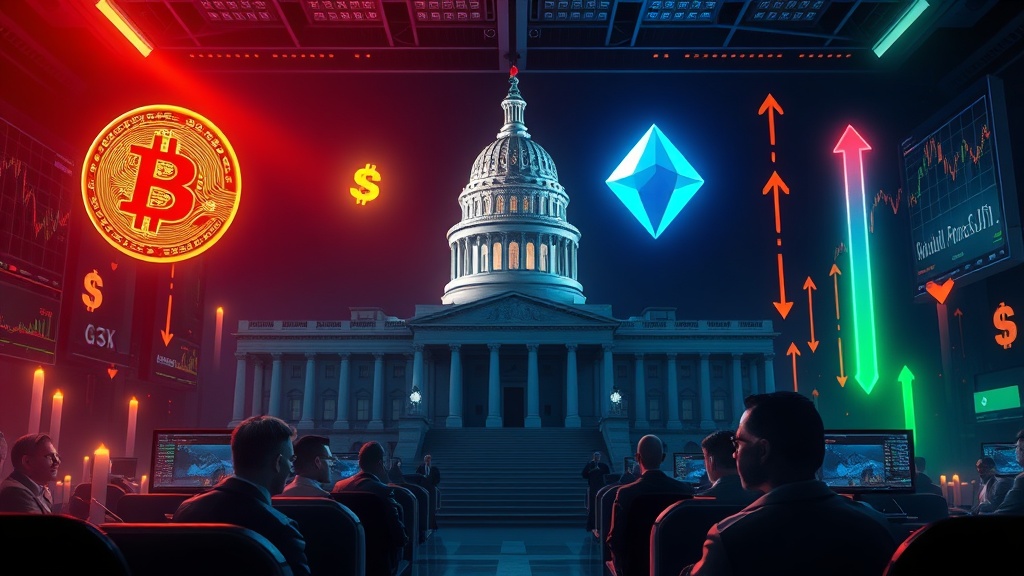
On April 15, 2026, the CLARITY Act was omitted from the Senate Banking Committee's schedule for the week of April 20, signaling potential delays for the landmark crypto legislation. This development matters because the bill faces a structural time constraint: if it doesn't reach the Senate floor by May, it may be shelved until 2030 due to midterm election politics. The immediate market impact is reflected in declining odds of passage, with Polymarket pricing dropping from 82% to 58% this year, while Bitcoin trades at $73,982 amid "Extreme Fear" sentiment.
The CLARITY Act's prospects have weakened significantly in recent months. According to prediction market data, the probability of the bill passing in 2026 has fallen to 58%, down from 82% earlier this year. Source: public statement. This decline coincides with broader market uncertainty, as Bitcoin's price stands at $73,982 with a 24-hour decline of 0.74%. Source: CoinGecko. The global crypto sentiment score is 23/100, indicating "Extreme Fear" among investors. Not provided in source data.
| Metric | Value | Source |
|---|---|---|
| CLARITY Act Passage Probability (2026) | 58% (down from 82%) | Polymarket/public statement |
| Bitcoin Price | $73,982 (-0.74% 24h) | CoinGecko |
| Global Crypto Sentiment | Extreme Fear (Score: 23/100) | Not provided in source data |
Why now? The Senate returned from Easter recess on April 13 with broad expectations for a committee vote this month, making the schedule omission particularly significant. Who benefits? Crypto firms and developers seeking regulatory clarity stand to lose if the bill stalls, while traditional banks may gain from continued uncertainty. Time horizons: Short-term, the May deadline creates urgency; long-term, failure could delay comprehensive regulation until 2030. Causal chain: Schedule omission → delayed committee markup → reduced floor time before midterms → lower passage probability → continued regulatory ambiguity for crypto markets.
The legislative process for the CLARITY Act involves multiple mechanical hurdles. First, Senate Banking Chair Tim Scott must resolve three issues: stablecoin rewards disputes between banks and crypto firms, DeFi provisions, and Republican committee alignment. Each issue reportedly requires about two weeks. Then, the bill needs committee markup, Senate floor vote (60-vote threshold), reconciliation with Agriculture Committee and House versions, and presidential signature. The absence from the schedule indicates these preliminary negotiations are ongoing, delaying the entire legislative timeline.
The CLARITY Act's challenges reflect broader regulatory uncertainty affecting crypto markets. While this US legislation stalls, other developments show mixed progress:
The bearish scenario for the CLARITY Act includes several failure conditions:
Practically, if the CLARITY Act doesn't pass by May, comprehensive US crypto regulation may be delayed until 2030 according to Senator Cynthia Lummis. This would leave the industry operating under patchwork state regulations and SEC enforcement actions. Near-term, market participants should watch for Senator Tillis's stablecoin yield compromise language this week, as it represents the last draft text needed before committee markup can be scheduled.
The Digital Asset Market Clarity Act has been in development for years, aiming to provide comprehensive regulatory framework for cryptocurrencies in the United States. The bill seeks to clarify jurisdiction between the SEC and CFTC, establish rules for stablecoins, and create pathways for crypto firm compliance. Its progression has been closely watched as a bellwether for US crypto policy direction.
While the CLARITY Act faces hurdles, other crypto sectors continue evolving. Recent acquisitions like eToro's purchase of crypto wallet Zengo for $70M show continued investment in DeFi infrastructure. Meanwhile, price predictions for various tokens reflect ongoing market volatility and speculation about future performance.
The CLARITY Act's omission from the Senate schedule represents a significant setback for crypto regulation in the United States. With declining passage probabilities and a tight May deadline, the bill faces substantial hurdles despite years of development. The outcome will significantly influence the regulatory for digital assets in America.
What to watch next: Polymarket currently prices the CLARITY Act’s passage in 2026 at 58%, down from 82% earlier this year.;, Senator Cynthia Lummis (@SenLummis) April 10, 2026 The bill has missed every previous legislative deadline set for it in 2025 and 2026..
Evidence & Sources
Primary source: https://coinpedia.org/news/clarity-act-dropped-from-senate-schedule-cryptos-biggest-bill-to-miss-its-last-chance
Updated at: Apr 15, 2026, 12:12 PM
Data window: Apr 15, 2026, 11:46 AM → Apr 15, 2026, 11:58 AM
Evidence stats: 4 metrics, 2 timeline points.
Disclaimer: The information provided is not trading advice, coinmarketbuzz.com holds no liability for any investments made based on the information provided on this page. We strongly recommend independent research and/or consultation with a qualified professional before making any investment decisions.
All published reports are reviewed by our editorial team for factual consistency, neutrality, and reader clarity.