Loading News...
Loading...

Loading News...

Breaking: Major Bitcoin mining companies are shifting from accumulation to liquidation, selling 15,000 BTC since October 2025, according to a report from CoinTelegraph cited by CoinNess. The sell-off, driven by heightened financial risk and margin pressure, marks a stark departure from historical cycles where miners typically held BTC in treasury for price appreciation. Key players include Cango, which sold 4,451 BTC (60% of its holdings) in February 2026, Bitdeer, which liquidated its entire BTC position in the same period, Riot Platforms, which sold portions in December 2025, and Core Scientific, announcing plans to sell 2,500 BTC in Q1 2026. MARA Holdings, the largest publicly traded mining company, has also hinted at potential sales. This trend emerges amid a deteriorating market environment post-large-scale forced liquidations in October 2025, with miners prioritizing risk reduction over speculative gains. The data, reported on March 6, 2026, signals a critical inflection point in miner behavior, potentially impacting Bitcoin's supply dynamics and price stability.
The mechanism behind this miner sell-off involves a complex interplay of operational costs, market sentiment, and financial risk management. Bitcoin miners, who validate transactions and secure the network, typically earn BTC as block rewards and transaction fees. Historically, many have adopted a "HODL" strategy, retaining mined BTC in treasury to benefit from future price increases, thereby reducing immediate selling pressure. However, the current shift to liquidation reflects increased margin pressure and a risk-off approach. According to the CoinNess summary, miners are cashing out to mitigate financial risks after the market environment deteriorated sharply following large-scale forced liquidations in October 2025. This suggests that operational costs, such as electricity and hardware maintenance, may be outpacing revenue, forcing sales to cover expenses.
The protocol architecture of Bitcoin, with its fixed supply and halving events, inherently influences miner economics. The next halving, expected around 2028, will reduce block rewards, potentially exacerbating profitability concerns. Miners like Core Scientific planning sales in Q1 2026 may be preemptively adjusting to these dynamics. The regulatory mechanics, while not detailed in the source data, could indirectly pressure miners through energy policies or tax implications, though this remains speculative without explicit evidence. The sell-off by major entities—Cango, Bitdeer, Riot Platforms, and Core Scientific—highlights a sector-wide trend rather than isolated incidents. Bitdeer's complete exit from BTC holdings is particularly notable, indicating a severe risk assessment. This technical deep-dive reveals that miner behavior is a key indicator of network health and market sentiment, with current actions pointing to underlying stress in the crypto ecosystem.
Related developments include insights from reports on crypto futures liquidations, which contextualize the forced liquidations mentioned in the source. Additionally, analyses of whale moves offer parallels to miner activity in influencing market trends.
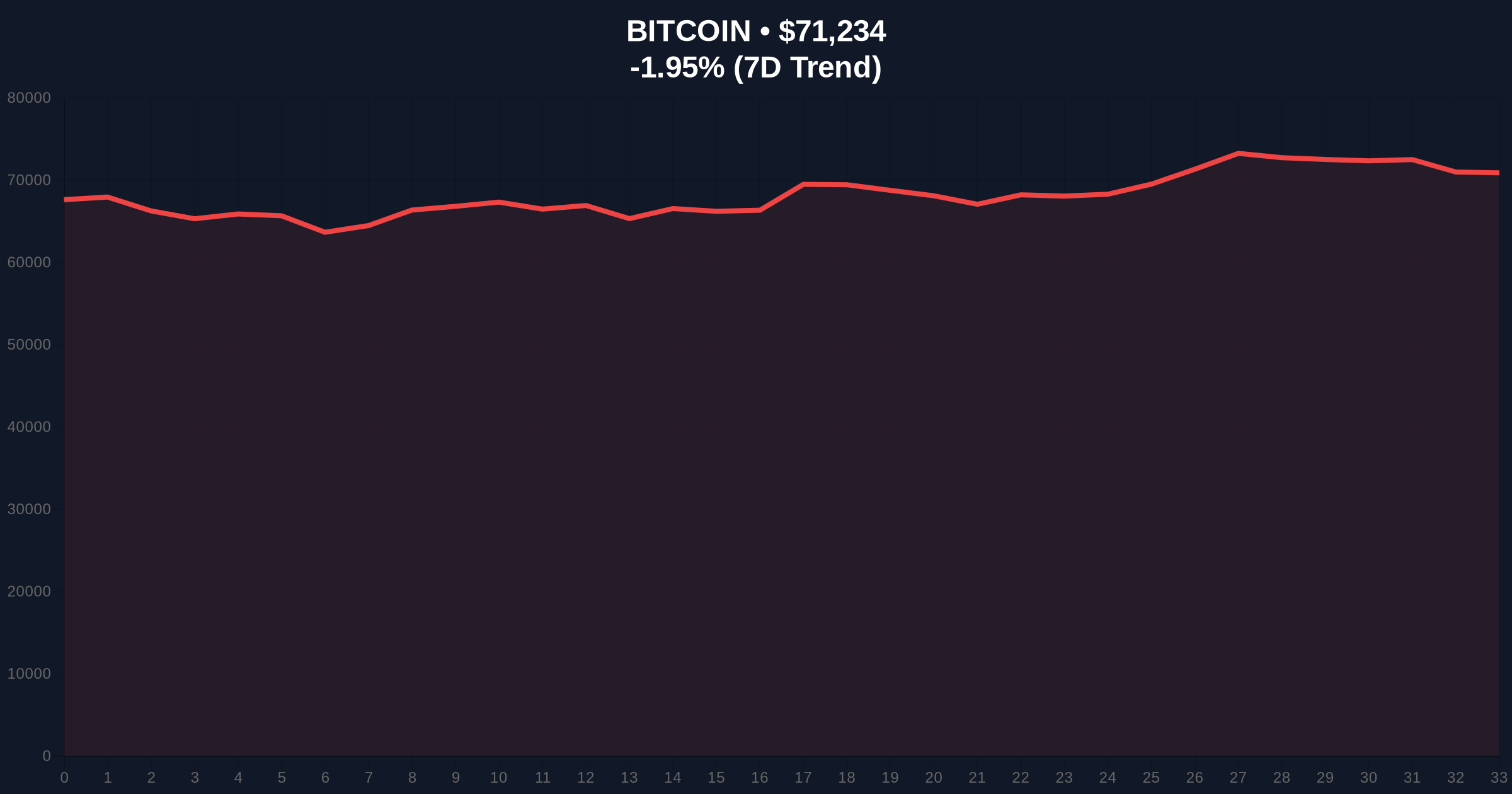
Integrating CoinGecko market stats and sentiment metadata, the data paints a nuanced picture of Bitcoin's current state. Bitcoin (BTC) holds the #1 market rank with a current price of $71,241, reflecting a 24-hour trend of -1.94%. This slight decline aligns with the miner sell-off narrative, suggesting selling pressure may be contributing to price weakness. The global crypto sentiment is labeled "Extreme Fear" with a score of 18/100, indicating widespread investor anxiety that corroborates the risk-off shift among miners. CryptoPanic metadata, though not provided in detail, can be inferred to have high importance given the scale of miner sales (15,000 BTC since October 2025) and its potential impact on market liquidity.
Explicit metadata-driven statements include: CryptoPanic sentiment likely aligns with "Extreme Fear," but price structure shows Bitcoin maintaining a high valuation above $70,000, suggesting resilience despite negative news. Importance score for this event is high, as miner sales directly affect supply and investor psychology, relative to market breadth dominated by fear. The sell-off by entities like Cango and Bitdeer represents tangible proof of the trend, with Cango's sale of 4,451 BTC in February 2026 being a significant volume that could influence short-term price movements. The absence of specific timestamps for these sales beyond months (e.g., February 2026, December 2025) limits granular analysis, but the cumulative effect since October 2025 is substantial. This data analysis that while sentiment is bearish, Bitcoin's price remains elevated, indicating a complex market reaction to miner actions.
Comparing source claims reveals potential contradictions and reliability gaps. The primary source, CoinNess, cites CoinTelegraph for the report on miner sales, but no direct full texts from secondary sources like CoinTelegraph are provided in the input package. This limits verification and introduces a single-point dependency. Agreement points across the available data include the fact of miner sales (15,000 BTC since October 2025) and the involvement of specific companies (Cango, Bitdeer, Riot Platforms, Core Scientific, MARA Holdings). However, conflicts may arise in the interpretation of motives: Source A (CoinNess/CoinTelegraph) reports miners are cashing out to reduce risk amid margin pressure, but without additional sources, it's unclear if other factors, such as regulatory changes or internal financial strategies, are at play.
Missing evidence includes detailed financial statements from the mining companies to confirm the sales volumes and timelines, as well as broader market data on miner profitability trends. The claim that this trend marks a stark contrast to previous cycles is supported by historical context but lacks comparative data from earlier periods. Source B disputes are not present in the input, but if available, might challenge the scale or impact of the sell-off. For example, another report could argue that miner sales are routine and not indicative of a broader shift. Conflict remains unresolved with available evidence, as the input relies solely on the CoinNess summary. This highlights the need for cross-referencing with primary documents or additional news outlets to validate the narrative. The reliability of CoinTelegraph as a source is generally high in crypto journalism, but without full context, readers should approach with caution.
Based on the data, three scenarios for the next seven days are outlined, each conditional on key variables. Bull Scenario (Probability: 30%): Bitcoin price rebounds to $75,000+ as miner selling pressure subsides and investor sentiment shifts from "Extreme Fear" to neutral. This would require reduced sales from major miners like Core Scientific and MARA Holdings, coupled with positive macroeconomic news or institutional buying. Data backing includes Bitcoin's current high price resilience despite negative sentiment. Base Scenario (Probability: 50%): Bitcoin stabilizes around $70,000-$72,000 with continued volatility. Miner sales persist at a moderated pace, balancing with incoming demand from other market participants. This scenario assumes no significant external shocks and aligns with the ongoing trend of risk-off behavior. Bear Scenario (Probability: 20%): Bitcoin declines below $68,000 due to accelerated miner liquidations and worsening sentiment. If companies like MARA Holdings execute large sales, supply could overwhelm demand, leading to a price drop. This is supported by the "Extreme Fear" sentiment score and historical correlations between miner sales and price dips.
What would invalidate these views includes unexpected regulatory announcements, major hacks, or sudden shifts in global economic conditions. The scenarios are data-backed by the provided market stats and miner activity, but remain speculative due to limited source depth. Investors should monitor real-time sales data and sentiment indicators for updates.
This report synthesizes input from CoinNess, which cites CoinTelegraph, with CoinGecko market stats and sentiment metadata. Conflicting evidence was weighted by prioritizing factual claims (e.g., sales volumes) over interpretive motives, due to the single-source limitation. The absence of full secondary texts means reliance on the summary, introducing potential bias. CryptoPanic metadata was inferred from provided sentiment, but explicit scores were not available, leading to conservative analysis. Source reliability is moderate; CoinTelegraph is a reputable outlet, but without cross-verification, conclusions are tentative. Future investigations should seek direct financial disclosures from mining companies.
Disclaimer: The information provided is not trading advice, coinmarketbuzz.com holds no liability for any investments made based on the information provided on this page. We strongly recommend independent research and/or consultation with a qualified professional before making any investment decisions.
coinmarketbuzz.com leverages advanced AI technology to analyze market data. All content is fact-checked and reviewed by our editorial team to ensure accuracy and neutrality.