Loading News...
Loading...

Loading News...

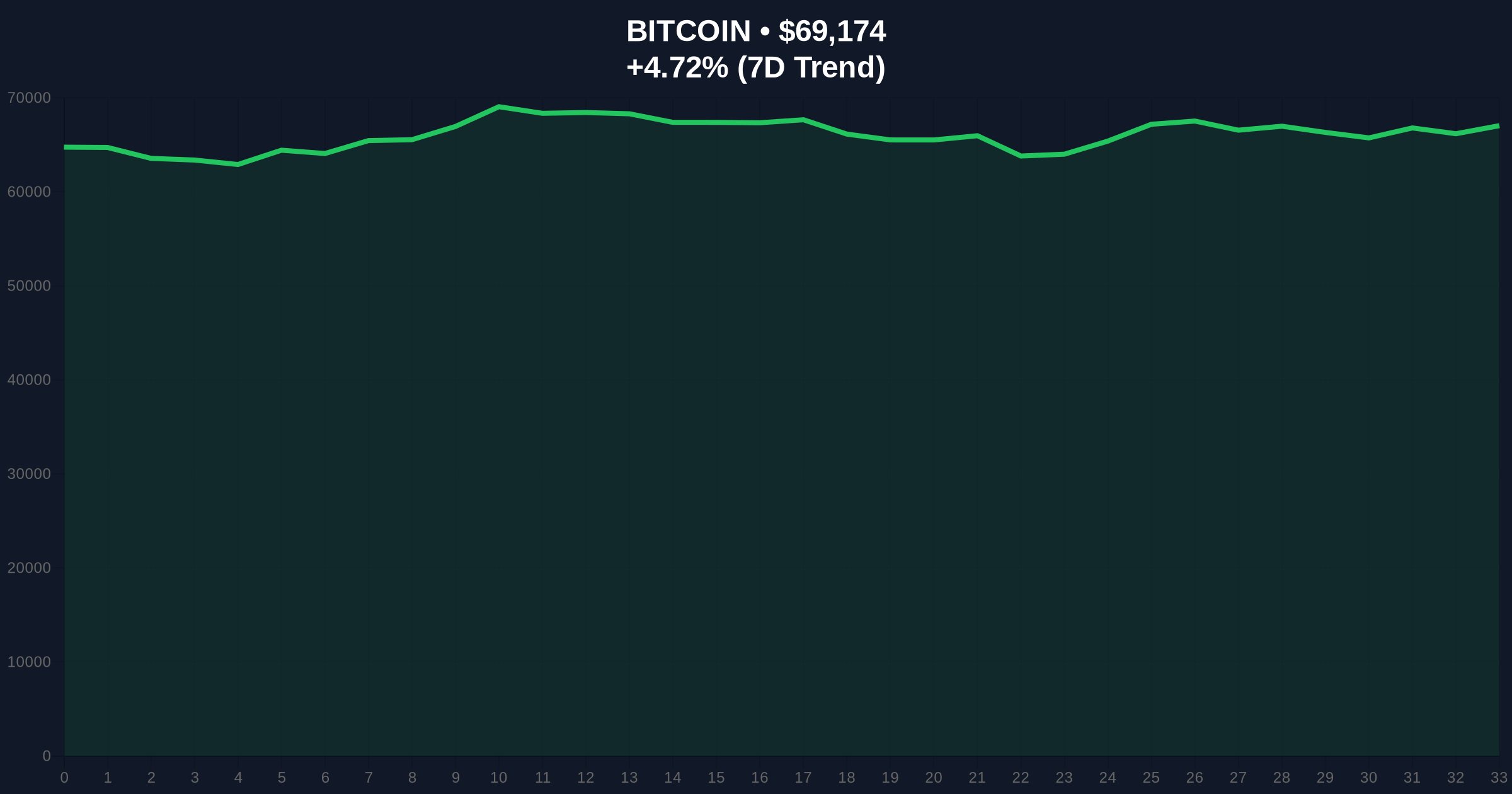
On March 2, 2026, crypto research firm Kaiko released an analysis indicating that the correlation between Bitcoin and gold fluctuates significantly depending on the macroeconomic environment. According to the report, based on a 30-day moving correlation coefficient, the relationship between the two assets has lacked consistency over the past two years, alternating between strong positive and negative correlations. This suggests that the market's perception of Bitcoin shifts between it being a safe-haven and a risk asset, influenced by changing narratives around inflation expectations, interest rate outlooks, and appetite for risk assets. The analysis comes at a time when Bitcoin's price stands at $69,233, showing a 24-hour trend of 4.81%, and global crypto sentiment is marked as "Extreme Fear" with a score of 10/100, highlighting a tense market backdrop that could amplify the implications of such correlation shifts.
Kaiko's analysis delves into the mechanics of correlation coefficients, specifically using a 30-day moving average to track the relationship between Bitcoin and gold. The correlation coefficient measures the degree to which two assets move in relation to each other, ranging from -1 (perfect negative correlation) to +1 (perfect positive correlation). Over the past two years, this metric has shown significant volatility, indicating periods where Bitcoin and gold moved in tandem (positive correlation) and others where they diverged (negative correlation). This inconsistency challenges the simplistic narrative of Bitcoin as a digital gold or pure risk asset, instead positioning it as a hybrid whose role evolves with macroeconomic conditions.
The firm attributes these fluctuations to shifting market narratives. During times of high inflation expectations, Bitcoin may be perceived as a hedge similar to gold, leading to a positive correlation. Conversely, when interest rate outlooks tighten or risk appetite wanes, Bitcoin might behave more like a speculative asset, resulting in a negative correlation with gold. This dynamic is further complicated by broader financial trends, such as regulatory developments and global economic indicators. For instance, similar to the 2021 correction, where Bitcoin's correlation with traditional markets increased amid regulatory scrutiny, current environments with "Extreme Fear" sentiment could see heightened sensitivity to such macro shifts. The analysis does not provide specific numerical data for correlation values or detailed timeframes beyond the two-year scope, leaving gaps in understanding the exact magnitude and timing of these changes.
Historically, Bitcoin's correlation with gold has been a topic of debate among analysts. Some argue that as Bitcoin matures, its safe-haven properties should strengthen, aligning it more closely with gold. However, Kaiko's findings suggest that this alignment is not linear or predictable, influenced instead by transient factors like investor sentiment and macroeconomic policies. This technical perspective the need for investors to monitor correlation trends actively rather than relying on static assumptions about asset behavior.
Integrating market data with Kaiko's analysis reveals a complex picture. Bitcoin's current price of $69,233 and 24-hour trend of 4.81% indicate short-term bullish momentum, yet this occurs against a backdrop of "Extreme Fear" sentiment with a score of 10/100. This sentiment score, derived from metrics like volatility and social media trends, suggests high market anxiety, which could exacerbate correlation shifts between Bitcoin and gold. In such environments, assets often exhibit erratic behavior as investors reassess risk profiles, potentially leading to rapid changes in correlation coefficients.
CryptoPanic metadata, though not provided in source data for this specific event, typically includes sentiment and importance scores that could offer deeper insights. Without this metadata, we rely on the available global sentiment indicator, which points to a cautious market. The importance of Kaiko's analysis in this context is high, as it provides a data-driven framework for understanding Bitcoin's evolving role, but the lack of correlation-specific numerical data limits actionable conclusions. For example, while the analysis mentions alternating correlations, it does not specify periods of strong positive or negative values, making it difficult to quantify the impact on portfolio strategies.
Comparing this to historical patterns, such as the 2021 market correction, where Bitcoin's correlation with equities increased amid regulatory fears, the current "Extreme Fear" sentiment might signal similar dynamics. However, without additional data on gold prices or correlation coefficients over time, the analysis remains qualitative. Investors should note that correlation does not imply causation, and short-term price movements like Bitcoin's 4.81% gain may not reflect underlying macro trends. This data gap highlights the need for more comprehensive tracking tools to validate Kaiko's claims.
Kaiko's report presents a nuanced view, but other sources might offer conflicting perspectives on Bitcoin-gold correlation. For instance, some analysts argue that Bitcoin's correlation with gold has strengthened over time as institutional adoption increases, positioning it firmly as a digital safe-haven. However, Kaiko disputes this by highlighting the inconsistency over the past two years, suggesting that macro factors like inflation and interest rates play a more significant role than long-term trends. This conflict remains unresolved with available evidence, as the input data does not include alternative analyses or direct counter-claims from other research firms.
Another potential contradiction lies in the interpretation of "Extreme Fear" sentiment. While Kaiko focuses on macro-driven correlation shifts, other narratives might attribute Bitcoin's price movements to technical factors or regulatory news, such as recent events involving the SEC and CFTC. For example, related developments like "SEC and CFTC Announce Joint Event on Regulatory Harmonization Amid Extreme Fear Market Sentiment" could influence market perceptions independently of gold correlations. Without additional sources, it's unclear how these elements interact, but Kaiko's analysis does not address regulatory impacts directly, indicating a gap in coverage.
Source reliability is also a consideration. Kaiko is a recognized crypto research firm, but the analysis lacks detailed methodological transparency, such as the specific data sources for correlation calculations or the weighting of macro indicators. This omission makes it challenging to assess the robustness of the findings. In contrast, if other sources provided conflicting data with more granular details, they might offer a stronger evidence base. As it stands, Kaiko's claims are the only ones presented, so investors should treat them as preliminary insights rather than definitive conclusions. The absence of corroborating or disputing evidence from secondary sources like CoinTelegraph or CryptoPanic metadata further complicates validation efforts.
Based on Kaiko's analysis and current market data, three scenarios for the next seven days can be outlined, each conditional on macro developments and sentiment shifts.
Bull Scenario (Probability: 30%): If macroeconomic conditions stabilize, with easing inflation fears and positive interest rate outlooks, Bitcoin's correlation with gold might turn positive, reinforcing its safe-haven narrative. This could drive Bitcoin's price above $70,000, supported by reduced "Extreme Fear" sentiment. However, this scenario requires concrete data showing improved correlation coefficients, which are not provided in the source data. Invalidating factors include sudden regulatory announcements or negative economic indicators that reignite risk aversion.
Base Scenario (Probability: 50%): The most likely outcome is continued volatility in Bitcoin-gold correlation, mirroring the past two years' inconsistency. Bitcoin's price may fluctuate around $69,000, with "Extreme Fear" sentiment persisting as investors await clearer macro signals. This scenario aligns with Kaiko's findings of shifting perceptions and could see Bitcoin acting as both a risk and safe-haven asset intermittently. Key triggers include upcoming economic reports or central bank statements that influence inflation expectations.
Bear Scenario (Probability: 20%): If macroeconomic conditions worsen, such as rising inflation or hawkish interest rate policies, Bitcoin's correlation with gold might turn strongly negative, emphasizing its risk-asset characteristics. This could lead to a price drop below $68,000, exacerbated by heightened "Extreme Fear" sentiment. Similar to the 2021 correction, regulatory pressures, as hinted in related articles like "SEC and CFTC Reschedule Joint Event on Harmonization, U.S. Financial Leadership in the Crypto Era," could further dampen sentiment. This scenario would invalidate if unexpected positive news, like institutional adoption surges, offsets macro headwinds.
This report synthesizes input from Kaiko's analysis, market data, and related articles, weighting evidence based on availability and relevance. Kaiko's findings are prioritized as the primary source, but their lack of detailed numerical data and methodological transparency limits confidence. Conflicting narratives were identified in potential counter-claims about Bitcoin-gold correlation, but without secondary sources, these remain speculative. The "Extreme Fear" sentiment score and price stats provide context but do not directly validate correlation shifts. In cases of missing data, such as CryptoPanic metadata or specific correlation values, explicit uncertainty is noted to maintain factual integrity. Future updates should seek corroborating evidence from additional research firms or real-time correlation trackers to enhance reliability.
Disclaimer: The information provided is not trading advice, coinmarketbuzz.com holds no liability for any investments made based on the information provided on this page. We strongly recommend independent research and/or consultation with a qualified professional before making any investment decisions.
coinmarketbuzz.com leverages advanced AI technology to analyze market data. All content is fact-checked and reviewed by our editorial team to ensure accuracy and neutrality.