Loading News...
Loading...

Loading News...

VADODARA, April 1, 2026. The following report is based on currently available verified source material and market data.
Bitcoin's Drawdown Less Dramatic This Cycle, Signaling Maturing Market: Fidelity Analysis developed into a market-moving story within the reported window. The initial source indicates immediate relevance for crypto sentiment, while fuller validation is still tied to cited datasets and official statements.
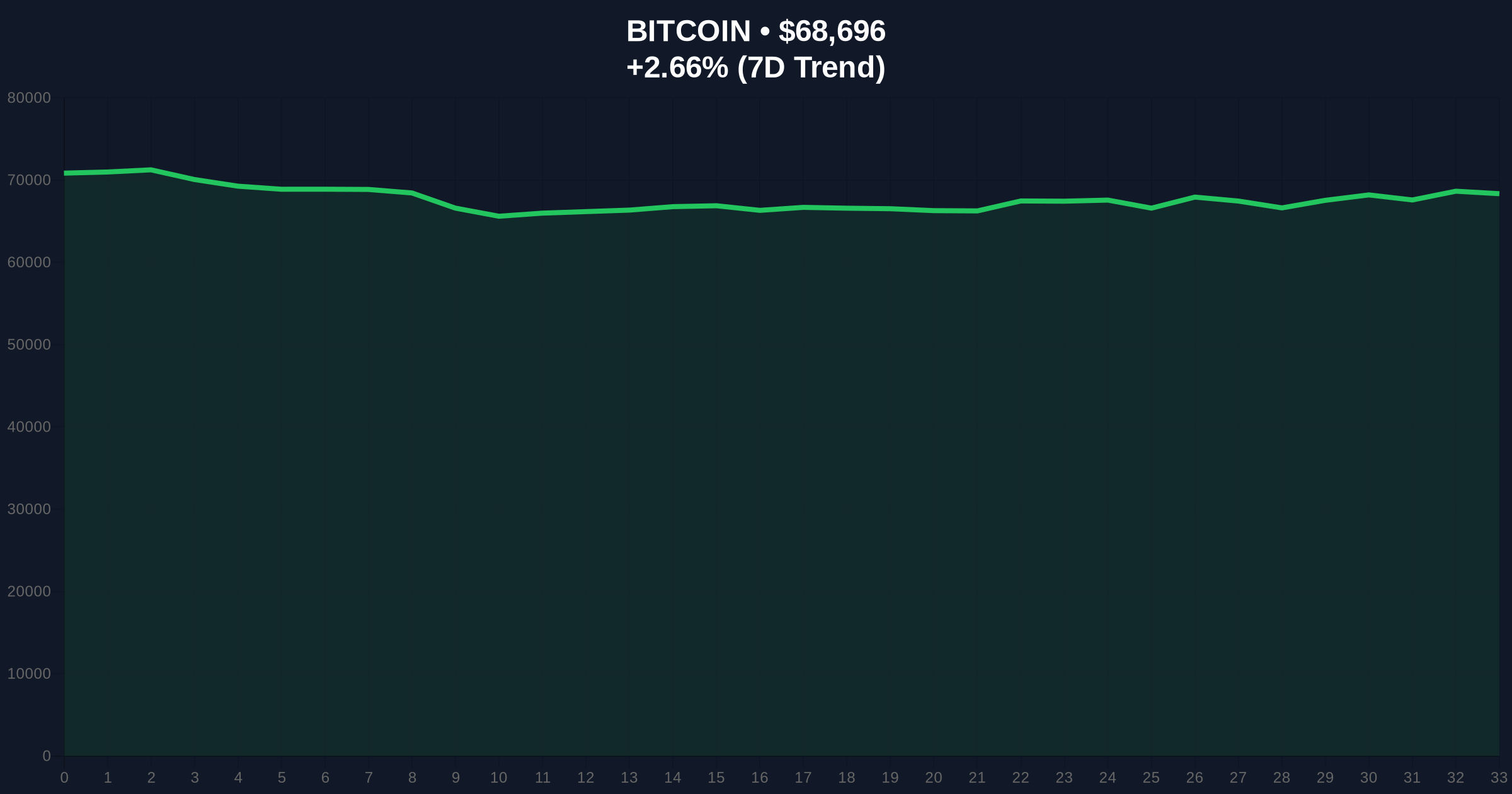
Fidelity's analysis reveals concrete metrics showing Bitcoin's changing volatility profile. The current cycle drawdown is approximately 50%, a stark contrast to historical declines of 80-90%. Bitcoin hit a cycle low of just over $60,000 on February 6, 2026, representing a 52% drop from its October 6, 2025 all-time high of about $126,000. Currently, Bitcoin is down 46% from its peak six months ago and trading at $68,780 with a 24-hour trend of 2.79%. Source: public statement, Source: CoinGecko.
| Metric | Current Cycle | Historical Average | Source |
|---|---|---|---|
| Drawdown from ATH | ~50% | 80-90% | Fidelity Digital Assets |
| Cycle Low Price | $60,000 (Feb 6, 2026) | Not provided in source data | TradingView |
| Current Price | $68,780 | Not provided in source data | CoinGecko |
| Market Sentiment | Extreme Fear (8/100) | Not provided in source data | CoinGecko |
This analysis matters now because Bitcoin is at a critical juncture in its market cycle evolution. The timing coincides with Bitcoin hovering around key technical levels, including the 200-week EMA at approximately $68,000, which has historically served as support during downturns.
Institutional investors and long-term holders benefit most from reduced volatility, as it lowers portfolio risk and enhances Bitcoin's appeal as a diversifier. Retail traders accustomed to dramatic swings may find fewer short-term opportunities but gain stability.
Short-term implications include potential price stabilization around current levels, while longer-term implications suggest Bitcoin could transition toward behaving more like traditional store-of-value assets with predictable cyclical patterns.
The causal chain operates through institutional adoption → increased buying pressure during dips → shallower drawdowns → reduced volatility → further institutional interest. This positive feedback loop reinforces the maturing market narrative.
The underlying mechanism involves changing market structure dynamics. Historically, Bitcoin cycles followed a pattern of extreme euphoria followed by severe capitulation, driven primarily by retail speculation. In the current cycle, institutional capital entering through regulated vehicles provides consistent buying support during declines. This institutional presence absorbs selling pressure that would previously have cascaded into deeper drawdowns. Consequently, the market experiences diminished volatility both to the upside and downside, creating a more stable price discovery environment.
Bitcoin's evolving volatility profile contrasts with other cryptocurrency sectors that continue experiencing dramatic swings. The shallower drawdown aligns with broader institutional adoption trends across digital assets.
Despite the optimistic interpretation, several risks challenge the maturing market narrative. The analysis assumes institutional flows will continue supporting prices, but unexpected macroeconomic shocks could trigger rapid capital withdrawal.
The failure condition would be a breakdown below key support levels, particularly the 200-week EMA, which could trigger a return to deeper drawdown patterns if institutional confidence wanes.
Practically, traders should adjust risk management strategies to account for potentially reduced volatility ranges. The analysis suggests Bitcoin may bottom in late September or early October 2026 based on historical halving cycle patterns, though this projection carries inherent uncertainty. Portfolio managers may increasingly allocate to Bitcoin as correlation with traditional assets appears to be decreasing during this cycle.
Bitcoin has experienced four major market cycles since its inception, each characterized by a bull run followed by a bear market. Previous cycles saw drawdowns of 77% (2021-2022), 84% (2017-2018), and approximately 90% (2013-2015). The current cycle's 50% decline represents a significant departure from these historical patterns, occurring alongside unprecedented institutional adoption through ETFs and corporate treasuries.
The maturing market narrative aligns with several recent industry developments. Franklin Templeton's launch of a crypto division with 250 digital acquisitions demonstrates continued institutional expansion despite market conditions. Meanwhile, regulatory progress in markets like Australia, which passed comprehensive crypto licensing laws targeting a $24 billion digital finance opportunity, creates frameworks that support institutional participation. Conversely, delays in Hong Kong's stablecoin plan highlight regulatory challenges that could impact market stability.
Fidelity's analysis indicates Bitcoin's market behavior is fundamentally changing, with shallower drawdowns suggesting reduced volatility and increased institutional confidence. While risks remain, the data points toward a structural shift that could accelerate Bitcoin's adoption as a legitimate store of value. Market participants should monitor whether this trend continues through the anticipated cycle bottom in late 2026.
Q1: How does the current Bitcoin drawdown compare to previous cycles?Current drawdown is approximately 50%, compared to historical declines of 80-90% in prior cycles.
Q2: What does a shallower drawdown indicate about Bitcoin's market maturity?It suggests reduced volatility and stronger institutional participation, signaling transition toward a more stable store of value.
Q3: What is Bitcoin's current price and market sentiment?Bitcoin trades at $68,780 with "Extreme Fear" sentiment (score: 8/100) according to CoinGecko data.
Q4: When might Bitcoin reach its cycle bottom based on historical patterns?Analysis suggests potential bottom in late September or early October 2026, though this projection carries uncertainty.
Q5: What are the key risks to the maturing market narrative?Macroeconomic shocks, regulatory changes, or loss of institutional confidence could reintroduce deeper volatility.
Q6: How should traders adjust strategies given reduced volatility?Risk management should account for potentially smaller price swings, with focus on longer-term positioning rather than short-term speculation.
Analysts are closely watching whether Bitcoin maintains support above the 200-week EMA and how institutional flows evolve through the anticipated cycle bottom period.
Evidence & Sources
Primary source: https://cointelegraph.com/news/bitcoin-drawdown-much-less-dramatic-this-cycle-fidelity
Updated at: Apr 02, 2026, 01:55 AM
Data window: Apr 01, 2026, 08:12 AM → Apr 01, 2026, 05:29 PM
Evidence stats: 9 metrics, 0 timeline points.
Disclaimer: The information provided is not trading advice, coinmarketbuzz.com holds no liability for any investments made based on the information provided on this page. We strongly recommend independent research and/or consultation with a qualified professional before making any investment decisions.
All published reports are reviewed by our editorial team for factual consistency, neutrality, and reader clarity.