Loading News...
Loading...

Loading News...

VADODARA, April 6, 2026. The following report is based on currently available verified source material and market data.
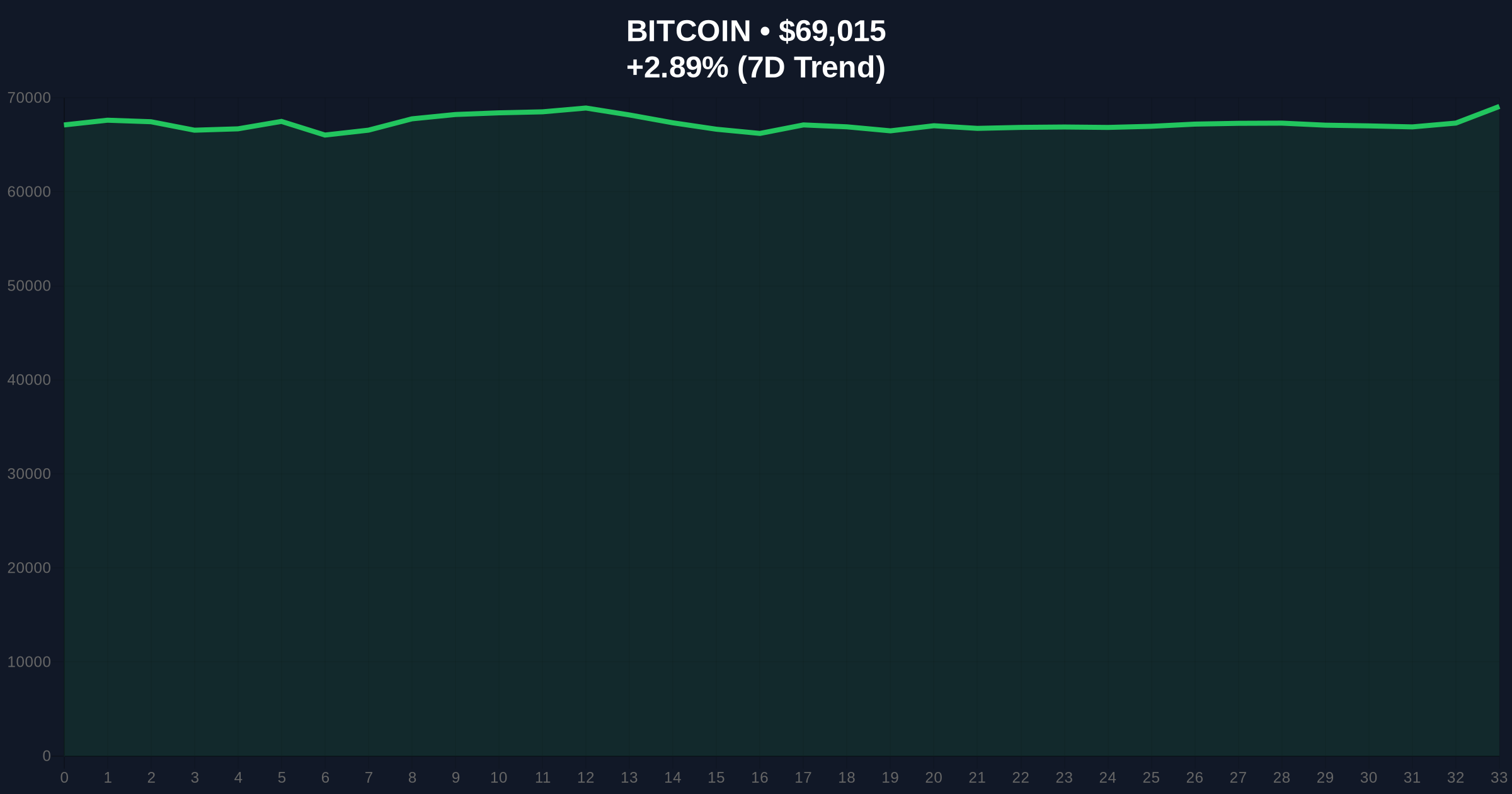
Bitcoin's correlation with global central bank easing has turned strongly negative since 2024, suggesting it now leads rather than lags monetary policy signals, according to a Binance Research report published on April 5, 2026. This structural shift is attributed to spot Bitcoin ETFs, which have allowed institutional investors to position months ahead of policy changes, transforming BTC from a macro 'lagging receiver' to a 'leading pricer.' The change occurs amid extreme market fear, with Bitcoin trading at $69,012 and showing a 2.88% 24-hour gain, indicating potential decoupling from traditional risk-asset pressures.
The report highlights a reversal in Bitcoin's historical relationship with monetary policy. Before ETF approval in January 2024, Bitcoin's correlation with the Global Easing Breadth Index, tracking 41 central banks, was mildly positive, with BTC tending to follow easing cycles by several months. Since 2024, the correlation has turned strongly negative, with the opposite effect nearly three times stronger. Current market metrics show Bitcoin's price at $69,012 with a 24-hour trend of 2.88%, while global crypto sentiment registers as "Extreme Fear" with a score of 13/100. Source: CoinGecko.
| Metric | Value | Source |
|---|---|---|
| Bitcoin Price | $69,012 | CoinGecko |
| 24h Trend | 2.88% | CoinGecko |
| Global Crypto Sentiment | Extreme Fear (13/100) | Market Intelligence |
| ETF Approval Date | January 2024 | Public Statement |
This shift matters now because it coincides with renewed stagflation fears tied to rising oil prices and geopolitical tensions, a backdrop that historically pressured risk assets like Bitcoin. The timing is critical as rate expectations have swung from projected cuts to possible hikes, yet Bitcoin's price action suggests it may be pricing in future pivots earlier.
The mechanism hinges on a change in market participant behavior. Before ETFs, retail investors dominated crypto trading and reacted to macro news with a lag. ETFs enabled institutions to enter at scale, and these firms use sophisticated models to position months ahead of policy changes. Consequently, Bitcoin now acts as a forward-looking asset, with price movements anticipating rather than reacting to monetary easing or tightening. This shift is quantified by the reversal in correlation strength, indicating that crypto-native drivers like policy progress and institutional flows now outweigh the direction of monetary easing itself.
This development contrasts with broader crypto trends, where other assets remain sensitive to macro pressures. For instance, Ethereum and altcoins often still correlate with Bitcoin's older patterns, though ETF-driven flows could eventually propagate. Key adjacent developments include:
The bearish scenario hinges on several uncertainties. If institutional flows reverse due to regulatory crackdowns or ETF outflows, the decoupling could prove temporary. Additionally, the report's analysis may overstate the shift if short-term data anomalies distort correlation metrics.
Practically, traders may need to adjust strategies by monitoring ETF flow data and on-chain institutional metrics more closely than Fed announcements. Regulatory developments around ETFs will be critical, as further approvals or restrictions could amplify or dampen this trend. In the near term, watch for whether negative correlation persists during the next Fed meeting cycle.
Historically, Bitcoin showed a mild positive correlation with global easing cycles, often lagging by months as retail traders reacted to macro news. The approval of spot Bitcoin ETFs by the SEC in January 2024 marked a structural change, enabling large-scale institutional entry that has reshaped price discovery mechanisms.
Amid this shift, broader market context includes extreme fear sentiment and parallel crypto events. Notably, Circle's Arc has announced a quantum resistance roadmap, addressing long-term security concerns as AI capabilities advance. Additionally, an Ethereum OG deposited $26.49M in ETH to Coinbase, signaling potential sell intent amid the fearful backdrop. These developments highlight how Bitcoin's decoupling occurs within a complex ecosystem facing both innovation and pressure.
Bitcoin's evolving role from macro follower to front-runner reflects deep market maturation driven by ETFs. While this decoupling offers new opportunities for early price discovery, it also introduces risks if the institutional thesis falters. The coming months will test whether this negative correlation holds under sustained macro pressure.
Q1: What does 'front-running the Fed' mean for Bitcoin?It means Bitcoin's price now anticipates Federal Reserve policy changes rather than reacting after they occur, due to institutional forward-looking positioning via ETFs.
Q2: How strong is the correlation change reported by Binance?The negative correlation since 2024 is nearly three times stronger than the previous positive correlation, indicating a significant reversal.
Q3: Does this mean Bitcoin is immune to Fed decisions?No, but it suggests crypto-native factors may outweigh direct monetary easing direction, with Bitcoin pricing in pivots earlier.
Q4: What role do ETFs play in this shift?ETFs enabled institutional investors to enter at scale, shifting price dynamics from retail-reactive to institutionally anticipatory.
Q5: What is the current market sentiment around this change?Global crypto sentiment is "Extreme Fear" with a score of 13/100, per market intelligence data, even as Bitcoin shows short-term gains.
Q6: What should traders watch next?Monitor ETF flow data, on-chain institutional metrics, and whether negative correlation persists during upcoming Fed meetings.
Traders and analysts are closely watching ETF flow trends and on-chain data to validate whether Bitcoin's decoupling from Fed policy marks a permanent structural shift or a temporary anomaly.
Evidence & Sources
Primary source: https://www.coindesk.com/markets/2026/04/05/bitcoin-is-now-front-running-the-fed-rather-than-reacting-to-it-etfs-are-the-cause
Updated at: Apr 06, 2026, 06:14 AM
Data window: Apr 05, 2026, 06:00 PM → Apr 06, 2026, 06:13 AM
Evidence stats: 6 metrics, 6 timeline points.
Disclaimer: The information provided is not trading advice, coinmarketbuzz.com holds no liability for any investments made based on the information provided on this page. We strongly recommend independent research and/or consultation with a qualified professional before making any investment decisions.
All published reports are reviewed by our editorial team for factual consistency, neutrality, and reader clarity.