Loading News...
Loading...

Loading News...

VADODARA, April 3, 2026. The following report is based on currently available verified source material and market data.
Bitcoin Mining Difficulty Jumps 3.87% to 138.97 T, Signaling Network Strength Amid Market Fear developed into a market-moving story within the reported window. The initial source indicates immediate relevance for crypto sentiment, while fuller validation is still tied to cited datasets and official statements.
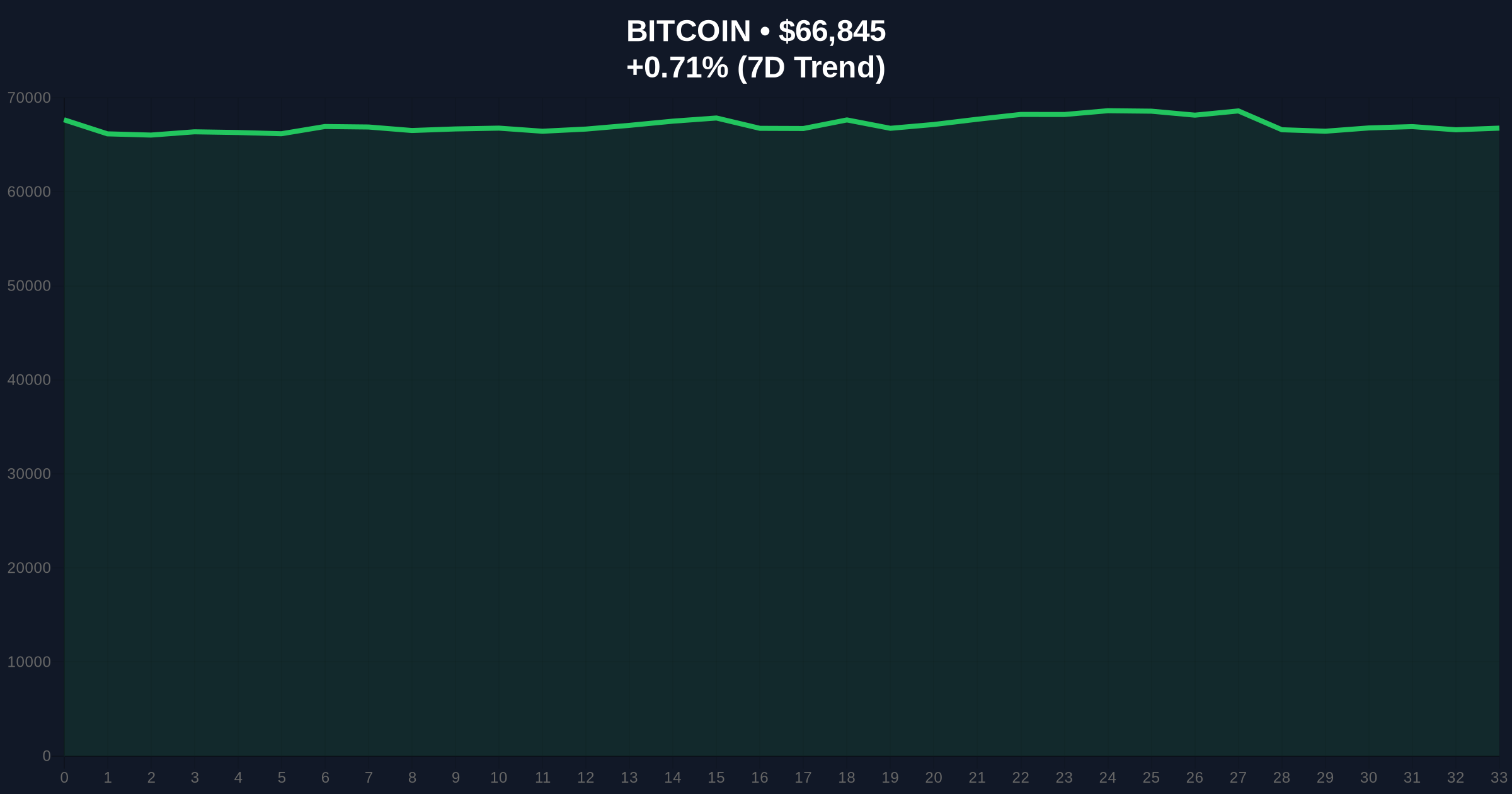
Bitcoin's mining difficulty increased by 3.87% to 138.97 T at approximately 9:28 a.m. UTC on April 3, 2026, marking a reversal from a 7% drop on March 21. This adjustment signals renewed network strength as Bitcoin trades at $66,823 with a 0.67% 24-hour gain, despite global crypto sentiment registering "Extreme Fear" at a score of 9/100. The rise in difficulty reflects increased miner competition and hash rate, potentially stabilizing the network ahead of the next scheduled adjustment in about 14 days.
The latest difficulty adjustment shows a 3.87% increase to 138.97 T, following a previous decline of over 7% on March 21. This metric, which measures how hard it is to mine a Bitcoin block, directly correlates with network hash rate and miner activity. According to CoinGecko data, Bitcoin's current price is $66,823, with a 0.67% 24-hour trend upward, while the market sentiment remains in "Extreme Fear" territory. The next difficulty adjustment is scheduled in approximately 14 days and two hours, providing a near-term timeline for miners to adapt.
| Metric | Value | Source |
|---|---|---|
| Mining Difficulty Increase | 3.87% | Source: public statement |
| New Difficulty Level | 138.97 T | Source: public statement |
| Bitcoin Price | $66,823 | Source: CoinGecko |
| 24-Hour Price Trend | 0.67% | Source: CoinGecko |
| Global Crypto Sentiment | Extreme Fear (9/100) | Source: CoinGecko |
Why now? The difficulty rise occurs amid a market backdrop of "Extreme Fear," suggesting miners are committing more resources despite negative sentiment, possibly anticipating price stability or long-term gains. This timing is critical as it follows a recent 7% drop, indicating a quick recovery in network security.
Who benefits? Miners with efficient operations gain from higher difficulty as it weeds out less competitive players, potentially increasing their share of block rewards. Long-term Bitcoin holders may benefit from enhanced network security, while traders could see reduced volatility due to stabilized mining activity.
Time horizons: Short-term, the adjustment may pressure inefficient miners, leading to potential hash rate fluctuations. Long-term, it reinforces Bitcoin's proof-of-work security model, supporting institutional confidence.
Causal chain: Increased hash rate from miners → higher difficulty adjustment → improved network security → potential price support as security attracts investors → reduced selling pressure from miners if profitability holds.
Bitcoin's difficulty adjusts approximately every two weeks based on the total hash rate, ensuring block times remain near 10 minutes. A 3.87% increase means miners are solving blocks faster than targeted, prompting the network to raise the difficulty to maintain equilibrium. This mechanism works through a built-in algorithm that recalculates based on past block production rates. The rise to 138.97 T indicates that more computational power has been added since the last adjustment, likely due to new mining hardware or increased participation from existing miners. This process inherently stabilizes the network by balancing miner incentives against energy costs.
While Bitcoin's difficulty rises, other crypto sectors face distinct challenges. For instance, stablecoin issues and hack-related events highlight volatility in adjacent markets. Key developments include:
These events contrast with Bitcoin's mining difficulty increase, which focuses on internal network health rather than external market shocks.
In the near term, miners must optimize operations to maintain profitability against higher difficulty. The scheduled adjustment in 14 days will test whether this trend persists. For the market, increased difficulty could reduce sell-side pressure from miners if rewards cover costs, potentially supporting prices. However, if global fear persists, broader adoption may stall, limiting upside.
Bitcoin mining difficulty is a core component of its proof-of-work consensus, automatically adjusting to keep block production steady. Historically, difficulty increases often correlate with bull markets as miners expand capacity, but they can also precede hash rate declines if prices fall. The recent 7% drop on March 21 marked a brief pullback, making this 3.87% rise a notable recovery in network metrics.
Contextually relevant articles include analysis on Bitcoin's market role skepticism and reports of whale deposits to Binance, which may influence miner behavior amid price uncertainty. Geopolitical events affecting crypto prices also highlight external risks that could impact mining economics.
The 3.87% Bitcoin mining difficulty increase to 138.97 T network resilience despite "Extreme Fear" sentiment, with mechanisms supporting security and potential price stability. While miners benefit short-term, risks from hash rate volatility and energy costs loom, requiring close monitoring of the next adjustment in 14 days.
Q1: What does a 3.87% difficulty increase mean for Bitcoin?It indicates more miner competition and higher network security, as the algorithm adjusts to maintain 10-minute block times.
Q2: How does this affect Bitcoin's price?Not directly, but improved security can attract long-term investors, while miner selling pressure may ease if profitability holds.
Q3: Why did difficulty fall 7% on March 21?Not provided in source data, but typically due to decreased hash rate from miner exits or technical issues.
Q4: What is the significance of the "Extreme Fear" sentiment?It reflects broad market caution, which could limit price gains despite positive mining metrics.
Q5: When is the next difficulty adjustment?Scheduled in approximately 14 days and two hours from April 3, 2026.
Q6: How do miners adapt to higher difficulty?By upgrading hardware, optimizing energy use, or relocating to lower-cost regions to maintain margins.
Traders are watching the next difficulty adjustment and hash rate trends for signals of miner health amid ongoing market fear.
Evidence & Sources
Primary source: https://coinness.com/news/1153545
Updated at: Apr 03, 2026, 12:25 PM
Data window: Apr 03, 2026, 11:50 AM → Apr 03, 2026, 11:51 AM
Evidence stats: 4 metrics, 0 timeline points.
Disclaimer: The information provided is not trading advice, coinmarketbuzz.com holds no liability for any investments made based on the information provided on this page. We strongly recommend independent research and/or consultation with a qualified professional before making any investment decisions.
All published reports are reviewed by our editorial team for factual consistency, neutrality, and reader clarity.