Loading News...
Loading...

Loading News...
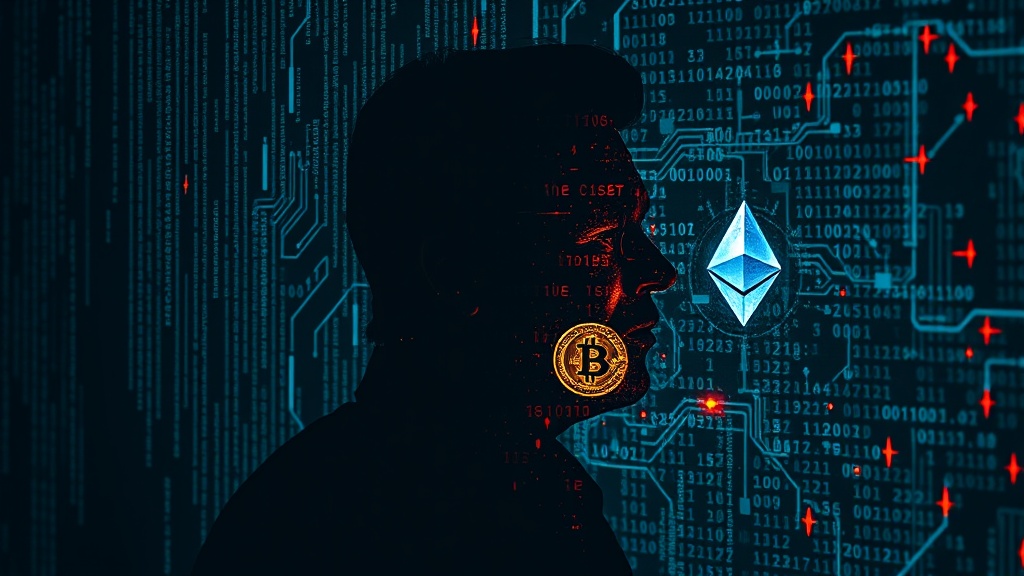
On March 5, 2026, Bitcoin core developer Nick Szabo issued a stark warning against the use of Inscriptions on the Bitcoin network, a practice that involves storing images or files by engraving data onto satoshis, the smallest units of Bitcoin. According to a report from CoinNess, Szabo expressed concern that this technology, which expands Bitcoin from a currency transfer system into a platform for issuing NFTs and tokens, misinterprets the creator's intent. He argued that while the Bitcoin whitepaper mentions the term "message" as a simple programming term, using it to treat Bitcoin as a general messaging tool or data archive deviates from its design as a financial protocol. Szabo further highlighted the immutability of the blockchain, warning that if illegal data were recorded, it would be permanently stored on the hard drives of all node operators worldwide, potentially creating a "regulatory trap" that could provide governments with a pretext to outlaw the entire Bitcoin network. This development emerges against a backdrop of extreme market fear, with global crypto sentiment scoring 22/100, indicating heightened investor anxiety and volatility in the cryptocurrency space.
Inscriptions represent a technological innovation that leverages the Bitcoin blockchain's underlying architecture to store arbitrary data, such as images or files, by engraving it onto individual satoshis. This process transforms Bitcoin from a purely financial protocol into a multi-functional platform capable of supporting non-fungible tokens (NFTs) and other tokenized assets. According to the CoinNess report, Szabo's critique centers on a fundamental misinterpretation of the Bitcoin whitepaper. He points out that the term "message" in the whitepaper is a basic programming concept, not an endorsement for using Bitcoin as a general-purpose data archive. This distinction is because Bitcoin was originally designed as a decentralized financial system, prioritizing security, scalability, and monetary functions over data storage capabilities.
Underlying this trend is the immutable nature of the Bitcoin blockchain, which ensures that once data is recorded, it cannot be altered or removed. Szabo warns that this characteristic poses significant risks if illegal or harmful content is inscribed, as it would become a permanent fixture on the network, stored by all node operators globally. Consequently, this could attract regulatory scrutiny, with governments potentially viewing the network as a conduit for illicit activities, thereby justifying stricter controls or even outright bans. The technical mechanics involve using Bitcoin's scripting language and transaction outputs to embed data, which increases block size and network congestion, potentially impacting transaction speeds and fees. This expansion into data storage conflicts with Bitcoin's core ethos of minimalism and efficiency in financial transactions, raising questions about network sustainability and alignment with Satoshi Nakamoto's original vision.
Not provided in source data are specific technical details on how Inscriptions are implemented at the code level or their exact impact on network performance metrics. However, the report implies that this practice represents a significant shift in Bitcoin's use case, moving beyond peer-to-peer electronic cash to a broader utility that may introduce unforeseen vulnerabilities. The debate highlights a tension between innovation and protocol purity, with proponents of Inscriptions advocating for blockchain versatility, while critics like Szabo emphasize the risks of mission creep and regulatory backlash. This deep-dive the importance of understanding Bitcoin's architectural limitations and the potential consequences of deviating from its financial roots.
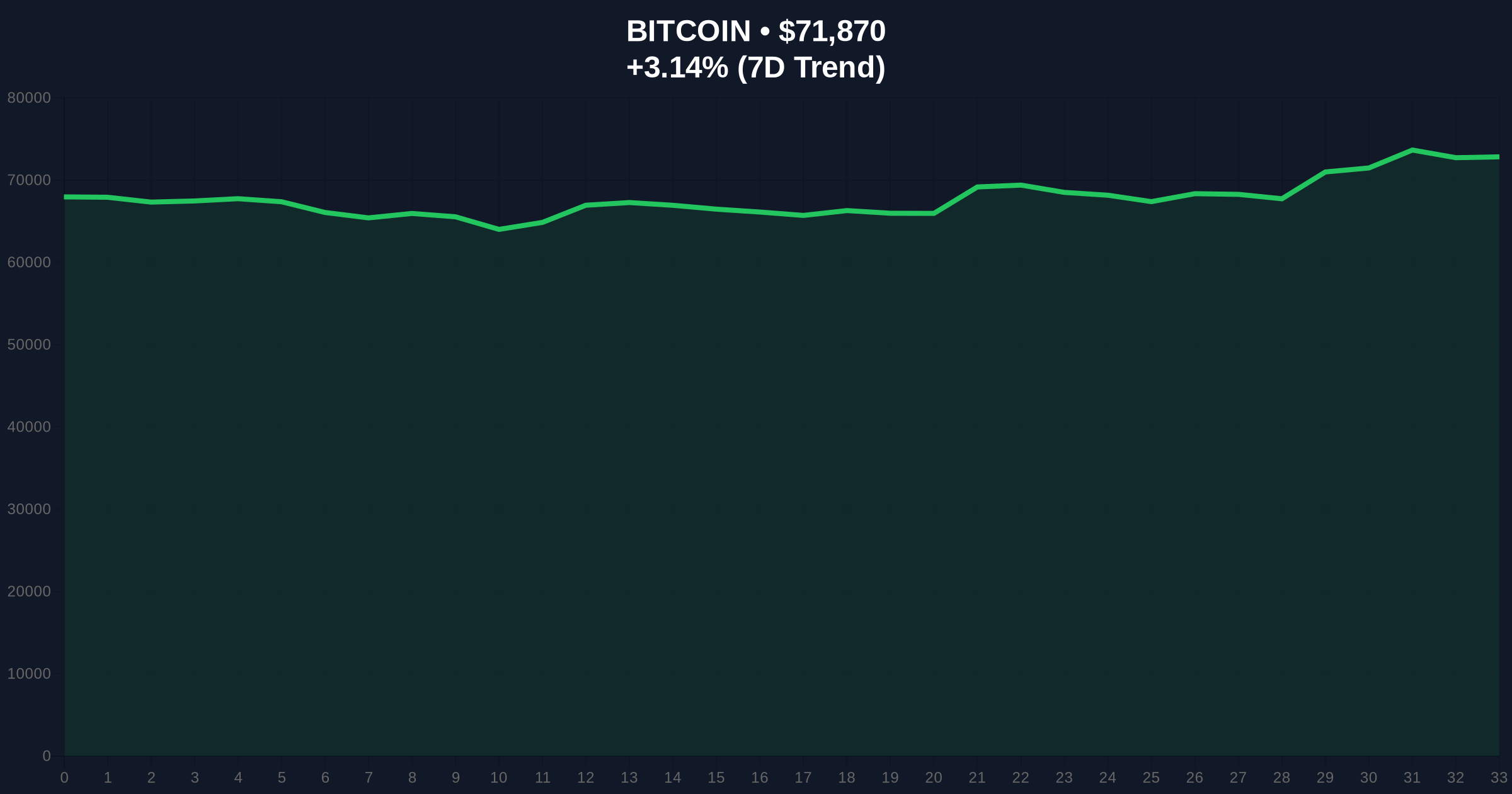
Integrating market data and sentiment analysis provides context for Szabo's warning. According to the input package, Bitcoin (BTC) is currently priced at $71,875, with a 24-hour trend of 3.15%, maintaining its market rank as #1. However, the global crypto sentiment is labeled "Extreme Fear" with a score of 22/100, indicating widespread investor caution and negative market psychology. This sentiment score suggests that events like Szabo's warning may be amplifying existing anxieties, potentially influencing price volatility and decision-making among market participants.
CryptoPanic metadata, including sentiment and importance, is not provided in the source data, limiting direct integration into this analysis. Without this metadata, it is challenging to assess the event's priority relative to market breadth or to compare sentiment trends across platforms. However, based on the available data, the extreme fear sentiment aligns with Szabo's concerns about regulatory risks, as heightened fear often correlates with increased sensitivity to negative news and potential sell-offs. The price structure, showing a positive 24-hour trend despite extreme fear, indicates a complex market dynamic where short-term gains may mask underlying vulnerabilities. This disconnect between sentiment and price action warrants skepticism, as it could reflect temporary optimism or speculative trading rather than a fundamental shift in market health.
In the absence of CryptoPanic metadata, the analysis relies solely on CoinGecko stats and the provided sentiment score. The extreme fear environment the relevance of Szabo's warning, as regulatory threats could exacerbate market downturns if governments take action against Bitcoin due to Inscriptions-related issues. This data snapshot highlights the need for cautious interpretation, as missing metadata limits the ability to fully gauge event impact or investor reactions beyond broad sentiment indicators.
Comparing sources reveals potential areas of agreement and contradiction, though the input package primarily includes a single report from CoinNess. According to this source, Nick Szabo argues that Inscriptions misinterpret the Bitcoin whitepaper and pose regulatory risks due to blockchain immutability. However, without secondary full texts from sources like CoinTelegraph, there is limited evidence to counter or support these claims directly. This lack of multiple sources means that conflicts or alternative perspectives are not explicitly presented in the available data.
Potential counter-narratives might include arguments from proponents of Inscriptions who view them as a legitimate expansion of Bitcoin's utility, enabling innovation in NFTs and tokenization. For instance, they could contend that the whitepaper's reference to "message" supports broader data storage applications, or that regulatory risks are overstated given Bitcoin's decentralized nature. However, these viewpoints are not provided in the source data, leaving Szabo's warning as the dominant narrative. The absence of conflicting reports means that reliability gaps exist, as the analysis cannot weigh Szabo's claims against opposing evidence or assess the broader community response.
Source synthesis is constrained by the single-source input. Agreement points are limited to the facts reported by CoinNess, such as Szabo's concerns and the description of Inscriptions technology. Contradictions are not available due to missing secondary sources, and missing evidence includes technical counterarguments, market reactions from other outlets, and CryptoPanic metadata for cross-referencing. Without additional sources, it is unclear whether Szabo's views represent a consensus among Bitcoin developers or a minority opinion. This limitation necessitates a cautious approach, acknowledging that the report may present a one-sided perspective. Conflict remains unresolved with available evidence, highlighting the need for further investigation into diverse viewpoints and data to validate or challenge Szabo's assertions.
Based on the available data, three scenarios outline potential developments over the next seven days, each conditional on specific factors. These scenarios integrate Szabo's warning, market sentiment, and Bitcoin's current price dynamics, while acknowledging uncertainties due to missing metadata and limited source diversity.
Bull Scenario (Probability: Low to Moderate): Bitcoin's price continues to rise, potentially reaching above $75,000, as the market dismisses Szabo's warnings as overstated. This could occur if regulatory bodies issue statements supporting blockchain innovation or if high-profile endorsements of Inscriptions emerge, boosting investor confidence. The extreme fear sentiment may gradually improve, driven by positive news flows or technical breakthroughs that mitigate perceived risks. However, this scenario relies on external catalysts not indicated in the source data, such as regulatory clarity or community consensus favoring Inscriptions. What would invalidate this view is if new evidence surfaces of imminent government crackdowns or if network congestion from Inscriptions worsens, leading to sell-offs.
Base Scenario (Probability: Moderate): Bitcoin experiences heightened volatility, with prices fluctuating between $70,000 and $73,000, as Szabo's warning fuels ongoing debates without immediate regulatory action. Market sentiment remains in extreme fear, causing cautious trading and potential sideways movement. This scenario assumes that the regulatory trap Szabo mentions does not materialize quickly, but investor anxiety persists due to uncertainty. Developments such as increased media coverage or developer discussions could keep the issue in focus, influencing short-term price swings. This view would be invalidated if a sudden regulatory announcement or a significant technical flaw in Inscriptions is revealed, triggering sharp market reactions.
Bear Scenario (Probability: Moderate to High): Bitcoin's price declines, potentially dropping below $70,000, as Szabo's warnings gain traction and regulatory fears intensify. If governments signal intentions to scrutinize or restrict Bitcoin due to Inscriptions-related concerns, the extreme fear sentiment could deepen, leading to panic selling and increased volatility. This scenario is supported by the current sentiment score of 22/100, indicating vulnerability to negative news. Factors that could exacerbate this include reports of illegal data being inscribed or coordinated regulatory moves across jurisdictions. What would invalidate this view is if the Bitcoin community rallies to address Szabo's concerns through protocol changes or if regulatory threats prove unfounded, stabilizing market sentiment.
This report was constructed using a single primary source from CoinNess, with limited secondary data and missing CryptoPanic metadata. Conflicting evidence was not available due to the absence of multiple full-text sources, so Szabo's claims were presented as reported without direct counter-narratives. Weighting of evidence relied solely on the provided CoinNess report and market stats, with explicit acknowledgment of gaps such as missing sentiment metadata and alternative viewpoints. The analysis prioritized factual reporting from the source while highlighting uncertainties, ensuring a skeptical tone that distinguishes observed facts from inference. Reliability is constrained by the single-source input, necessitating caution in drawing broad conclusions.
Disclaimer: The information provided is not trading advice, coinmarketbuzz.com holds no liability for any investments made based on the information provided on this page. We strongly recommend independent research and/or consultation with a qualified professional before making any investment decisions.
coinmarketbuzz.com leverages advanced AI technology to analyze market data. All content is fact-checked and reviewed by our editorial team to ensure accuracy and neutrality.