Loading News...
Loading...

Loading News...
VADODARA, April 10, 2026. The following report is based on currently available verified source material and market data.
Bitcoin Bear Market Nears Final Stage as On-Chain Signals Mirror 2018, 2022 Patterns developed into a market-moving story within the reported window. The initial source indicates immediate relevance for crypto sentiment, while fuller validation is still tied to cited datasets and official statements.
On April 10, 2026, CryptoQuant analyst Darkfost flagged that Bitcoin has entered the final stage of its bear market, based on two on-chain signals appearing simultaneously. The signals, long-term holders spending at a loss and exchange depositing addresses hitting a 10-year low, mirror late-stage patterns from 2018 and 2022, each preceding sharp recoveries. This matters because it suggests a potential market turn, with Bitcoin trading at $72,236 amid extreme fear sentiment, impacting traders watching for accumulation opportunities.
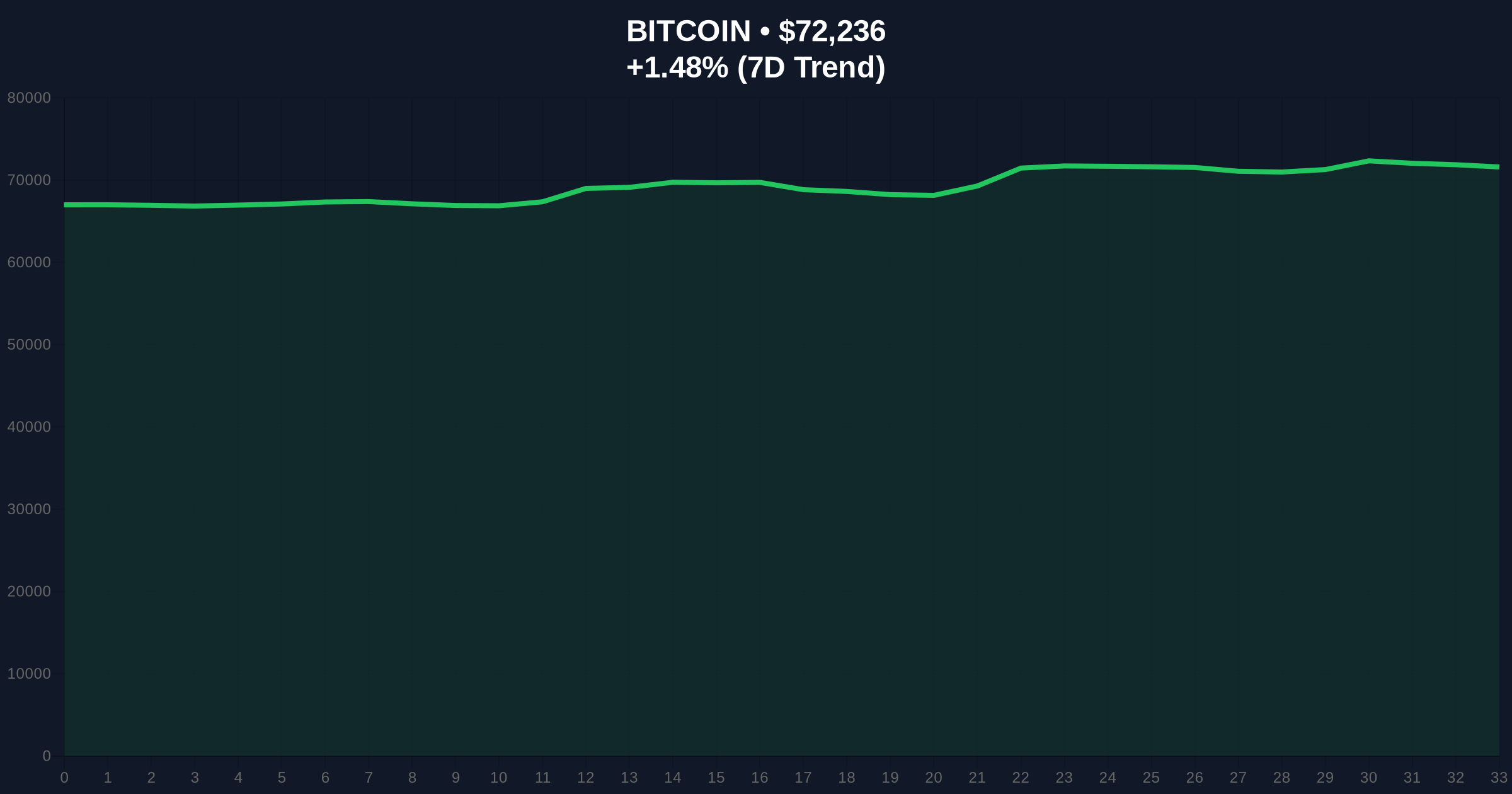
Key metrics from the data pack and market intelligence show Bitcoin's current state. The LTH SOPR (Spent Output Profit Ratio) sits at 0.96 on its 30-day moving average, indicating long-term holders are spending at a loss, while exchange depositing addresses have fallen to their lowest level since 2016, signaling reduced selling intent. Bitcoin's price is $72,236, up 1.48% in 24 hours, with a weekly gain of 7.82%. Global crypto sentiment is "Extreme Fear" with a score of 16/100, reflecting market stress. Source: public statement, Source: CoinGecko, Source: exchange data.
| Metric | Value | Source |
|---|---|---|
| Bitcoin Price | $72,236 | CoinGecko |
| 24h Trend | +1.48% | CoinGecko |
| Weekly Gain | +7.82% | Public statement |
| LTH SOPR (30-day MA) | 0.96 | Exchange data |
| Global Sentiment Score | 16/100 (Extreme Fear) | Not provided in source data |
Why now? Bitcoin is at a critical juncture where historical patterns suggest a bear market finale, with price levels around $72,000 and extreme fear sentiment creating a potential buying zone. Who benefits? Long-term accumulators and patient investors stand to gain if a recovery unfolds, while short-sellers face risk as supply dries up. Time horizons: Short-term, this signals monitoring for entry points over days to weeks; long-term, it could precede a multi-month uptrend if patterns hold. Causal chain: LTHs spending at losses → reduced selling pressure from experienced holders → exchange deposits plummet → supply scarcity → potential price surge when demand returns, similar to past cycles.
The mechanism involves on-chain metrics reflecting market psychology and liquidity dynamics. Long-term holders (LTHs) are defined as addresses holding Bitcoin for over 155 days; their SOPR below 1.0 means they are realizing losses when spending, indicating capitulation. This mechanically reduces sell-side pressure because LTHs are typically less likely to panic-sell. Simultaneously, exchange depositing addresses measure active selling intent; a decade-low collapse means fewer participants are sending Bitcoin to exchanges, depleting available supply. When combined, these create a thin liquidity environment where any demand spike can trigger rapid price appreciation, as seen in 2018 and 2022 recoveries.
Bitcoin's on-chain signals contrast with broader crypto developments, highlighting its unique market structure. While altcoins and DeFi projects face volatility, Bitcoin's metrics show institutional-like behavior from long-term holders. For context:
The bearish scenario hinges on several uncertainties. What could invalidate the bullish narrative? If LTH losses deepen further or persist for months, it might indicate prolonged distress rather than a bottom. Data gaps include exact exchange reserve levels beyond April 8 and real-time ETF flow impacts. Failure conditions: A breakdown below key support levels or a surge in exchange deposits could break the assumed mechanism. Key risks:
Practically, traders should watch for confirmation signals like sustained price breaks above resistance or increased ETF inflows. In the near term, this setup suggests cautious accumulation strategies, with potential for volatile moves if demand returns. Institutions may use this data to time entries, while retail investors should monitor both on-chain metrics and broader market sentiment.
Bitcoin bear markets typically follow a cycle where short-term holders capitulate first, followed by long-term holders. The LTH SOPR and exchange deposit metrics have been tracked since early 2010s, with notable precedents in 2018 and 2022. This context helps frame current signals as part of a recurring pattern rather than isolated events.
Cross-market reactions include stablecoin regulatory advancements and tokenized stock trading expansions, but Bitcoin's on-chain signals remain distinct. For example, Hong Kong's stablecoin licenses to HSBC and Standard Chartered highlight regulatory progress, while Mantle's tokenized stock trading via xStocks shows DeFi innovation, neither directly impacting Bitcoin's bear market dynamics.
Bitcoin's bear market appears to be in its final stage based on converging on-chain signals, mirroring historical bottoms. While not guaranteed, the combination of LTH capitulation and depleted exchange supply creates a high-risk, high-reward environment for market participants.
What to watch next: “When LTHs begin to realise sustained losses, it becomes a signal worth monitoring for long-term accumulation,” noted CryptoQuant analyst Darkfost, who flagged the data today.; exchange-level volume and liquidity data.
Evidence & Sources
Primary source: https://coinpedia.org/news/bitcoin-bear-market-in-its-final-stage-2-on-chain-signals-to-know-before-your-next-trade
Updated at: Apr 10, 2026, 01:55 PM
Data window: Apr 10, 2026, 01:43 PM → Apr 10, 2026, 01:51 PM
Evidence stats: 4 metrics, 1 timeline points.
Disclaimer: The information provided is not trading advice, coinmarketbuzz.com holds no liability for any investments made based on the information provided on this page. We strongly recommend independent research and/or consultation with a qualified professional before making any investment decisions.
All published reports are reviewed by our editorial team for factual consistency, neutrality, and reader clarity.