Loading News...
Loading...

Loading News...

VADODARA, April 14, 2026. The following report is based on currently available verified source material and market data.
Binance's PRER Launch: A Skeptical Look at Exchange Risk Controls Amid 'Extreme Fear' Market developed into a market-moving story within the reported window. The initial source indicates immediate relevance for crypto sentiment, while fuller validation is still tied to cited datasets and official statements.
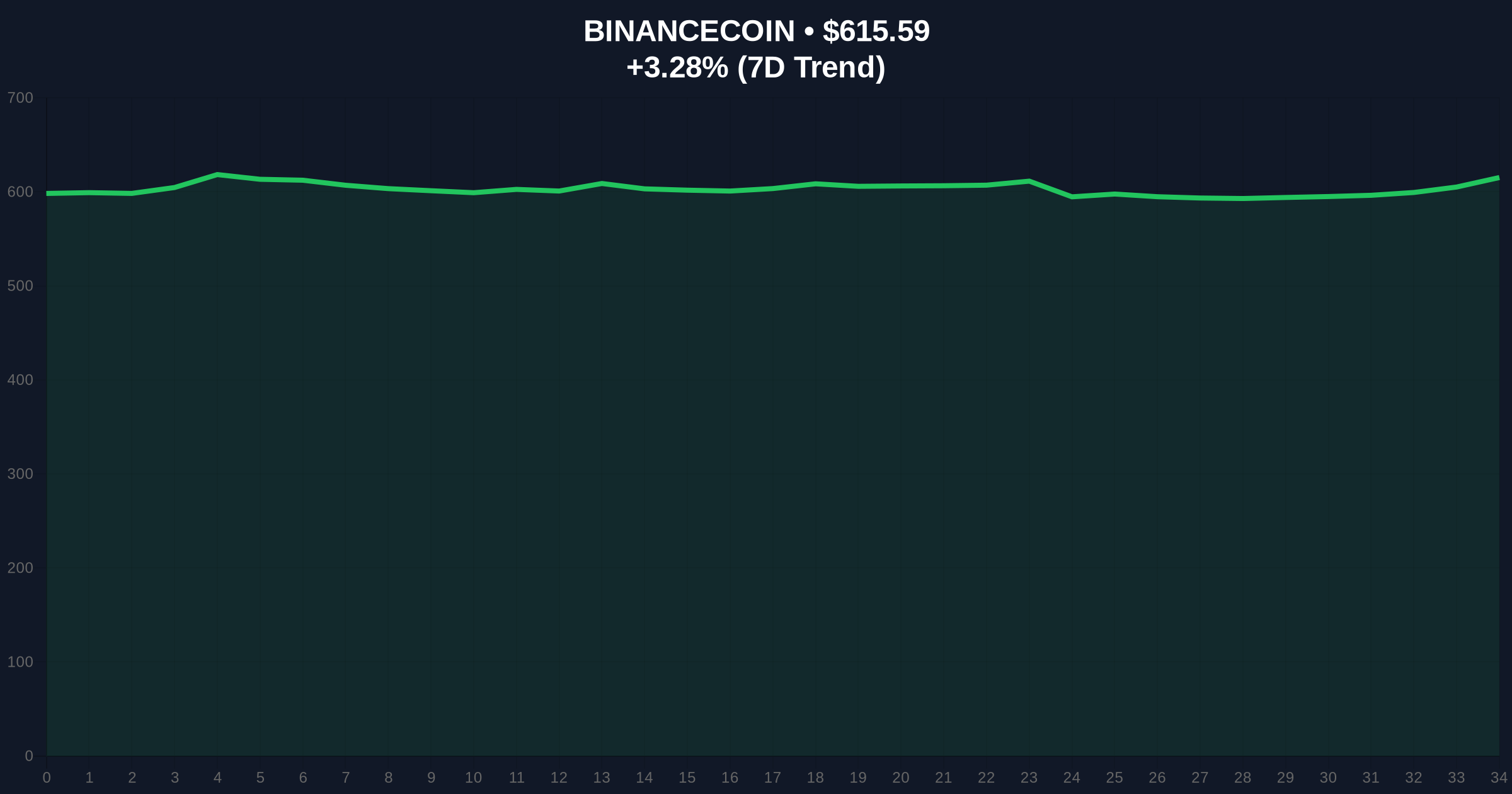
Binance will introduce its Spot Price Range Execution Rule (PRER) on April 15, 2026, a mechanism designed to prevent orders from being filled at abnormal prices during extreme market conditions. This move, announced on April 7, aims to maintain a fair trading environment amid high liquidity and price volatility. The launch comes as global crypto sentiment registers "Extreme Fear" with a score of 21/100, and BNB trades at $615.65 with a 24-hour gain of 3.29%, ranking #5 by market cap. The immediate impact is a potential reduction in price distortion from unusual activity, but the deeper implications for market efficiency and trader autonomy warrant scrutiny.
The PRER implementation restricts order execution to a specific price range, with market orders placed outside this band automatically expiring. Key metrics include BNB's price at $615.65 and a 24-hour trend of 3.29%, both sourced from CoinGecko. The timeline for the event is not provided in source data, but the announcement date is April 7, with activation set for April 15. Below is a snapshot of current market conditions:
| Metric | Value | Source |
|---|---|---|
| Global Crypto Sentiment | Extreme Fear (Score: 21/100) | Source: market data |
| BNB Price | $615.65 | Source: CoinGecko |
| BNB 24h Trend | 3.29% | Source: CoinGecko |
| BNB Market Rank | #5 | Source: CoinGecko |
Why now? Binance's PRER launch coincides with a period of "Extreme Fear" in crypto markets, suggesting heightened volatility and potential for abnormal price swings. The exchange likely aims to preempt disorderly trading during such conditions, but the timing raises questions about whether this is a proactive safeguard or a reactive measure to past incidents. Who benefits? Retail traders may gain protection from extreme fills, while whales and institutions could face reduced manipulation opportunities. However, automated traders and arbitrageurs might lose efficiency if price ranges are too restrictive. Time horizons: Short-term, PRER could stabilize spot pairs by limiting outlier executions, but long-term, it may alter market dynamics by centralizing price control. Causal chain: The mechanism works by setting execution bands → preventing fills outside range → reducing price distortion → potentially increasing trader confidence, but this assumes optimal range settings that don't hinder legitimate volatility.
PRER operates by defining a permissible price range for order execution, mechanically blocking trades that fall outside this band. During extreme market events, such as flash crashes or liquidity gaps, orders placed beyond the range expire automatically rather than executing at distorted prices. This internal mechanism relies on real-time price feeds and algorithmic checks to enforce the band, aiming to dampen volatility spikes. However, the effectiveness hinges on the accuracy of range calibration, too narrow, and it stifles price discovery; too wide, and it fails to prevent abuse. The underlying market-structure logic is that by filtering out anomalous trades, PRER reduces noise and maintains orderly books, but it also introduces a layer of exchange intervention that could conflict with decentralized principles.
Binance's PRER initiative aligns with broader exchange trends toward enhanced risk controls, but it stands out for its proactive approach to spot trading. Other platforms have implemented similar mechanisms in derivatives or during specific events, but spot markets often remain less regulated. Key adjacent developments include:
Compared to these, PRER is a more direct intervention in price execution, potentially setting a precedent for other exchanges to follow.
The bullish narrative assumes PRER will enhance market fairness, but several risks could invalidate this view. First, the mechanism may create false security if ranges are poorly calibrated, leading to missed opportunities or increased slippage during legitimate volatility. Second, centralizing price control at Binance could reduce market efficiency by limiting arbitrage and price discovery, contradicting crypto's decentralized ethos. Third, the "Extreme Fear" sentiment score of 21/100 suggests underlying market stress that PRER alone cannot resolve, potentially masking deeper liquidity issues. Key uncertainties include:
Failure conditions include PRER causing increased order rejection rates or exacerbating volatility if ranges are too reactive.
Practically, traders should monitor how PRER affects order fill rates and price spreads post-launch. If effective, it could reduce instances of extreme price distortions, but if flawed, it might lead to complaints about restricted trading. Near-term, expect increased scrutiny from regulators and competitors, as PRER sets a benchmark for exchange risk management. Longer-term, this could spur innovation in decentralized alternatives that offer similar protections without central control.
Binance has a history of implementing trading safeguards, such as circuit breakers and monitoring tags, to address market integrity. The PRER announcement on April 7 follows a pattern of incremental updates amid growing regulatory and volatility pressures. Historically, exchanges have faced criticism for inadequate controls during flash events, making PRER a logical step, but its novelty in spot markets requires careful evaluation.
Contextually relevant articles include Binance Adds Monitoring Tag to 7 Assets Including FARM, Removes Seed Tag from XAUT, which highlights ongoing exchange oversight efforts, and KOSPI Tops 6,000 for First Time in Over 40 Days Amid Global Crypto Market Volatility, underscoring the interconnected nature of financial markets. These developments suggest a broader trend toward risk mitigation, but PRER's direct price intervention is a distinct escalation.
Binance's PRER launch represents a significant step in exchange risk management, aimed at curbing abnormal price fills during volatile periods. While potentially beneficial for trader protection, its success depends on precise implementation and raises questions about market efficiency and centralization. In a climate of "Extreme Fear," such controls may offer reassurance, but they also underscore the ongoing tension between safety and autonomy in crypto markets.
Q1: What is PRER and how does it work?PRER is Binance's Spot Price Range Execution Rule that limits order execution to a specific price range, with orders outside this range expiring automatically to prevent abnormal fills.
Q2: When does PRER take effect?PRER is scheduled to launch on April 15, 2026, as announced on April 7.
Q3: How does PRER benefit traders?It aims to protect traders from extreme price distortions during volatile markets, but effectiveness depends on range settings.
Q4: What are the risks of PRER?Risks include poorly calibrated ranges hindering price discovery, increased centralization, and potential for reduced market efficiency.
Q5: How does PRER compare to other exchange controls?Unlike monitoring tags or circuit breakers, PRER directly intervenes in spot price execution, making it a more aggressive risk tool.
Q6: What should traders watch after PRER launch?Traders should monitor order fill rates, price spreads, and any changes in volatility to assess PRER's impact.
Analysts are closely watching the post-launch data to see if PRER reduces price anomalies without stifling legitimate market activity.
Evidence & Sources
Primary source: https://coinness.com/news/1154437
Updated at: Apr 14, 2026, 05:13 AM
Data window: Apr 14, 2026, 05:10 AM → Apr 14, 2026, 05:12 AM
Evidence stats: 2 metrics, 0 timeline points.
Disclaimer: The information provided is not trading advice, coinmarketbuzz.com holds no liability for any investments made based on the information provided on this page. We strongly recommend independent research and/or consultation with a qualified professional before making any investment decisions.
All published reports are reviewed by our editorial team for factual consistency, neutrality, and reader clarity.