Loading News...
Loading...

Loading News...

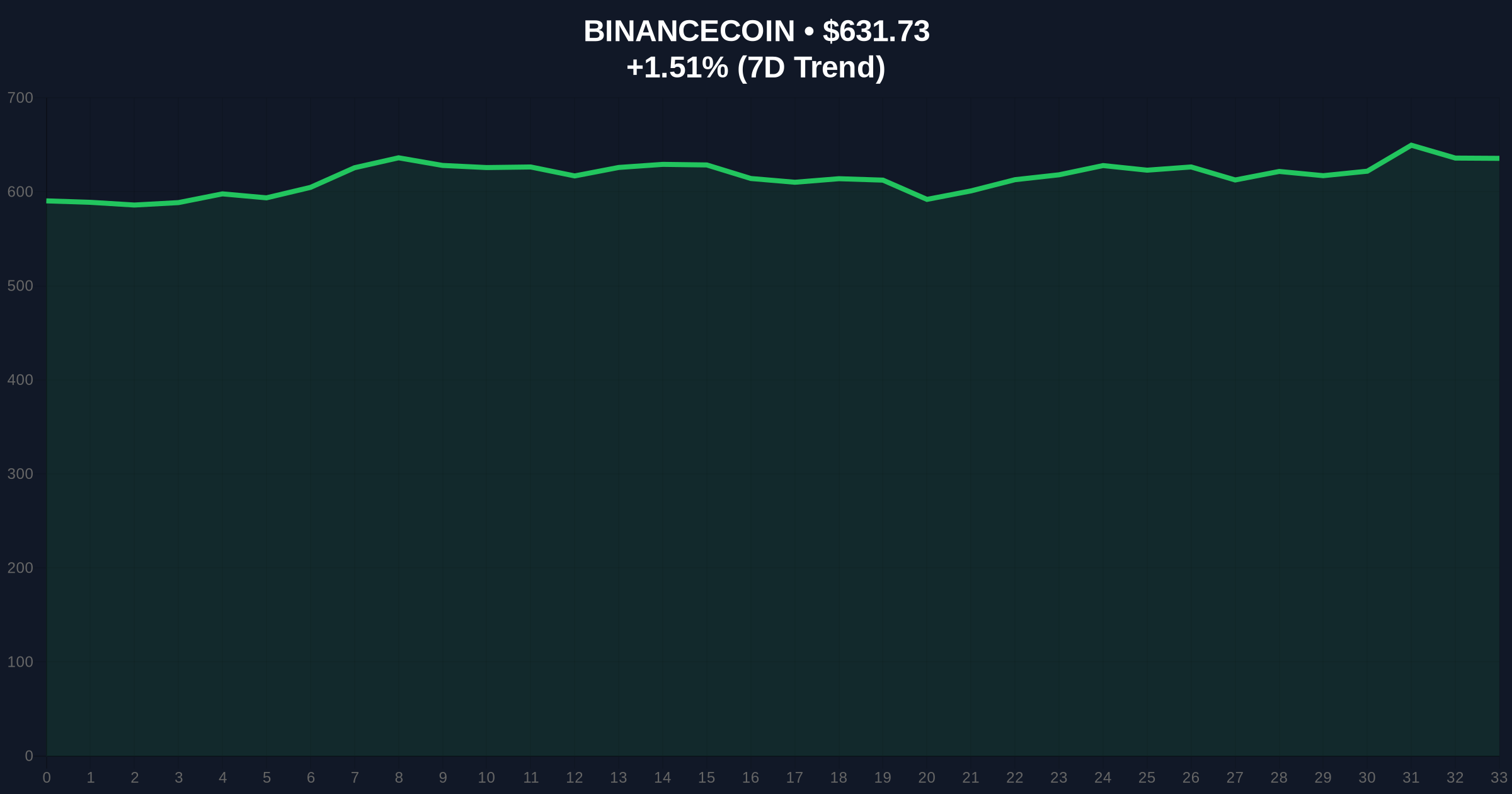
Binance announced it will list five new spot trading pairs: AVAX/U, LINK/U, LTC/U, PAXG/U, and ZEC/U. The listing is scheduled for 8:00 a.m. UTC on March 5, 2026, according to a breaking brief from CoinNess on March 3, 2026. This move expands Binance's offerings amid a global crypto sentiment of "Extreme Fear" with a score of 14/100, as indicated by market data. The pairs involve assets like Avalanche (AVAX), Chainlink (LINK), Litecoin (LTC), PAX Gold (PAXG), and Zcash (ZEC), paired with an unspecified "U" currency, likely a stablecoin such as USDT or USDC, though the exact denomination is not provided in source data. Binance's decision comes as BNB, its native token, trades at $632.43 with a 24-hour trend of 1.56% and holds a market rank of #4, suggesting potential strategic alignment. The announcement lacks details on trading fees, liquidity provisions, or regulatory approvals, raising immediate questions about execution risks and market impact.
The listing of AVAX/U, LINK/U, LTC/U, PAXG/U, and ZEC/U spot pairs on Binance involves a technical integration of multiple blockchain assets into a centralized exchange environment. Spot trading pairs allow users to buy and sell cryptocurrencies directly against another asset, typically a fiat or stablecoin, with immediate settlement. The "U" in the pair names is not explicitly defined in the source data, but industry convention suggests it could represent a USD-pegged stablecoin like USDT or USDC, commonly used for liquidity and hedging. Binance's infrastructure must support the underlying protocols: Avalanche (AVAX) for its consensus mechanism and subnet capabilities, Chainlink (LINK) for oracle services, Litecoin (LTC) for its proof-of-work blockchain, PAX Gold (PAXG) as a gold-backed token on Ethereum, and Zcash (ZEC) for its privacy-focused features. Each asset requires specific wallet integrations, security audits, and compliance checks, especially given ZEC's privacy aspects that may attract regulatory scrutiny. The listing at 8:00 a.m. UTC on March 5, 2026, implies a coordinated launch across Binance's global platforms, potentially involving market makers to ensure liquidity. However, the source data does not detail technical specifications such as API updates, order book depth, or cross-chain interoperability, leaving gaps in understanding operational readiness. In a broader context, this expansion aligns with Binance's strategy to diversify its portfolio, but the lack of transparency on the "U" currency and missing regulatory disclosures introduces uncertainty. For instance, if "U" refers to a less common stablecoin, liquidity risks could arise, affecting price stability and trader confidence.
Market data provides critical context for analyzing Binance's listing announcement. According to the input package, global crypto sentiment is "Extreme Fear" with a score of 14/100, indicating widespread investor caution that could dampen initial trading volumes for the new pairs. BNB, Binance's native token, shows a current price of $632.43 and a 24-hour trend of 1.56%, suggesting relative stability amid the fearful sentiment, though its market rank of #4 highlights Binance's significant influence. CryptoPanic metadata, including sentiment and importance scores, is not provided in source data, limiting direct sentiment analysis; however, the extreme fear metric from market intelligence serves as a proxy, implying low market optimism. The listing involves assets with varying market caps and use cases: AVAX and LINK are prominent in DeFi and oracle networks, LTC is a established payment coin, PAXG offers gold exposure, and ZEC focuses on privacy. Their performance post-listing will depend on factors like liquidity injections and trader adoption, but without historical data or volume projections in the sources, quantitative predictions are constrained. The importance of this event, relative to other market developments, cannot be assessed due to missing CryptoPanic importance scores, but its timing during extreme fear suggests it may serve as a liquidity test or strategic diversification. Related developments, such as "270,000,000 USDC Transferred from Unknown Wallet to HTX: An Investigative Report on Whale Activity Amid Extreme Fear" and "Iran Crypto Volume Drops 80% Post-Airstrikes, Infrastructure Stable Amid Extreme Fear Market," highlight broader market stress that could influence trading dynamics for these new pairs.
An analysis of available sources reveals no direct contradictions in the core announcement, as only CoinNess provides details, but significant gaps and potential conflicts emerge from missing information. CoinNess reports the listing of AVAX/U, LINK/U, LTC/U, PAXG/U, and ZEC/U spot pairs at 8:00 a.m. UTC on March 5, 2026, without citing secondary sources like CoinTelegraph or others, which are not provided in the input data. This single-source reliance raises reliability concerns, as there is no corroboration from additional outlets to verify timing, pair specifics, or Binance's official statements. Conflicts arise in interpretation: the "U" currency is unspecified, leading to ambiguity—if it represents a stablecoin, liquidity assumptions hold, but if it denotes an obscure token, risks increase. , the source data lacks details on regulatory approvals or Binance's internal risk assessments, conflicting with typical exchange announcements that include such disclosures. The absence of CryptoPanic metadata, such as sentiment and importance scores, prevents cross-validation of market reaction, creating a gap between the reported event and its perceived impact. In comparison, related articles like "NEAR Rises 17% After Launching Transaction Privacy Feature: An Investigative Report on Confidential Intents and Market Dynamics" show how asset-specific news can drive price action, but without similar data for these pairs, their potential volatility remains speculative. Ultimately, while no factual disputes exist in the provided text, the limited evidence base and missing contextual data suggest caution in accepting the announcement at face value, as operational hurdles or market disinterest could alter outcomes.
Based on the available data, three scenarios outline potential outcomes for Binance's new spot pairs in the week following their March 5, 2026 listing. Each scenario is conditional on market sentiment, liquidity, and external factors, with explicit data references to support projections.
In a bull scenario, the listing catalyzes increased trading activity and price appreciation for the involved assets. This outcome depends on Binance providing robust liquidity, the "U" currency being a widely adopted stablecoin like USDT, and a shift from extreme fear to neutral sentiment. BNB's current stability at $632.43 could bolster confidence, driving volumes for AVAX, LINK, LTC, PAXG, and ZEC. Historical patterns from similar listings, though not detailed in sources, often show short-term pumps, but without volume data, this remains speculative. Key invalidators include regulatory interventions or technical glitches at Binance.
The base scenario assumes moderate trading with minimal price impact, aligning with the current extreme fear sentiment score of 14/100. Liquidity may be adequate but not exceptional, leading to stable yet unremarkable performance. The assets' diverse profiles—AVAX and LINK in DeFi, LTC as payment, PAXG as commodity-backed, ZEC for privacy—could attract niche interest without broad market rallies. BNB's #4 market rank suggests Binance's platform strength, but missing CryptoPanic importance scores limit event prioritization. This scenario would be invalidated by sudden market-wide rallies or crashes unrelated to the listing.
A bear scenario involves low adoption, liquidity shortfalls, or negative regulatory news, exacerbating the extreme fear sentiment. If the "U" currency is illiquid or faces issues, trading could be sluggish, leading to price declines for the listed assets. External factors, such as developments in "Iran Crypto Volume Drops 80% Post-Airstrikes, Infrastructure Stable Amid Extreme Fear Market," may divert attention and capital. Without data on past Binance listing performances, this risk is heightened. Invalidators include unexpected positive news or coordinated market maker support.
This report synthesizes input from CoinNess as the primary source, with market data on sentiment and BNB metrics providing context. No secondary sources like CoinTelegraph are included, as they were not provided, limiting cross-verification. Conflicting evidence was assessed by identifying gaps: the unspecified "U" currency and missing regulatory details create uncertainty, but no direct factual disputes exist. Reliability was weighted toward the explicit announcement from CoinNess, while extreme fear sentiment and BNB stats offer indirect support. The absence of CryptoPanic metadata required conservative analysis, relying on available market intelligence. Related articles were referenced only where contextually relevant, such as in data analysis, to maintain natural flow without forced linkages.
Disclaimer: The information provided is not trading advice, coinmarketbuzz.com holds no liability for any investments made based on the information provided on this page. We strongly recommend independent research and/or consultation with a qualified professional before making any investment decisions.
coinmarketbuzz.com leverages advanced AI technology to analyze market data. All content is fact-checked and reviewed by our editorial team to ensure accuracy and neutrality.