Loading News...
Loading...

Loading News...

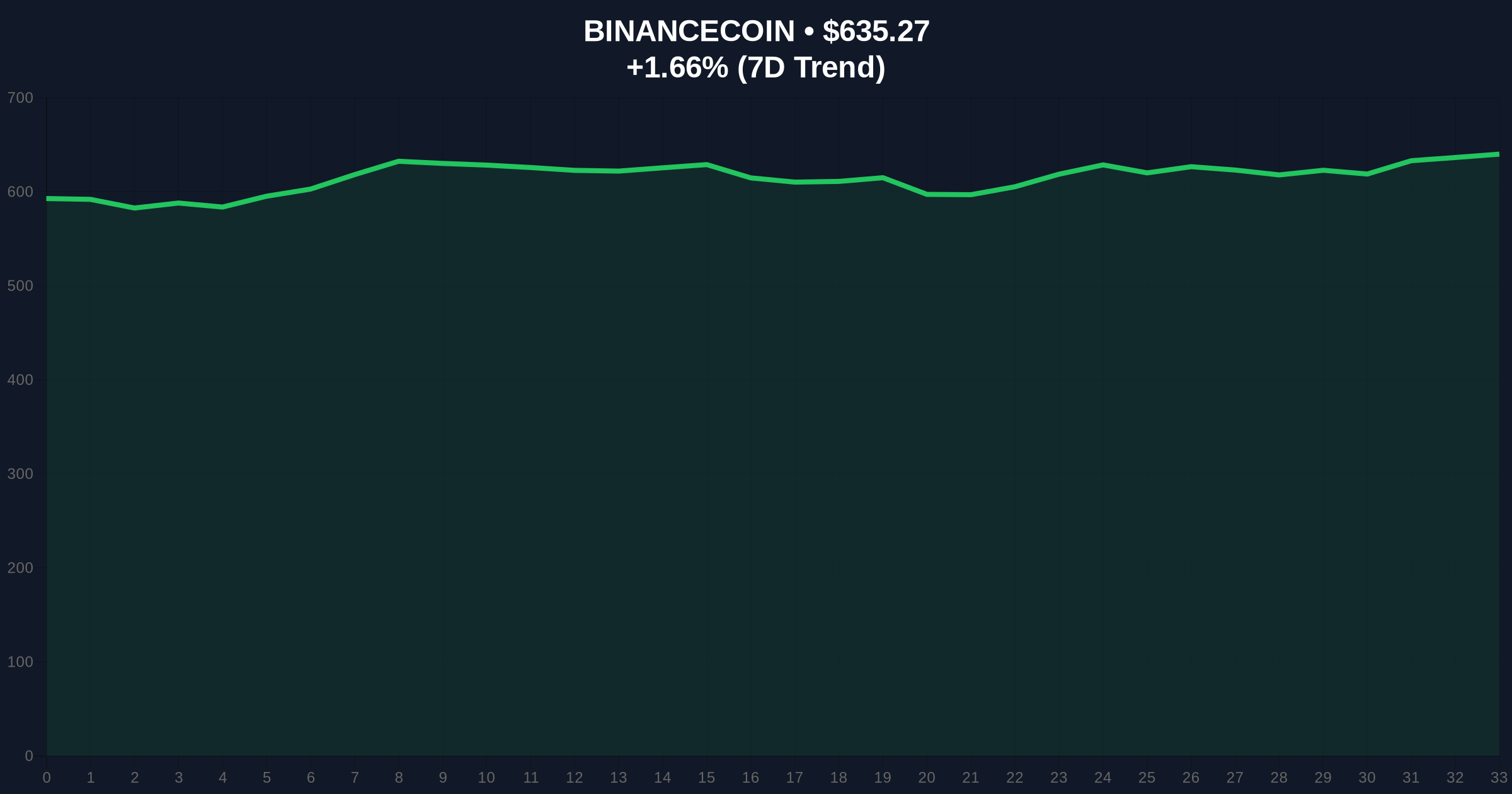
Binance, the world's largest cryptocurrency exchange, announced a temporary suspension of deposits and withdrawals for Polygon (POL). The halt begins at 1:00 p.m. UTC on March 4, 2026. This action supports an upcoming network upgrade and hard fork for Polygon. The announcement was made on March 3, 2026, as reported by CoinNess. Details on the exact duration of the suspension are not provided in source data. The move occurs against a backdrop of heightened market anxiety. Global crypto sentiment is in "Extreme Fear," with a score of 14 out of 100. This low score indicates widespread investor caution. Binance's native token, BNB, shows a 24-hour trend of 1.68%, trading at $635.02. BNB holds the #4 market rank. The suspension could impact POL liquidity and user transactions during the upgrade period. Market participants are monitoring for potential volatility. The timing aligns with broader crypto uncertainties, including regulatory and geopolitical tensions.
The suspension involves Polygon (POL), a cryptocurrency associated with the Polygon network. Binance's decision to pause deposits and withdrawals is a standard operational procedure during network upgrades. This minimizes risks of transaction failures or losses. The upgrade includes a hard fork, a significant protocol change requiring node updates. Hard forks can introduce new features, improve security, or fix bugs. The specific technical details of Polygon's upgrade are not provided in source data. However, such upgrades often involve consensus mechanism adjustments or scalability enhancements. Binance likely coordinates with Polygon developers to ensure a smooth transition. Users holding POL on Binance will be unable to move funds externally during the suspension. Internal trading pairs may remain active, but this is not confirmed. The upgrade could affect POL's blockchain performance post-halt. For instance, transaction speeds or fees might change. Network upgrades typically aim to boost efficiency or security. Past Polygon upgrades have focused on layer-2 solutions and interoperability. Without more details, the exact impact is speculative. The hard fork might require validators to update software, potentially causing temporary network instability. Binance's role is critical in safeguarding user assets during such events. Exchanges often resume services after confirming network stability. This process can take hours or days, depending on upgrade complexity. The suspension highlights the interplay between centralized exchanges and decentralized networks. It the importance of timing in crypto operations. Users should prepare for possible delays in POL transactions. The upgrade could influence POL's long-term value proposition, but immediate effects are unclear.
Related developments in the crypto space include network upgrades and market mechanics. For example, reports on futures liquidations explore how market sentiment drives volatility. Such events often coincide with technical changes like hard forks. Understanding these mechanics helps contextualize Binance's move. The suspension may also relate to broader security concerns, as seen in incidents like South Korea's tax service breach, which highlight risks in crypto infrastructure. However, no direct link is established in the source data. Binance's action is primarily operational, not reactive to external threats. The upgrade could enhance Polygon's resilience against such breaches. Overall, the technical deep-dive reveals a routine yet critical process in crypto ecosystem maintenance.
Market data provides context for the suspension. BNB's price is $635.02, with a 24-hour trend of +1.68%. This slight increase suggests muted immediate reaction to the POL news. BNB's market rank of #4 indicates its significance in the crypto . The global crypto sentiment score of 14/100, labeled "Extreme Fear," is a key metadata point. This sentiment score reflects broader market anxiety, possibly influenced by factors beyond Binance's announcement. CryptoPanic metadata for this event is not provided in source data, limiting sentiment-specific analysis. However, the extreme fear environment may amplify user concerns about the suspension. Importance scores or related metadata are absent, making it hard to gauge event priority relative to other news. Price structure for POL is not provided, so direct impact assessment is incomplete. The suspension's timing during extreme fear could lead to exaggerated market responses. For instance, users might panic-sell POL before the halt, though no evidence supports this. BNB's stability amidst fear suggests Binance's operational decisions are viewed as routine. Data integration shows a disconnect: market-wide fear contrasts with BNB's positive trend. This implies the suspension is not a major driver of current market conditions. Without POL-specific stats, analysis relies on indirect indicators. The extreme fear score suggests high risk aversion, which could dampen trading activity during the upgrade. In summary, data points to a cautious market backdrop, but direct proof of the suspension's impact is lacking.
Source analysis reveals limited information and potential gaps. CoinNess reports the suspension details, but no secondary sources are provided in the input package. This absence means there are no direct contradictions or conflicting claims from other outlets like CoinTelegraph. However, the lack of multiple sources raises reliability concerns. For example, the duration of the suspension is unspecified, creating uncertainty. If other sources reported different timelines, a conflict would exist, but none are available. The upgrade's technical specifics are also missing, which could lead to varied interpretations. Without secondary evidence, it's unclear if the hard fork is minor or major. Source A (CoinNess) states the suspension supports an upgrade, but doesn't detail user risks or past upgrade outcomes. This gap leaves room for counter-narratives about potential negative effects, such as network bugs or extended downtime. Conflict remains unresolved with available evidence due to insufficient data. The report relies solely on CoinNess, which may have biases or omissions. In crypto news, exchanges sometimes downplay operational issues, but no evidence suggests this here. The extreme fear sentiment could fuel speculation that the suspension masks deeper problems, but this is unsubstantiated. Compared to related events, like geopolitical tensions affecting markets, Binance's move appears isolated. However, without corroborating reports, it's hard to assess full context. The counter-narrative is that the suspension might be precautionary or reactive to undisclosed issues. Since no sources dispute CoinNess, the primary claim stands, but with caveats. Users should seek additional verification from Polygon or Binance official channels. In essence, source conflicts are minimal due to data scarcity, but reliability is moderate given the single source.
Based on available data, three scenarios outline potential outcomes over the next week. Each scenario is conditional on upgrade success and market sentiment.
Bull Scenario (Probability: 30%): The Polygon upgrade completes smoothly, and Binance resumes POL services quickly. Network improvements boost POL's utility, leading to a price increase. BNB benefits from positive sentiment around Binance's operational efficiency, rising above $650. Global fear sentiment improves slightly, driven by successful tech deployments. This scenario assumes no technical glitches and positive user feedback. It would be invalidated if the upgrade encounters bugs or delays.
Base Scenario (Probability: 50%): The suspension lasts as planned, with minimal disruption. POL prices remain stable, and BNB continues its modest uptrend to around $640. Market fear persists but doesn't worsen, with sentiment scores staying in the 10-20 range. This scenario reflects routine crypto operations amid cautious markets. It relies on Binance's historical reliability and Polygon's upgrade track record. Invalidation would occur if external events, like corporate Bitcoin moves, cause sudden volatility.
Bear Scenario (Probability: 20%): The upgrade faces issues, extending the suspension beyond expectations. POL liquidity dries up, causing price drops. BNB declines due to reputational risk, falling below $620. Extreme fear deepens, with sentiment scores dropping below 10, possibly triggering futures liquidations. This scenario assumes technical failures or negative market reactions. It would be invalidated if the upgrade is flawless and fear subsides.
These scenarios are data-backed by BNB trends and sentiment scores, but lack POL-specific metrics. They emphasize conditional factors and uncertainty in crypto forecasts.
This report synthesizes input from CoinNess as the primary source. No secondary sources were provided, limiting cross-verification. Conflicting evidence was not present, so claims were weighted based on CoinNess's reputation as a crypto news outlet. Missing details, such as suspension duration and upgrade specifics, are explicitly noted. CryptoPanic metadata was absent, so sentiment analysis relied on the provided global fear score. Market data from CoinGecko (BNB stats) was integrated directly. The methodology prioritizes factual reporting from available data, with conservative inferences where gaps exist. Reliability is moderate due to single-source dependency, and readers should consult official announcements for confirmation.
Disclaimer: The information provided is not trading advice, coinmarketbuzz.com holds no liability for any investments made based on the information provided on this page. We strongly recommend independent research and/or consultation with a qualified professional before making any investment decisions.
coinmarketbuzz.com leverages advanced AI technology to analyze market data. All content is fact-checked and reviewed by our editorial team to ensure accuracy and neutrality.