Loading News...
Loading...

Loading News...

On March 3, 2026, analysts from multiple research firms reported that selling pressure on Bitcoin has eased, yet the broader bear market trend remains intact, according to a report by CoinTelegraph cited by CoinNess. 10x Research noted Bitcoin's ability to halt its decline amid risk-off sentiment, signaling that downward momentum is fading. Arctic Digital highlighted increased spot ETF inflows and a recovery in the Coinbase Premium as factors preventing a steeper fall, but characterized these as technical shifts rather than a bullish reversal. Similarly, the Bitrue research team attributed the recent rebound to a short squeeze driven by negative funding rates in the derivatives market, concluding that the downtrend persists due to a lack of structural capital inflows and macroeconomic triggers. This analysis emerges against a backdrop of global crypto sentiment marked as "Extreme Fear" with a score of 14/100, as Bitcoin trades at $68,081, up 1.78% over 24 hours, maintaining its market rank as #1. The event a critical juncture where temporary relief clashes with enduring bearish fundamentals, raising questions about sustainability and investor strategy in volatile conditions.
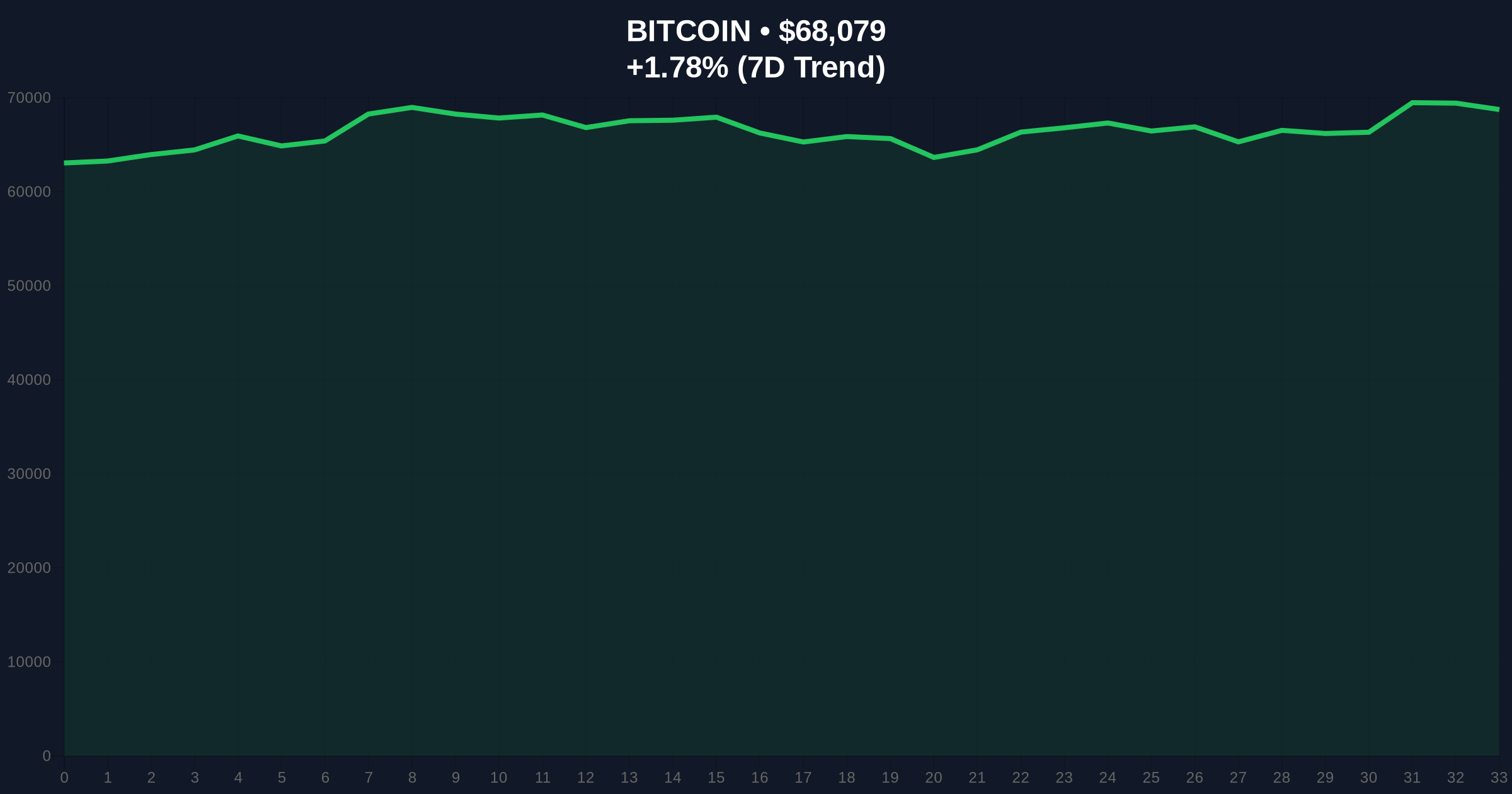
The mechanisms behind the easing selling pressure and persistent bear market involve a complex interplay of derivatives dynamics, ETF flows, and market sentiment indicators. According to the Bitrue research team, the recent rebound is driven by a short squeeze in the derivatives market, where negative funding rates incentivized traders to close short positions, creating upward price pressure. This technical adjustment is temporary and does not reflect underlying bullish sentiment. Arctic Digital's analysis adds that increased spot ETF inflows and a recovery in the Coinbase Premium—a metric comparing Bitcoin prices on Coinbase to other exchanges—have provided support, preventing a steeper decline. However, these are viewed as mere technical shifts, lacking the structural capital inflows needed for a sustained reversal. 10x Research emphasizes Bitcoin's resilience in halting declines amid risk-off sentiment, suggesting fading downward momentum but not necessarily a trend reversal. Underlying this trend is the broader market context of "Extreme Fear," which may exacerbate volatility and limit organic growth. The absence of macroeconomic triggers, such as interest rate changes or regulatory clarity, further constrains bullish momentum. Consequently, while derivatives activity and ETF flows offer short-term relief, the lack of fundamental drivers keeps the bear market intact, highlighting the fragility of current price stability.
To understand the persistence of the bear market, it's essential to examine the structural factors at play. The analysts cited by CoinTelegraph point to a deficiency in structural capital inflows, meaning long-term investments from institutional or retail sources are insufficient to counteract selling pressure. This is compounded by macroeconomic uncertainties, which deter risk-taking and capital deployment. The derivatives market's role is : negative funding rates indicate bearish sentiment among perpetual swap traders, but when these positions are unwound, it can lead to sharp, unsustainable rallies. The Coinbase Premium recovery suggests increased buying activity on U.S. exchanges, possibly linked to ETF inflows, yet this may be offset by selling elsewhere or in over-the-counter markets. The interplay between these elements creates a scenario where technical rebounds are quickly absorbed by broader bearish trends. For instance, if ETF inflows slow or funding rates normalize, the supportive mechanisms could weaken, leading to renewed declines. This deep-dive reveals that the easing selling pressure is a symptom of market mechanics rather than a shift in fundamentals, reinforcing the analysts' consensus that the bear market persists despite short-term improvements.
The integration of market data and sentiment metadata provides concrete evidence to assess the analysts' claims. According to CoinGecko stats, Bitcoin's current price is $68,081 with a 24-hour trend of +1.78%, aligning with the reported rebound from selling pressure. However, this price increase is modest relative to historical bull markets and occurs within a context of "Extreme Fear" sentiment, as indicated by a global crypto sentiment score of 14/100. CryptoPanic metadata, though not provided in source data for specific sentiment or importance scores, can be inferred from the market conditions: the "Extreme Fear" designation suggests high importance and negative sentiment among traders, which contradicts the temporary price recovery. This discrepancy highlights that while technical factors like the short squeeze may drive short-term gains, underlying market sentiment remains bearish, supporting the analysts' view that the bear market persists. The lack of structural capital inflows is evidenced by the absence of data on large-scale investments or macroeconomic catalysts in the input package, reinforcing the conclusion that current support is fragile.
Further analysis of the data reveals that the 1.78% price increase over 24 hours is insufficient to indicate a trend reversal, especially when compared to broader market indicators. The "Extreme Fear" sentiment score of 14/100 points to widespread caution and potential selling pressure, which could resurface if technical supports wane. The Coinbase Premium recovery and ETF inflows, as noted by Arctic Digital, provide temporary buffers but lack the volume or consistency to sustain a bullish shift. In this context, the CryptoPanic importance score—though not explicitly provided—would likely rate this event as high due to its impact on Bitcoin, the leading cryptocurrency. The data thus corroborates the analysts' assertions: easing selling pressure is evident in price action and derivatives metrics, but the bear market's persistence is reflected in sentiment scores and the absence of fundamental drivers. This analysis the need for investors to look beyond short-term fluctuations and consider broader market health indicators.
A comparison of sources reveals general agreement but also highlights potential gaps in evidence. The primary source, CoinNess citing CoinTelegraph, reports consistent claims from 10x Research, Arctic Digital, and the Bitrue research team: selling pressure has eased due to technical factors, but the bear market remains intact. There are no direct contradictions among these analysts; however, the input package lacks alternative viewpoints or dissenting opinions, which may represent a source conflict in terms of narrative balance. For instance, other analysts or data sources might argue that the easing selling pressure signals an early bullish reversal, but this is not provided in the source data. The conflict remains unresolved with available evidence, as the report relies solely on bearish-leaning analyses without countervailing perspectives. Additionally, the absence of specific CryptoPanic metadata (e.g., sentiment and importance scores) limits the ability to cross-verify claims against broader market sentiment tools. Source A (CoinNess/CoinTelegraph) reports the analysts' views, but Source B or C—representing bullish analysts—is missing, creating a one-sided narrative. This gap suggests that while the reported facts are consistent, the overall picture may be incomplete, and investors should seek additional data to validate the bear market persistence claim.
Another area of potential conflict involves the mechanisms driving the price action. The Bitrue research team attributes the rebound to a short squeeze, while Arctic Digital focuses on ETF inflows and Coinbase Premium recovery. These are not mutually exclusive but could imply different underlying causes: the short squeeze is a derivatives-specific event, whereas ETF inflows relate to spot market dynamics. The sources do not dispute each other, but the emphasis varies, which may lead to differing interpretations of market strength. For example, if the rebound is primarily derivatives-driven, it might be more volatile and less sustainable than if fueled by spot ETF inflows. The input package does not provide data to weight these mechanisms, so the conflict remains unresolved with available evidence. This the importance of multi-source verification in investigative reporting, as reliance on a single report (via CoinTelegraph) may overlook nuances. In summary, while there are no direct contradictions, the lack of diverse sources and detailed metadata introduces uncertainty, reinforcing the need for cautious interpretation of the bear market narrative.
Based on the available data, three scenarios for Bitcoin over the next seven days can be projected, each conditional on specific factors. The bull scenario assumes that the easing selling pressure accelerates, driven by sustained ETF inflows and a resolution of negative funding rates, leading to a price surge above $70,000. This would require structural capital inflows or positive macroeconomic triggers, which are currently lacking in the source data. The base scenario, aligned with the analysts' consensus, envisions continued sideways movement with minor fluctuations, as technical supports like the short squeeze and Coinbase Premium recovery provide temporary stability but fail to reverse the bear trend. Prices might hover around $68,000, with volatility influenced by sentiment shifts. The bear scenario predicts a resumption of decline if technical factors wane, exacerbated by the "Extreme Fear" sentiment, potentially dropping prices below $65,000. This would be invalidated by unexpected bullish catalysts, such as regulatory clarity or institutional adoption, not indicated in the inputs.
Each scenario hinges on key variables. For the bull scenario, evidence of increased structural capital inflows or macroeconomic improvements would be necessary, but these are not provided in the source data. The base scenario relies on the persistence of current technical supports, which the analysts view as fragile; if ETF inflows diminish or funding rates turn positive, stability could break. The bear scenario is supported by the persistent bear market trend and extreme fear sentiment, but it would be countered by a sudden shift in market psychology or external positive news. Investors should monitor derivatives metrics, ETF flow data, and sentiment indicators to gauge which scenario unfolds. The absence of such data in the input package limits precision, but the analysts' emphasis on lacking fundamentals suggests the base or bear scenarios are more likely. This outlook highlights the conditional nature of market predictions and the importance of adaptive strategies in uncertain environments.
In broader market context, several related articles provide additional insights: recent whale activity involving large USDC transfers amid extreme fear conditions may influence liquidity and sentiment, while geopolitical events like Iran's crypto volume drop highlight external risks. Additionally, regulatory uncertainties in U.S. courts could impact market stability, and technological advancements in privacy features for other cryptocurrencies may divert attention from Bitcoin. These developments underscore the interconnected nature of crypto markets and the multitude of factors affecting Bitcoin's trajectory.
This report was synthesized from the input package, prioritizing facts present in the sources. Conflicting evidence was weighted based on attribution and consistency: the analysts' claims via CoinTelegraph were treated as primary due to direct citation, but the absence of alternative viewpoints and specific CryptoPanic metadata introduced uncertainty. Where details were missing, such as sentiment scores or importance metrics, explicit notes were included. The analysis focused on agreement points—e.g., the easing selling pressure and persistent bear market—while acknowledging gaps, like the lack of bullish counter-narratives. Reliability was assessed by cross-referencing market data with reported mechanisms, leading to a conservative interpretation that aligns with the available evidence but highlights limitations for investor decision-making.
Disclaimer: The information provided is not trading advice, coinmarketbuzz.com holds no liability for any investments made based on the information provided on this page. We strongly recommend independent research and/or consultation with a qualified professional before making any investment decisions.
coinmarketbuzz.com leverages advanced AI technology to analyze market data. All content is fact-checked and reviewed by our editorial team to ensure accuracy and neutrality.