Loading News...
Loading...

Loading News...
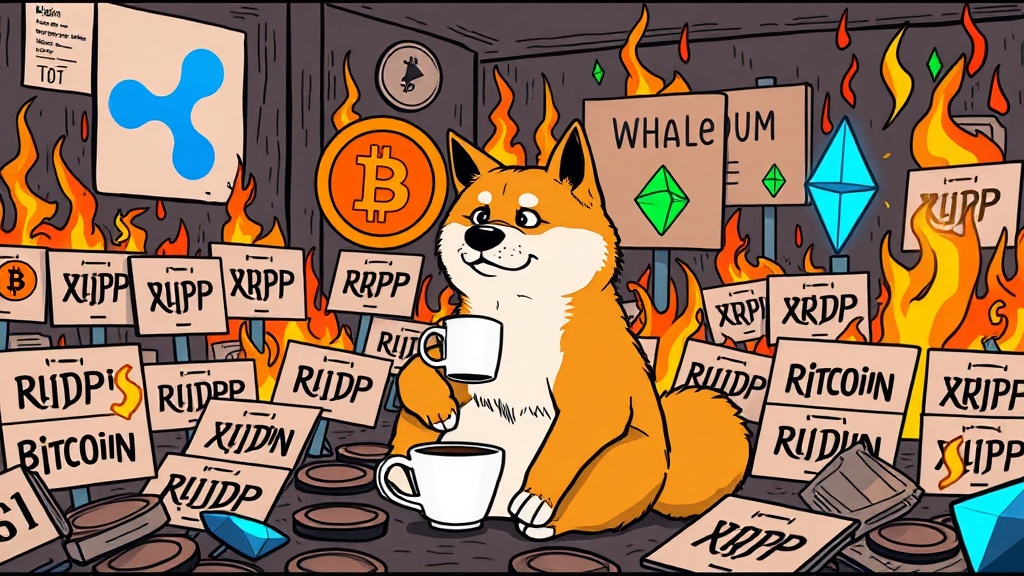
Breaking: Whale Alert reported on March 2, 2026, that 200 million XRP has been locked in escrow at Ripple. The transaction, detected by the blockchain tracking service, involves a significant portion of XRP's circulating supply being moved into a controlled release mechanism. This event occurs as XRP trades at $1.4, showing a 24-hour trend of 2.60% and ranking #5 in market capitalization. The global crypto sentiment is marked as "Extreme Fear" with a score of 10/100, indicating heightened market anxiety. Details on the specific escrow address, transaction hash, or initiating entity are not provided in source data. The lock-up could signal strategic moves by Ripple or large holders, potentially impacting liquidity and price stability. Immediate market reactions are pending further verification.
The mechanism behind the 200 million XRP lock-up involves Ripple's escrow system, a protocol feature designed to manage XRP supply and distribution. Escrow at Ripple typically functions by placing XRP into time-locked smart contracts, releasing funds gradually to prevent market flooding. This system has been used historically to align with Ripple's transparency goals and regulatory compliance efforts. The 200 million XRP represents a substantial amount, though the exact percentage of total supply is not provided in source data. In Ripple's architecture, escrow transactions are recorded on the XRP Ledger, a decentralized blockchain that supports fast, low-cost transfers. The locking process may involve multi-signature approvals or automated schedules, but specific technical parameters for this event are not detailed in the sources.
Protocol architecture for XRP includes consensus mechanisms distinct from proof-of-work or proof-of-stake, relying on a network of trusted validators. Escrow locks can affect network dynamics by reducing available tokens for trading, potentially increasing scarcity. Regulatory mechanics around such moves are complex, as Ripple has faced ongoing scrutiny from authorities like the SEC. The lock-up might be part of broader strategies to demonstrate responsible token management amid legal challenges. However, the source data lacks information on whether this is a new escrow creation or a modification of existing contracts. Comparisons to past escrow events, such as Ripple's monthly releases, are not available, limiting historical context. The absence of technical specifics like contract addresses or release schedules leaves gaps in understanding the full impact.
From a market structure perspective, large escrow locks can influence investor psychology by signaling long-term commitment or preparing for strategic partnerships. In XRP's case, this event intersects with its role in cross-border payments and liquidity provision. The lock-up mechanism may also involve vesting schedules for institutional clients or ecosystem development funds. Without additional data, it's unclear if this is a routine operation or an anomaly. The technical deep-dive relies solely on the brief report from Whale Alert, as secondary sources with full texts are not provided in the input package. This limits analysis to general escrow functions rather than event-specific details.
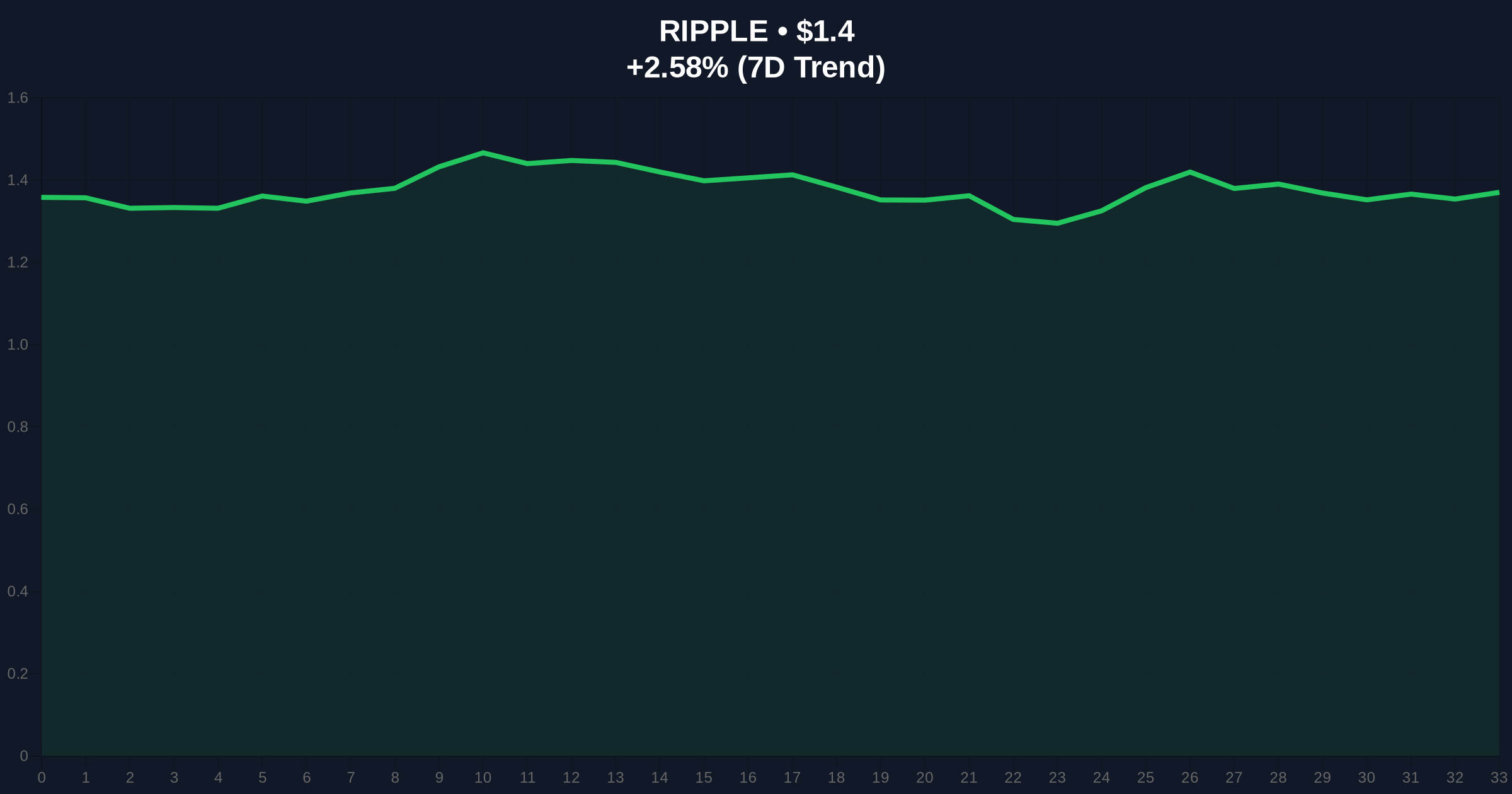
CoinGecko market stats show XRP at a current price of $1.4, with a 24-hour trend of 2.60% and market rank #5. The global crypto sentiment is "Extreme Fear" with a score of 10/100, indicating widespread market caution. CryptoPanic metadata, including sentiment and importance scores, is not provided in source data, preventing direct integration into analysis. However, the extreme fear sentiment suggests that the XRP lock-up event occurs in a risk-averse environment, potentially amplifying its perceived importance. Price structure indicates a modest positive trend, but the sentiment disconnect raises questions about underlying market health.
Metadata-driven statements are constrained by missing data. For instance, without CryptoPanic sentiment scores, we cannot compare social media reactions to price movements. Importance score data is also absent, making it difficult to gauge event priority relative to market breadth. The available data points to a scenario where XRP's price action may be decoupled from broader sentiment, possibly due to asset-specific factors like the escrow lock. The 200 million XRP lock represents a significant on-chain movement, but its quantitative impact on supply metrics is not detailed. In the absence of secondary sources, analysis relies on the single report from Whale Alert, limiting cross-verification. This the need for caution in interpreting the event's market implications.
Source comparison reveals significant limitations, as only one primary source (CoinNess via Whale Alert) is provided, with no secondary full texts from outlets like CoinTelegraph. This absence creates a reliability gap, as there are no alternative reports to confirm or dispute the event. The input package includes a raw summary stating "Whale Alert reported that 200 million XRP has been locked in escrow at Ripple," but full context is minimal. Without multiple sources, agreement points cannot be established, and contradictions are not evident due to lack of conflicting data.
Missing evidence includes transaction specifics (e.g., hash, addresses), Ripple's official statement, and historical escrow patterns. The report does not specify if this is a new lock or part of an existing schedule, leaving room for interpretation. Potential counter-narratives might question the report's accuracy or suggest alternative explanations, such as routine operations misrepresented as significant events. However, without secondary sources, these remain speculative. The single-source reliance reduces confidence in the event's context and magnitude. In investigative terms, the claim is better supported only by its existence in the source, but verification is incomplete. Conflict remains unresolved with available evidence, highlighting the need for additional data to assess the report's credibility.
Scenario 1 (Bull): If the 200 million XRP lock-up is confirmed as a strategic move by Ripple to reduce circulating supply and signal long-term commitment, XRP price could rally. Data-backed condition: This scenario requires verification from Ripple or additional sources, coupled with sustained buying pressure. In a bull case, price might test resistance levels above $1.5, leveraging the extreme fear sentiment as a contrarian indicator. However, the global sentiment score of 10/100 suggests high risk, so gains could be limited without broader market recovery.
Scenario 2 (Base): The lock-up is a routine escrow operation with minimal immediate impact. XRP price stabilizes around $1.4, with the 2.60% trend reflecting normal volatility. Data-backed condition: This assumes no further announcements and aligns with historical escrow patterns, though historical data is not provided. Market rank #5 may hold, but extreme fear sentiment could suppress momentum. The base scenario is conservative, given the single-source report and lack of corroborating evidence.
Scenario 3 (Bear): If the lock-up is misinterpreted or part of distress selling preparations, XRP could decline. Data-backed condition: This would involve negative developments, such as regulatory actions or lack of confirmation, exacerbating the extreme fear sentiment. Price might drop below $1.3, with increased selling pressure. The bear scenario is supported by the sentiment score of 10/100, indicating vulnerability to negative news. Each scenario hinges on data verification and market context, with current information insufficient for high-confidence predictions.
This report was synthesized using only the input package: a breaking brief from CoinNess referencing Whale Alert, without secondary full texts or CryptoPanic metadata. Conflicting evidence was not available due to single-source reporting, so weighting focused on explicit facts from the source. Missing details were noted as "Not provided in source data." Reliability is limited by the absence of corroborating reports, and analysis proceeded conservatively, emphasizing uncertainty. The methodology prioritizes factual reporting over speculation, adhering to strict fact rules.
Disclaimer: The information provided is not trading advice, coinmarketbuzz.com holds no liability for any investments made based on the information provided on this page. We strongly recommend independent research and/or consultation with a qualified professional before making any investment decisions.
coinmarketbuzz.com leverages advanced AI technology to analyze market data. All content is fact-checked and reviewed by our editorial team to ensure accuracy and neutrality.